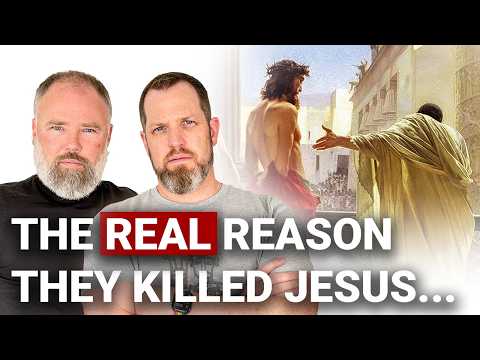
Did Jesus claim to be God?
Hooooo boy. This episode, we're asking one of the biggest questions in Christianity: Is Jesus God? We'll examine the gospel most frequently cited to support the idea: the gospel of John. Literally, the first verse of John says "The Word was with God, and the Word was God", doesn't that kind of end the debate? Well, if you know this show, you KNOW it's going to be more complicated than that! We'll go verse by verse discussing why what you've always been told may not be the full story. It may not be the story at all! ---- For early access to an ad-free version of every episode of Data Over Dogma, exclusive content, and the opportunity to support our work, please consider becoming a monthly patron at: https://www.patreon.com/DataOverDogma Follow us on the various social media places: https://www.facebook.com/DataOverDogmaPod https://www.twitter.com/data_over_dogma Have you ordered Dan McClellan's New York Times bestselling book The Bible Says So yet??? Buy at this link: https://static.macmillan.com/static/smp/bible-says-so-9781250347466/
Bonus Episode Recorded with this episode: read the full transcript $10 patrons · log in with Patreon Watch on YouTube
 Apple Podcasts
 Spotify
Transcript — tap any word to jump the video there
Dan Beecher I feel like, Dan, you've got a tall order in front of you- ... in-
Dan McClellan Yeah
Dan Beecher ... telling us how Jesus isn't God in the Book of John.
Dan McClellan Yeah. It is, uh-
Dan Beecher So- ...
Dan McClellan it's gonna be, it's gonna be, uh, a ride. Hey, everybody, I'm Dan McClellan. And
Dan Beecher I'm Dan Beecher.
Dan McClellan And you are listening to the Data Over Dogma podcast, where we increase public access to the academic study of the Bible and religion, and combat the spread of misinformation about the same. How are things, Dan?
Dan Beecher Rocking and rolling, man. Uh, I think this is, we're, we're, we're delving into one that's gonna be, uh, a p- a powder keg.
Dan McClellan Yeah. We're getting- Yeah ...
Dan Beecher we're getting, we're getting into the good stuff here. This is-
Dan McClellan This is, uh, on, uh, on social media, this is where I get the most pushback from folks, so, um-
Dan Beecher Oh, really?
Dan McClellan Yeah.
Dan Beecher Okay.
Dan McClellan Oh, yeah.
Dan Beecher Guys.
Dan McClellan It's surprising. Like, it's not, i- it's not that it causes, like, the biggest ruckus, but the people who are usually on my side about a lot of stuff
Dan Beecher when it comes to this
Dan McClellan will be like, "Mm, um, but I'm, I'm still right," so.
Dan Beecher All right, everybody, prepare to push back. This is gonna be a fun one. Uh, and we'll start with, uh, the, the f- the first one. Look, I'm gonna start us off with an idea, and it is an idea that is so fundamental to so many Christians, like, religious cosmology, that to say otherwise seems absurd.
Dan McClellan Mm-hmm.
Dan Beecher And so, uh, uh, what, before I present that, maybe you should just say your line.
Dan McClellan All right, let's see it.
Dan Beecher Okay. He said it. That means we're li- we're, we're diving in. Uh-
Dan McClellan The monkey has danced.
Dan Beecher Dance, monkey. Um, here's the idea. The idea is, so you actually came to me, uh, I, when we were discussing-
Dan McClellan In the night
Dan Beecher ... what, and then, yes-
Dan McClellan Yeah ...
Dan Beecher you, you came and visited me three times, and now I-
Dan McClellan Visions by night, yeah ...
Dan Beecher now, now I, uh, I believe in Christmas. Um, no, you, what you said was, "Let's-
Dan McClellan I thought you were going, "Now I'm digging up gold plates from a hill," but, uh, you, you took it a different direction.
Dan Beecher I went, I went-
Dan McClellan You went a different direction, so, okay
Dan Beecher ... I went Dickens instead of Joseph Smith, so there we go.
Dan McClellan There you go. Okay.
Dan Beecher Uh, the idea, what, what you said was, "Let's talk about the idea of if Jesus is God in the Book of John." So I took that to mean, when I first thought about that, I was like, "Aha, Jesus is God in all the other books, and John's the one that's like this crazy outlier that doesn't seem to think Jesus is God." And then I looked into it and I went, "Oh, oops, I'm completely wrong. John's the one."
Dan McClellan Yeah.
Dan Beecher John is, like-
Dan McClellan Yeah
Dan Beecher ... the place, when you look up an article of is Jesus God, you're gonna get citations to John all the way down. So this-
Dan McClellan Yeah
Dan Beecher ... so I feel like, Dan, you've got a tall order in front of you- ... in-
Dan McClellan Yeah
Dan Beecher ... telling us how Jesus isn't God in the Book of John.
Dan McClellan Yeah. It is, uh-
Dan Beecher So- ...
Dan McClellan it's gonna be, it's gonna be, uh, a ride.
Dan Beecher It's gonna be a ride.
Dan McClellan Yeah.
Dan Beecher Uh, let's start off with John 1:1. We're starting right at the top of John.
Dan McClellan As, as, uh, the great poet once said, "Anarchy," or- ... "In the beginning." Let's start with the beginning, John 1:1, which in Greek is en archeen ho logos, uh, in the beginning was the word. Ke ho logosen pros ton theon. And the word was pros ton theon means next to, with, beside God. And the word theon there has the definite article ton, which means the God. In Greek, you normally, if you're referring to a specific person or thing or place, you have to include a definite article. In English, we just have the. Uh, in Greek, you had a few different ones. But anyway, uh, that is God the Father, that is the God of Israel. And then you have the third clause in John 1:1, ke theos en ho logos, which is translated in, uh, the KJV and most translations, "And the word was God." It doesn't say that. Yeah. What? It doesn't say that. It,
Dan Beecher okay.
Dan McClellan And it is the-
Dan Beecher I'm even looking at the NRSV-
Dan McClellan Yes
Dan Beecher ... and it still says, "And the word was God."
Dan McClellan Yes, and it doesn't say that. And it is the, and, and this is the part that, that really infuriates people. It is the academic consensus of Greek grammarians that it does not say that. So, uh, even the, the very same Greek amer- grammarians people appeal to to insist that Jesus is God will say, "This is not identifying Jesus as the very God of Israel," and here's why. There's no definite article here. The word theos comes before the to-be verb. This is what's called a, a copula or a X is Y sentence, where they're equating two things.
Dan Beecher Uh-huh.
Dan McClellan And the word God comes before the verb, and the word comes after the verb. And in this kind of sentence, if there is a noun before the to-be verb that is either, um, has already been, uh, mentioned in close connection or is well-known, and both of those things are true of God-
Dan Beecher Yeah
Dan McClellan ... then it will take the definite article. So if this were a reference to the God of Israel, it would say ke ho theos en ho logos, and it simply does not, and there is no manuscript, uh, that is thought to be anywhere near original-
Dan Beecher Okay
Dan McClellan ... uh, that says that. So
Dan Beecher I- I'm, he- here's what I'm gonna do. I'm gonna- ... I'm gonna read the whole thing in English, because you broke it up a lot-
Dan McClellan Okay
Dan Beecher ... with the, uh, with, with the Greek.
Dan McClellan Right.
Dan Beecher So the whole thing says "In the beginning was the Word, and the Word was with God-
Dan McClellan Mm-hmm
Dan Beecher ... and the Word was God."
Dan McClellan Right.
Dan Beecher Now, when we say the Word-
Dan McClellan Right
Dan Beecher ... we're not talking about the bird.
Dan McClellan No.
Dan Beecher The bird is not the Word in this case.
Dan McClellan No, that doesn't happen till the '60s, I think.
Dan Beecher Right. We're talking about Jesus. Jesus is the Word that we are talking about.
Dan McClellan Right. The Word become flesh, right.
Dan Beecher Let's get back to that. So what you, the, the, the grammar thing that you just said went-
Dan McClellan Yeah
Dan Beecher ... completely over my head.
Dan McClellan Okay. So we've- Um- ... got, when it says the Word was with God, that means the Word was with the God of Israel.
Dan Beecher Was next to or-
Dan McClellan Yeah
Dan Beecher ... a, a, adjacent. Was God of Israel adjacent?
Dan McClellan Yeah.
Dan Beecher Okay.
Dan McClellan And, and the use of theos in the final clause, however, is qualitative.
Dan Beecher Right.
Dan McClellan It's not definite. So it's not a reference to the God of Israel. It is a reference to the qualities possessed by deity. So-
Dan Beecher So- ... the Word was godlike or goddish.
Dan McClellan Godlike, God, uh, well, the, it's tricky because I- I've said the best translation would probably be the Word was deity.
Dan Beecher Oh, okay.
Dan McClellan Um, and so the idea being the Word was divine.
Dan Beecher Mm.
Dan McClellan Or the Word was, uh, and this is still within the realm of, of plausibility, the Word was a god.
Dan Beecher Right.
Dan McClellan Now, a lot of people, that, that's how the New World translation, uh, renders it, and, and a lot of people really don't like that translation, and I am among them. But the idea is not Jesus is the God of Israel. The idea is the qualities that define deity, Jesus has those qualities.
Dan Beecher So more than just being divine, uh, the qualities of a god.
Dan McClellan Uh, which would be, I, I would argue would be what con- it means to be divine. But there, there's a... And, and so Daniel Wallace, who is a, is very well-known, um, Greek grammarian and is, is a Christian scholar, um, he has pointed out this, this has to be qualitative. It is not, uh, definite. But then he goes on to argue, here's how it's still Trinitarian.
Dan Beecher Huh.
Dan McClellan He argues that Jesus is not the God of Israel. Jesus is the second person of the Trinity. And so it's not that Jesus encapsulate all that God is, it's that Jesus is another person of the Trinity, which is, which is an argument that requires the logic of the Trinity, the notion of consubstantiality, the notion that God exhausts the category of deity, that you can have no deity apart from God.
Dan Beecher Right.
Dan McClellan These are all assumptions that would develop between the second and the fifth century CE as the Trinity developed.
Dan Beecher Okay, but calm down 'cause we're gonna get to that later in the show.
Dan McClellan Yeah, we're gonna get to that later in the show. But what- But these assumptions, consubstantiality, these other things, did not exist when the Gospel of John was written. The Gos-
Dan Beecher Right
Dan McClellan ... the author of the Gospel of John, using this word qualitatively as they are demonstrably doing, could not have been trying to say that Jesus was the second person of the Trinity because no such concept existed at the time.
Dan Beecher Okay.
Dan McClellan What the author of the Gospel of John is saying is that Jesus was deity. Jesus was divine. They're trying to get close to saying that Jesus was God without saying Jesus was God, because in this time period, Jesus had some kind of very special relationship to God that they hadn't really figured out how to articulate yet. They didn't understand it. It was, it was still in kind of the, the realm of rhetoric. It had not yet been systematized. It had not yet been rationalized, and they had not come to an agreement on what exactly the nature of Jesus' relationship to God was.
Dan Beecher Does, is there a sense in it... Because, uh, and I don't, I don't wanna be, I don't want any, uh, Christians to be offended by this comparison, but, like, w- you know, the, we're in Greek times. There are plenty of examples of, like, a deity father, a, a god father-
Dan McClellan Yeah
Dan Beecher ... having a half-mortal child-
Dan McClellan Mm-hmm
Dan Beecher ... and then it becoming a, you know, a, a demigod, a, a, you know, a, a, a being with God qualities that is not- ... a full god or whatever.
Dan McClellan Right.
Dan Beecher Do, is, is there any, any hint of that in this, or is that just not even referenced?
Dan McClellan Um, not really because while John is, is very well-versed in, in Greek philosophy, not, is, he's not very concerned with Greek mythology.
Dan Beecher Okay.
Dan McClellan So the concept of God here is not a Zeus concept. It is more like a, uh, Platonic, Stoic concept, which is relevant because they had these ideas about the, the Word is, uh, the idea of the Word of God in John is a little closer to the idea of the spoken word, something that is a part of me that comes out of me, that is an extension of my agency and my will and things like that, but is also semi-autonomous.
Dan Beecher Mm.
Dan McClellan It is out there. So there's, there's a notion called emanation theology, that the Logos, the Word, is an emanation from God, and this is, um, more common in, in later centuries as well. But we see something kind of similar in Philo, a, uh, a Jewish author from, um, the beginning of the first century CE, who also talks about the Logos as an extension of God, but also refers to the Logos as a second god. And so the, the, uh, relationship of John's theology to the Greek world is closer to Greek philosophical contemplation than it is to, to Greek mythology.
Dan Beecher Okay.
Dan McClellan But it's, this is not to say that John is just stealing things from the Greco-Roman world. It is, uh, what we have here is Greco-Roman period Judaism-
Dan Beecher Right
Dan McClellan ... which is both, um- ... founded on Judaism while also, uh, accommodating, uh, Greco-Roman thought.
Dan Beecher Okay.
Dan McClellan So it's, it's a combination of both kind of moving forward, trying to figure out how we're gonna think about these things. And, and John's gonna move from the beginning with kind of a, a more vague idea of Jesus, um, Jesus' relationship with God, to a clearer expression of Jesus' relationship with God, but it doesn't come from the narrator, and it doesn't come from Jesus. It comes from a third party. Um, and so-
Dan Beecher Well, let- let's-
Dan McClellan But we're- let's move on
Dan Beecher ... let's stay, but I wanna f- I mean, I'm gonna stay in chapter one because-
Dan McClellan Okay
Dan Beecher ... just 18 verses down w-
Dan McClellan Yeah
Dan Beecher ... in verse 18, it says, "No one has ever seen God. It is only the Son himself God-" "... who is close to the Father's heart, and who-
Dan McClellan Ah
Dan Beecher ... who has made him known."
Dan McClellan Yeah. So, so this-
Dan Beecher This is your favorite translation, or the one that you often, that you often turn to. This is the NRSV.
Dan McClellan Whoop. Um- He says, "Himself God"?
Dan Beecher Yeah.
Dan McClellan What, uh-
Dan Beecher I, I have blown your mind.
Dan McClellan Well, I'm, I'm, I'm looking at the NRSV, unless I need to look at the updated edition.
Dan Beecher I'm, I'm in, I'm in the NRSV updated, yeah.
Dan McClellan Oh, it's, that's the upd- they changed that? All right, hang on a minute. I'm about to- ... get real upset. Argh. Okay, yeah. This is-
Dan Beecher Oh, so, so if I go to, uh, the NRSV, uh-
Dan McClellan So this is, up until last year, this is how the NRSV read.
Dan Beecher Okay.
Dan McClellan Uh, "No one has ever seen God. It is God the Son who is close to the Father's heart, who has made him known." Now, this-
Dan Beecher Oh
Dan McClellan ... now, this is outright nonsensical, too, because here's the problem. Uh, this passage has a variant reading in the manuscripts. Uh, and it either reads monogenēs huios, which would be the, uh, traditionally only begotten son-
Dan Beecher Mm
Dan McClellan ... but would really mean unique or only son. And then there's another tradition that reads monogenēs theos, so only or unique God.
Dan Beecher Hmm.
Dan McClellan So it's either one or the other. And what the NRSV seems to be trying to do is split the difference- ... say, "Let's include both of them." Um-
Dan Beecher Let's shoot right between them.
Dan McClellan Yeah. And it- it's complex because the difference between these two in the earliest periods of the transmission of, of New Testament manuscripts would be the difference of a single letter, because they used what are called nomina sacra, uh, sacred names, holy names. Um, so divine names and divine titles were abbreviated. And frequently, what it was was the first and the last letter of the word. So, uh, Jesus Christ. If you saw Jesus' name, it's iota eta, uh, sigma omicron epsilon sigma. And so you would just have, uh, the iota and the sigma, I-S, and they would be brought together, and then there would be a little line over the top of them indicating this is an abbreviation for something. And so that's one, that's one of the nomina sacra. So this phrase, uh, monogenēs theos or huios, would be reduced to just, um, a couple of letters. And so the difference would be between a theta and an epsilon. Um, those aren't letters that are easily confused, but in this whole title, it would come down to one letter, so it would not be surprising for that to get mixed up. H- now, monogenēs theos would be the only time that phrase ever occurs anywhere. Um, John uses monogenēs huios several times throughout the Gospel of John. And so that would be, if we're going by consistency, if we're going by what the author uses elsewhere, it would have to be unique son.
Dan Beecher Hmm.
Dan McClellan Now, there's a principle of textual criticism, uh, that they call, uh, lectio difficilior, or the d- more difficult reading. And the principle there is that usually, not always, but usually, a change is im- implemented where someone tries to make a reading simpler.
Dan Beecher Right.
Dan McClellan It is rare that the change goes from a simple reading to a more difficult reading. And so the argument goes, well, monogenēs theos is, would be the more difficult reading since it doesn't agree with anything else, therefore, that must be the earlier reading.
Dan Beecher Hmm.
Dan McClellan Now, there, there are two problems with this. And one is that all that helps you figure out is between new two manuscripts which manuscript likely has the earlier reading. That does not necessarily mean that was the original reading.
Dan Beecher Right.
Dan McClellan Because that's requiring w- requiring we accept that the author actually said the only God. Jesus is the only God here, which would conflict with the entire rest of, uh, the Gospel of John. And the other problem is, when we're getting into the Christological controversies, monogenēs theos would be the more useful reading for a lot of Christians. And so it is no long- I, I don't think lectio difficilior is in play, um, in third, fourth century CE. And so there, there are a handful of different arguments, but basically it's not settled what is supposed to be here.
Dan Beecher Okay.
Dan McClellan And so John 1:18, I don't think any- but you, I, I don't think you can appeal to that as proof that John calls Jesus God. Um, there's a, there's a very- Be-
Dan Beecher because, because original, like, w- the ear- the earliest texts that we have disagree with each other on what it says.
Dan McClellan Uh, yeah. And I, and I think the, um, the earliest one says, the earliest one that we have, I- it's been a while since I've looked at this, so I don't know which one is earliest But, but yeah, i- in short, when we go look at the earliest manuscripts that we have, I think one of them may say, uh, theos and a couple others say, uh, huios. And ultimately, huios becomes the one that everybody settles on. Um, but there's an argument to make that, that theos was original. And so, uh, Bruce Metzger, um, published this book back in the '70s, uh, uh, Textual Commentary on the Greek New Testament, and, uh, and basically he's going through all of the main textual issues, textual problems. And, uh, the entry on here, uh, says, "Oh, yeah, electio difficiliorum," um, says that, uh, theos is probably earlier than huios. But then there's, the editors of the volume have a little note saying- ... "This is not likely because- ... this would require the author actually have written this, and, and that's just doesn't make any sense." Um, and so it's, it's debated. It's controversial. If someone, one, is dogmatically defending the deity of Christ in, uh, the deity of Christ in the sense of the Trinity, then they're going to be like, "Oh, that makes more sense. Yeah, yeah, I agree." And if somebody is not committed to that, then the huios reading is going to make more sense. Um, and so I, I think the huios reading obviously makes more sense because I am not dogmatically committed to defending the notion that, uh, Jesus is God.
Dan Beecher No. Al- although- I- if, if
Dan McClellan it's not-
Dan Beecher ... af- after this episode, people will accuse you of being dogmatically, uh, defending the opposite position.
Dan McClellan Oh, gosh. Yeah, bec- Yeah. Well, I get accused of that no matter what.
Dan Beecher Yeah.
Dan McClellan So.
Dan Beecher Um, all right, I'm moving on. Uh, let's go to chapter eight of John.
Dan McClellan Mm-hmm.
Dan Beecher Uh, way down at the bottom of chapter eight-
Dan McClellan Yeah
Dan Beecher ... uh, verse 58, it says, uh, "Jesus said to them, 'Very, ver- verily, truly I tell you, before Abraham was, I am.'"
Dan McClellan I am. Yeah, this one's fun 'cause this-
Dan Beecher Yeah, because I, I am, we recognize from, from the, uh, the Hebrew Bible as being a reference to a name for God, right?
Dan McClellan Kinda, yeah, a name for God. Um, th- there are levels to this, but, uh, let's start with I am. I am is something that we find, uh, there are two different groups of seven I am statements in the Gospel of John. And in Greek, this is ego eimi. Now, the thing about ego eimi is, is this is a loaded phrase. This is a coded reference to God's name, but it's not actually God's name. This is a reference to a statement in Exodus 3:14, which in the Hebrew, uh, Moses asks God, um, "Who should I say sent me?" And God says, uh, in Hebrew, "Ehyeh asher ehyeh," I will be what I will be, or I am what I am. Tell them Ehyeh sent you. Tell them I am sent you. Now, in the, in the Greek translation, the Septuagint, I am what I am is actually translated, uh, into a sentence, ego eimi ho on, I am the one who is, or I am the being one. Yeah. And then you say again, "Tell them ego eimi, I am sent you." But ego eimi is also the way that another Hebrew phrase is rendered in, um, other parts of the Bible, specifically Deutero-Isaiah, but Deuteronomy, I think, has it as well, where God says, "I am He." There are a bunch of places where, "Oh, the per- the, the one who can do this, the one who can do that, tell them I am He," or something like that. And that is ani hu in Hebrew. But that also gets translated into Greek in the Septuagint as ego eimi. So we've taken these two different kind of divine self-identifications and used the same Greek phrase to render them. And so this is now pregnant with import, uh, for, uh, regarding the divine name, even though neither of them is actually Adonai, and neither of them is the tetragrammaton. But it's a coded reference to that.
Dan Beecher Right.
Dan McClellan So John has Jesus saying, "I am. I am the good shepherd. I am the door. I am the vine, the true vine," all this kind of stuff, and, and that's ego eimi each time. And so here we have, "Before Abraham was," and most translations have, "Before Abraham was," comma, "I am." And then the, uh, they get mad at him and, and cast stones at him.
Dan Beecher Yeah.
Dan McClellan And so there, there are two, um, grounds on which people argue that this is identifying Jesus as God. The first is Jesus saying I am is like Jesus saying I am God. Now, it's not that. It is Jesus kind of winking at them, saying, "Look at me using this coded reference to the divine name," and then they get upset at him. And, um, I've argue, I, uh, argue in, in my book, uh, that the divine name was a communicable vehicle of divine agency. This is how you, uh, activated or enlivened the standing stone. The divine image was by writing the divine name on it, and provided the materials were right, provided the authority was right, when you impose the divine name, that charged the, the material media with the divine presence, which allowed the material media to presence the deity, manifest the presence, the power, the authority of the deity. And so in Greco-Roman period Judaism, we begin to see figures popping up in stories that are angels, that are exalted humans, that are figures who are not God, but have God's name and so are allowed to do the things that only God is supposed to do. And this starts in the Hebrew Bible with the angel of the Lord, where, uh, we have these stories like, uh, when, uh, God appears to Moses in Exodus 3. Verse two says it's the angel of God, but in verse five, the angel says, "I am the God of your father, the God of Isaac, the God of, uh, or Abraham, Isaac, and Jacob." Originally, that story was about God themselves visiting Moses, and somebody scribbled in malach before Adonai to kind of- ... obscure God's presence. No, no, no. It was kind of an angel. It was kind of God.
Dan Beecher Mm-hmm.
Dan McClellan And so we've got this tradition of an angel that's going around saying, "I am God," but is not God. And so in, in Exodus 23, God says, "Look, I'm sending an angel before you to guide you on the way. Don't tick him off. Uh, don't, uh, disobey him because he does not have to forgive your sins because my name is in him." And I argue that this is a way to rationalize what's going on with this angel who's going around saying, "I am God." They can say that because my name is in him. They are the authorized possessor or bearer of my name. And we see this in the Greco-Roman period. There's an angel named Yahuel who tells Abraham in the Apocalypse of Abraham, uh, "I'm able to do all these things by virtue of the divine name which dwells in me." And then we have, uh, Metatron, who is confused for Adonai. Somebody, uh... There's a verse where somebody says, "Hey, that says that's Adonai." And, and the rabbi says, "No, no, that's just Metatron." But Metatron has God's name, and so the text can refer to Metatron as God. Uh, and then we have, um, the Son of Man in the Enochic tradition, talks about being endowed with, uh, the divine name before the creation of the earth, and this is why all the world will bow down and worship the Son of Man. Um, and so there's a tradition already in place whereby somebody is the authorized possessor or bearer of the divine name, and because of that, they're allowed to do what only God is supposed to do, be able to do, and they're allowed to assert identification with God. And so my, my argument is that, uh, by giving this little wink and saying, "Egoi eimi," if you guys know what I mean- ... Jesus is saying, "Guess who's the possessor of the divine name? Guess who is the authorized bearer?" And this is a claim to a, a type of deity. This is a claim to being, uh, this exalted human or this, um, name-bearing angel, and this is akin to saying, "I'm divine," which is a, a type of blasphemy. Right. And so a lot of people will say they wouldn't have tried to stone him for any other reason but claiming to be God, but blasphemy includes so many more things than just-
Dan Beecher Right
Dan McClellan ... claiming to be God.
Dan Beecher Right. Yes. I-
Dan McClellan So-
Dan Beecher That makes sense to me. Uh-
Dan McClellan I'm glad it makes sense to you. It doesn't seem to comp- compute for, um, for an awful lot of folks, but yeah, just, you know, just saying, "Hey, God sucks," that, that would be a type of blasphemy. Um-
Dan Beecher Yeah
Dan McClellan ... any kind of trying to denigrate, demean, or lower God or even just God's name is a, a form of blasphemy in some ways.
Dan Beecher Well, and he's saying this to a group of, of rabbis, right? He's saying this to a group of, uh... Is, is that what it is? It's a group of rabbis-
Dan McClellan Well, here it- ... or? Well, John tends to kind of reduce all of the different groups to just the Jews.
Dan Beecher The Jews. G-
Dan McClellan yeah, 'cause John is- J- John is the most anti-Semitic of, of the Gospels.
Dan Beecher Oh, okay.
Dan McClellan Um, and tends to be pretty, um, tends to, to speak pretty demeaningly-
Dan Beecher That's true
Dan McClellan ... um, about, uh, th- the Jews.
Dan Beecher So yes, it says, "And then the Jews said to him, 'You are not yet 50 years old, and have you seen Abraham?'"
Dan McClellan Mm-hmm.
Dan Beecher And he said, and that's when he says, uh, "Before Abraham was, I am." Does it... In the, uh, in the, in the Greek-
Dan McClellan Mm-hmm
Dan Beecher ... because, because before Abraham was I am, when you-
Dan McClellan Yeah
Dan Beecher ... when you have the, the past tense of was and then the present tense of am-
Dan McClellan Right
Dan Beecher ... is it, is it basically the same, uh, in the Greek?
Dan McClellan It is, it is very, very similar.
Dan Beecher Makes it stand out in that way that you know the phrase I am isn't just a, uh, a reference to the past, but is a, is a reference to something greater or something different?
Dan McClellan That's, that's what the consensus view is, is that this is just grammatically unusual enough to be a cue-
Dan Beecher Yeah
Dan McClellan ... to this, there's something more going on here, wink, wink.
Dan Beecher Yeah.
Dan McClellan Um, however, there, there are some folks who will argue that the I am could be, could mean I was and continue to be.
Dan Beecher Okay.
Dan McClellan And so there is an argument to make for that. I don't think it's particularly strong. It's certainly a minority view among grammarians. Uh, but, but yeah, I would argue that it, it is ju- it is unusual enough in Greek to be kind of like English where they're like, "Well, what is going on there?"
Dan Beecher Okay.
Dan McClellan And what's going on there is, is Jesus is saying, "Hey, guess who got the divine name?"
Dan Beecher Yeah.
Dan McClellan It wasn't you.
Dan Beecher And, and then they picked up stones, and he had to hide and run away.
Dan McClellan Right.
Dan Beecher Um, okay. Uh, I'm gonna move on. This is, uh, to chapter... Where am I in? Chapter 10.
Dan McClellan Yeah.
Dan Beecher Chapter 10. Chapter 10. Verse 30-
Dan McClellan Mm-hmm
Dan Beecher ... says very clearly- ... "The Father and I-
Dan McClellan Mm-hmm
Dan Beecher ... are one." Case closed. You lose.
Dan McClellan Yeah. So, um, this is, uh, something that, uh, people like to, uh, appeal to to show that, uh, God and Jesus are one. There's a, there's... The question, though, is what does it mean to be one? Because they're... You can conceive of a lot of different ways that two different people could be one. I mean, it talks about how a man will leave his father and mother and cling onto his wife, and they will be one flesh.
Dan Beecher Yeah.
Dan McClellan And, like, not literally, but, uh, so we've gotta ask the question of, what does it mean to be one? Luckily- When it,
Dan Beecher when it comes to this podcast, you and I are one.
Dan McClellan Yeah, um, in a lot of different ways except for probably, uh, the ways you're thinking of. Uh- And here you're is a reference to the listener, uh, or viewer, um, and, or both. Um-
Dan Beecher Or both
Dan McClellan ... so luckily, we, we have some, we have a clue here in John 10, uh, because at the end of, uh, John 10:38- Uh, Jesus says, "The Father is in me, and I in him." So- Hmm ... so this, th- this seems to be a reference to how they're one. "He's in me. I'm in him." Um, this is, this is a oneness that, uh, needs further exploration. Luckily, we get further explanation-
Dan Beecher Right
Dan McClellan ... exploration and explanation in John 17, the intercessory prayer.
Dan Beecher Ah.
Dan McClellan Uh, we have three different spots in the intercessory prayer where Jesus is praying for his followers. Um, and he says, uh, in verse 11, in the middle of it, I'll, uh, start off. Where is the NRSV? Okay. "Holy Father, protect them in your name that you have given me," wink, wink, "your name that you have given me," so Jesus here is claiming to have the divine name, "so that they may be one, as we are one."
Dan Beecher Ah.
Dan McClellan And then a little further down, I think we're looking at, uh, 21. Yes, "That they may all be one, as you, Father, are in me, and I am in you, may they also be in us." So chapter 10 is not talking about a unique kind of oneness, 'cause at the end, Jesus explains, "I'm in him. He's in me." And now here in chapter 17, Jesus is praying that his followers be one with Jesus and, and God, just like Jesus and God are one. And here, we actually go back to the same idea. "They may be in us. Um, I in you, uh, you are in me. They may also be in us." So whatever oneness Jesus is talking about in John 10:30 is the exact same kind of oneness Jesus prays his followers will achieve with each other and with Jesus and God. And, and we have it again, uh, in verse 22, "The glory that you have given me," and this is something that people also will point out. They'll say, "Well, um, Isaiah says, 'My, my glory I do not give to any other.'" Hmm. So obviously, if Jesus has God's glory, that's 'cause Jesus is God. No, Jesus says, "You gave me your glory so that they may be one, as we are one. I in them," so now Jesus is not just in God. G- Jesus is also in his followers, "and you in me, that they may be completely one, so the world may know that you have sent me and have loved them even as you have loved me." So-
Dan Beecher Wow
Dan McClellan ... so unless-
Dan Beecher You got, it's, it's everybody in everybody. It is a-
Dan McClellan Yeah, it is one big, we're not gonna worry about what one big thing it is, but, um- J- Jesus is, or at least the Gospel, the author of the Gospel of John, is explaining what this oneness means, and it is a unity. It is a connection. It is not one being.
Dan Beecher Yeah.
Dan McClellan It is not one substance. That is a much later development.
Dan Beecher Well, and even earlier in that same chapter, in chapter 17 verse three-
Dan McClellan Mm-hmm
Dan Beecher ... uh, Jesus explicitly says, "And this is eternal life, that they may know you, the only true God, and Jesus Christ, whom you have sent."
Dan McClellan Right.
Dan Beecher Which seems to be a really strong distinction between these two entities.
Dan McClellan Yeah. He, he 'cause, 'cause one thing he doesn't say is that, "They may know you, the other guy that is part of-
Dan Beecher That is me
Dan McClellan ... the one true God of which I am also a part." Um, just says, "The only true," you're the only true God.
Dan Beecher Yeah.
Dan McClellan I'm not, I'm not a part of this. Um, and, uh, and back in, in chapter 10, uh, the, it says they, they try to stone him again, and people will argue, "Ah, ah, there's the stoning. That means that Jesus was claiming to be God." No, it just means they thought he committed blasphemy, and saying, "I, God and me are one," even, uh, a kind of unity type of one would still be considered blasphemy.
Dan Beecher Right.
Dan McClellan And then he says, "Well, for, for which of my good works are you stoning me, brethren?" And, um, they said, "Not for a good work, but for blasphemy, because," and I'm gonna read from the NRSV, "Because you, though only a human being, are making yourself God." Now, so a lot of people understand this to be the author suggesting that the Jewish folks correctly understood Jesus to be identifying himself as God, and that's wrong. Again- Again-
Dan Beecher It does seem to say that, Dan.
Dan McClellan It seems to say that because you're reading a poor English translation 'cause if you look in the Greek, you are once again missing the definite article, and we have some parallelism going on here. You being man, being human, it's anthropos. There's no definite article, so it's not saying you being the human. It, you being human as in qualitative-
Dan Beecher Right
Dan McClellan ... having the, the qualities of, of a human, make yourself theon, which again, does not have the definite article. So the parallel would suggest that you being human make yourself divine. In other words, you having the qualities of a human are trying to insist that you actually have the qualities of a deity.
Dan Beecher Right. Okay.
Dan McClellan And so it is not identifying Jes- not saying Jesus is trying to make himself the very God of Israel, but just divine.
Dan Beecher Right.
Dan McClellan And Jesus' response verifies that because Jesus quotes Psalm 82. "Well, hey, guys, your scripture says you are gods. Um, every one of you are gods and, um, sons of the Most High. If he called those people gods, then why are you getting upset with me for saying I'm the Son of God?" If they, if they understood Jesus to be saying, "I'm the God of Israel," his response would be a complete straw man. It would not be addressing their claim. If they are accusing Jesus of making himself a god, divine, then his response is perfectly on target because they're saying, "You're saying you're a god," and he says, "The scriptures say humans are gods." So I'm off the hook. Yeah. Because-
Dan Beecher Right
Dan McClellan ... so humans can be gods, and so you've got nothing on me. And so the, the argument that Jesus makes is entirely fallacious. If we understand John 10:33 to be saying Jesus is making himself the very God of Israel, he's not doing any such thing whatsoever.
Dan Beecher Right. All right. Uh, you know, the, the last thing that I had was, uh, was from, uh, chapter 20, verse 28. It's doubting Thomas finally no longer-
Dan McClellan Yes
Dan Beecher ... doubting-
Dan McClellan Yes
Dan Beecher ... and saying, uh, and, and Thomas answered him, "My Lord and my God."
Dan McClellan Yes.
Dan Beecher Uh, and we d- we don't have a lot of time for this one, so let's j- let's just-
Dan McClellan Okay
Dan Beecher ... power through it quick.
Dan McClellan Yeah, so, so basically this is an, an adaptation of the Shema. And also Paul talks about, kind of expands the Shema, talks about one Lord and one God. Um, Thomas is referring to Jesus as God, but here, notice it's not the narrator, it's not Jesus, it's somebody else recognizing that Jesus is manifesting the presence of God, which is precisely what divine images do. So you can refer to a divine image as the God. This is... And, and the divine image, if it is sentient, can refer to itself as the God. Go back to Exodus 3, it's the angel of the Lord who then says, "I am the God of your father, the God of Abraham, the God of Isaac, the God of Jacob." So, so Thomas saying, "My Lord and my God," is appealing to this idea that Jesus is functioning like a divine image. Jesus, as the authorized bearer of the divine name, is bearing the presence of God, is manifesting the presence of God, and could even go so far as to identify as God. But again, there's still some squishiness here because Jesus is not saying, "I am God." Jesus is allowing a follower to say that.
Dan Beecher Yeah.
Dan McClellan So there is still a little bit of distance between, um, what's going on and, and Jesus actually explicitly identifying as God. So the Trinitarian concept of God is a very different concept from what we have in the Gospel of John, even though it gets right up next to it. It is not, it does not have the philosophical frameworks available to it yet to assert Jesus is God the way the Trinitarians would later determine.
Dan Beecher That's it for this week's show. If you, friends at home, would like to write in to us about, uh, any questions that you might have or, uh, future ideas for shows, please feel free to do so. Contact at dataoverdogmapod.com. Uh, or if you would like to support the show, gain early access to an ad-free version of every episode, and also be a part of how this show goes, you can become a patron over on patreon.com/dataoverdogma. That's it for us. Thanks so much for listening. We'll see you again next week.
Dan McClellan Bye, everybody.