
 Watch on YouTube
 Apple Podcasts
 Spotify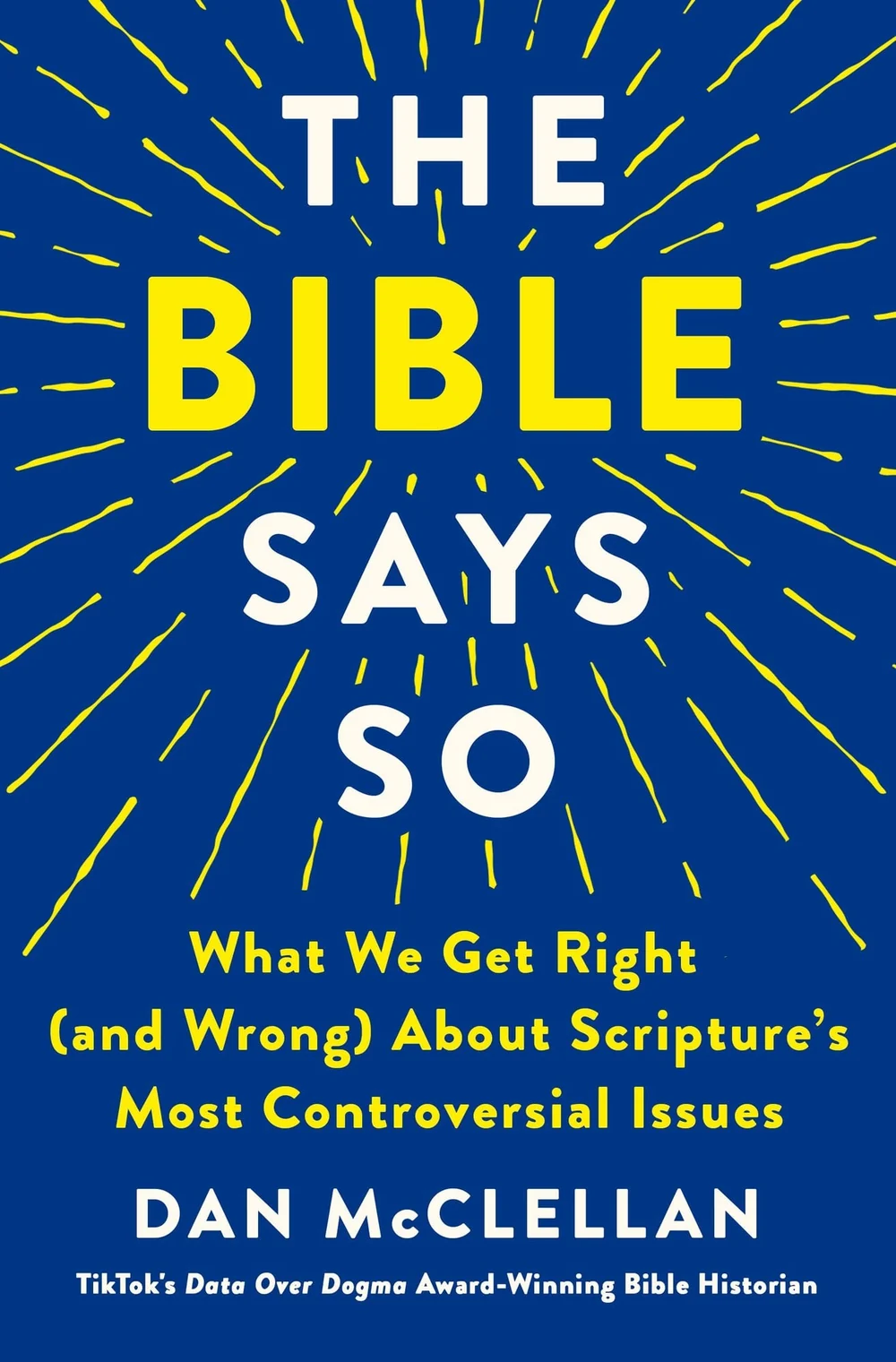
All episodes
The God-Forsaken Psalm
Psalm 22 [according to the Deer of Dawn (don't worry- you'll get that joke later)] is not a happy ditty. It is the song of a hopeless singer, crying out to a God who doesn't seem to be there. Which seems like kind of a weird thing to include in a book of scripture about that God, but there you go. But this psalm is particularly famous, as it was quoted by a pretty famous guy, at a pretty famous moment. This week on Data Over Dogma, we're looking at the words Jesus chose to say just before he died. Why, of all the scriptures that he had access to, did he quote this bleak, hopeless lament? Or was the psalm written as a prophesy? A foretelling of Jesus' untimely end? Then, speaking of the death of Jesus, we're going to talk about a peaceful area in Israel next to an ancient burial site. They call it the Garden Tomb, and many believe it to be the actual place where Jesus was laid after his death. Was it? For early access to an ad-free version of every episode of Data Over Dogma, exclusive content, and the opportunity to support our work, please consider becoming a monthly patron at:
Bonus Episode Recorded with this episode: read the full transcript $10 patrons · log in with PatreonTranscript — tap any word to jump the video there
Dan Beecher So before we start the show, I just want to jump in on something. An event has occurred, an announcement has been made- Mm ...
Dan McClellan Dr.
Dan Beecher Dan McClellan- Yes ... that something big's going to be happening, and you can pre-order it now.
Dan McClellan What's happening? What's happening is that I have written a book, again. And this one is a little different, though. This is not an academic tome. This is what's called a trade book, meaning it is written for a general audience, and there's actually money behind publicity. So, this- ... book is called "The Bible Says So: What We Get Right and Wrong About Scripture's Most Controversial Issues."
Dan Beecher Yeah.
Dan McClellan And this is something I've been working on for a while now. I'm very, very happy to have this almost ready to go. I'm very excited for people to see this. The first chapter is kind of a bird's eye view of how scholars think the Bible came together, and then we've got 18 chapters, each one addressing a different claim that begins with, "The Bible says," and then it's, "Homosexuality is an abomination. Abortion is murder. Jesus is God. You should beat your kids."
Dan Beecher Yuck.
Dan McClellan That sinners are going to be punished forever in hell. So, I'm going to be addressing a bunch of different things that we hear every day on social media about the Bible saying so, and it comes out April 29th, 2025. And it is available for pre-order now. I think we will probably put in the show notes the link to the landing page.
Dan Beecher Yeah. And we really hope that you'll do put in your pre-orders because it helps Dan out a lot, and it'll help him get to the top of the charts, to the- Yeah ...
Dan McClellan tops of the pops, and then- And that will make it so that we can get to your area and do lectures or book signings or things like that. The publisher is very eager to get us out there, provided there's an indication that the book is highly desired.
Dan Beecher So. Yeah, we're currently talking about doing live shows all over the country, that sort of thing.
Dan McClellan Mm-hmm.
Dan Beecher So, if you want to help make all of that happen, putting in a pre-order is a great way to do it.
Dan McClellan Yep. There will be an audiobook that I will be narrating as well.
Dan Beecher So- Nice ...
Dan McClellan if that's how you prefer to consume your literature, that'll be available. They have EPUB as well. You can get it on Kindle. You can do the hardcover. All that's available for pre-order now.
Dan Beecher Sweet. Let's keep doing this show.
Dan McClellan Okay.
Dan Beecher It's funny that they were working so hard to try and get Elijah to show up because I went to the Jewish Community Center for preschool, and there was one day every year when they would leave the door open and pour a glass of wine for Elijah, and then we would all go out and play in the playground, and when we came back, he had been there- A glass of wine ... and drank that glass of wine.
Dan McClellan So- ...
Dan Beecher and our teacher was a little happier.
Dan McClellan So I think- ...
Dan Beecher he's pretty easy to summon if you're careful.
Dan McClellan Hey, everybody, I'm Dan McClellan.
Dan Beecher And I'm Dan Beecher.
Dan McClellan And you're listening to the Data Over Dogma podcast, where we increase public access to the academic study of the Bible and religion and combat the spread of misinformation about the same. How are things, Dan?
Dan Beecher Good. Getting over some jet lag, but everything's great.
Dan McClellan Had a- Your accent has not come back too- ... much shifted toward the Manc- Yeah, man ... which I understood was kind of influential on you.
Dan Beecher Yeah. If I felt at all comfortable doing a Merseyside accent. You know what my favorite example of a Manchester accent is?
Dan McClellan Is it "Ferry Cross the Mersey?"
Dan Beecher No, no.
Dan McClellan No.
Dan Beecher Okay. Do you remember on "Ted Lasso"- Uh-huh ... the character Jamie Tartt, I think is from Manchester.
Dan McClellan Yeah. Oh, is he?
Dan Beecher And he keeps saying that things are "Poopeh." "That's poopeh," and I love how he says that. Anyway, but yes- Such a- ... I had a lovely time in England. I think- Uh-huh ... I'm going to just tease, and listen, reach out to us if this interests you. I think you and I are going to lead a tour to England because- Yeah ... it is awesome, and we can find some really cool stuff for us to show you guys and to talk about, and I'm pretty sure that "The Da Vinci Code" is real- ... and we can show you the Middle Temple cathedral or church- Mm ... where you can see the Knights Templar and all that- Yeah ... sort of stuff. We'll figure it all out for you, man.
Dan McClellan Yeah.
Dan Beecher So if that interests you at all, feel free to reach out to us, contact at dataoverdogmapod.com, and let us know. We'll keep you on the list. We got a show coming up. We're doing a show here.
Dan McClellan Oh.
Dan Beecher We're going to start with a chapter and verse- Mm-hmm ... and I believe this is our first Psalm-focused chapter and verse.
Dan McClellan Is that it? Well, we did Psalm 82- Oh, okay ... a while ago, but yeah, we have not done a bunch of them, so.
Dan Beecher There's a lot of Psalms.
Dan McClellan Aren't there? And there are even more if you go outside of the Protestant Bible.
Dan Beecher How dare you?
Dan McClellan What?
Dan Beecher Yeah.
Dan McClellan And there are even more- You're allowed to do that? There are even more at Qumran, so.
Dan Beecher Oh my gosh.
Dan McClellan Yeah.
Dan Beecher But- The Psalmist was more prolific than, I don't know, than John Lennon.
Dan McClellan A prolific author today?
Dan Beecher Yeah. I was looking for a songwriter because at least today's psalm seems to be in the form of a song.
Dan McClellan Mm-hmm.
Dan Beecher I don't know if they're all that, or if they're all meant to be sung, or if they- What is the deal with Psalms? We'll talk about it. We'll get to it.
Dan McClellan Yep.
Dan Beecher And then at the end of the show, we're going to do an Artifacts and Fiction.
Dan McClellan Mm-hmm.
Dan Beecher And we're going to be talking about where Jesus was absolutely, definitely buried, for sure. No questions.
Dan McClellan Yes, and where the Ark of the Covenant was even briefly spotted.
Dan Beecher Oh, really? Oh, that's right.
Dan McClellan Yes.
Dan Beecher That's right.
Dan McClellan Yes.
Dan Beecher Yes, I remember a certain TikToker making a video about that- ...
Dan McClellan at some point.
Dan Beecher Yeah.
Dan McClellan Well, all right.
Dan Beecher Let's just dive right in with- All right ... our chapter and verse. So, we're here in Psalm, what?
Dan McClellan 22.
Dan Beecher Psalm 22.
Dan McClellan 22, yes. Now, if you're reading in your Septuagint, that's going to be Psalm- As you should be.
Dan Beecher I think we all have... Everyone get out your copy of the Septuagint. That's going to be Psalm 21.
Dan McClellan But for everyone following the Masoretic tradition, which is most English translations, we're going to be in Psalm 22.
Dan Beecher Okay, interesting.
Dan McClellan And we had a- What accounts for that?
Dan Beecher Does someone add in a Psalm?
Dan McClellan Yes. I said there are more Psalms, and so the Septuagint has 151.
Dan Beecher Okay.
Dan McClellan We've got an extra Psalm.
Dan Beecher Oh my gosh.
Dan McClellan But yeah, the numbering is a little skewed there. So yeah, we have Psalm 22:1, verse 0 in the English translations, but verse 1 in the Hebrew says that it is to the leader, the chief musician, something like that, according to... And then we have this wonderful phrase, "Ayet ha'shachar," which means the deer of the dawn.
Dan Beecher Okay.
Dan McClellan So, this may be like a tune. It's like, "All right, everybody, this is to 'Amazing Grace.'"
Dan Beecher Right.
Dan McClellan Here we have the deer of the dawn, or the doe of the dawn, the morning doe- ... if you're nasty.
Dan Beecher And- I just...
Dan McClellan The morning doe- ...
Dan Beecher it does remind me of a different phrase that I won't say on the air.
Dan McClellan Anyway.
Dan Beecher Yeah. Yeah, when I first looked at this, I saw the instruction, and in the NRSVUE, you're looking at, it's in bold, as you say, verse 0. It's before verse 1.
Dan McClellan Yeah.
Dan Beecher And it just says, "To the leader," colon, "According to the deer of the dawn, a psalm of David." And I was like, "I don't know what any of that is. I don't know what I'm looking at." But so are you saying that it means that according to the deer of the dawn is like, as sung to the tune of the deer of the dawn?
Dan McClellan That's what some scholars think.
Dan Beecher Okay.
Dan McClellan We don't have a really good idea. People all the time are like, "What does selah mean?" And the best I got is, "I don't know."
Dan Beecher It means selah.
Dan McClellan It might be a pause. It might be a dance break. We're not sure exactly what's going on there.
Dan Beecher And then- I think it means something similar to cuckoo cachoo.
Dan McClellan Yeah. It could mean, this is where you scat.
Dan Beecher Yeah.
Dan McClellan Dealer's choice. Now, and then at the very end, a Psalm of David means moréh dāvīḏ in Hebrew, which could mean a song about David. It could mean- Hmm ... a song belonging to David. It could be a song for David. There are a bunch of different ways we could interpret this. But the traditional notion that David wrote all the Psalms or any of the Psalms is not considered to be historical by scholars.
Dan Beecher Okay.
Dan McClellan So, when folks try to talk to me about Psalm 22, they're like, "David said, David said, David said." No, a psalmist writing well after David was dead and gone said these things.
Dan Beecher Right.
Dan McClellan And yeah, this was not written by David.
Dan Beecher Remind me, do we think that there was a historical David?
Dan McClellan I would say there are some who think there was no historical David. I think it's probably more likely than not that there was a warlord named David who managed to conquer Jerusalem, and set up a chiefdom- Right.
Dan Beecher Okay ...
Dan McClellan and set up a dynasty.
Dan Beecher I remember now.
Dan McClellan Because we have the Tel Dan Stele.
Dan Beecher Mm-hmm.
Dan McClellan And this is unrelated to Steely Dan. As much as I wish there was a connection, it's unrelated. But it mentions, and this inscription was written by an Aramean named Hazael, who was talking about all the people he beat up. And he says he took out the kings of Israel, and then so and so of the house of David.
Dan Beecher Okay.
Dan McClellan Which seems to refer to David's whatever as not yet a kingdom, but just a dynasty that was probably set up in the south, headquartered at Jerusalem. So, I think it's more likely than not there was somebody, but the David who had this gigantic kingdom that spread far and wide, absolutely not. The Omride dynasty is when Israel was first put on the map, and that was after the house of David was likely established.
Dan Beecher Great. So, not David wrote this, probably, song.
Dan McClellan Yeah.
Dan Beecher And it's an interesting one.
Dan McClellan Yeah.
Dan Beecher It is a bummer. I'm going to just put that out there.
Dan McClellan Yeah.
Dan Beecher It is.
Dan McClellan When we first were talking about this before we hit record, you were like, "It is bleak." And yeah. And this is what's called a lament.
Dan Beecher Hmm.
Dan McClellan An individual lament, and we can narrow it down to an even more specific genre called the God complaint.
Dan Beecher Uh-huh.
Dan McClellan Okay. Where, and you see a bunch of Psalms of this style. There are communal ones and there are individual ones where they're basically just shaking their fist at God going, "Why are you doing this to me or to us?" And it follows a pattern. It starts off with a complaint, and it usually starts with the Hebrew word lama, which means why, or sometimes we have ad matai, which means how long. So Psalm 82, for instance, begins, "How long are you going to judge unjustly?"
Dan Beecher Sela.
Dan McClellan Whatever that means. And so here we have Eli Eli Lama, why have you forsaken me? And this is going to sound familiar to a lot of folks who have read the New Testament, because we have the transliteration into Aramaic in the Gospels of Mark and Matthew, where Jesus on the cross says, "Eloi or Eli? Eloi or Eli, lama sabachthani? Why have you forsaken me?"
Dan Beecher Yeah. I think it's inter-- Okay, so can I just go down a brief rabbit hole just about that- Let's do it.
Dan McClellan Yeah ...
Dan Beecher really quickly, because I looked at that, and when I did, what I see in many of the translations, though not all, is that quote doesn't quite match from Mark to Matthew.
Dan McClellan Correct.
Dan Beecher One is Eli and one is Eloi.
Dan McClellan Mm-hmm.
Dan Beecher And one is lama and one is lama, and I don't know.
Dan McClellan Mm-hmm.
Dan Beecher So talk, what are we looking at? I don't even know what language that's supposed to be. That's Aramaic?
Dan McClellan It's a transliteration into Greek from Aramaic.
Dan Beecher Okay.
Dan McClellan And so in the Hebrew, it's actually a different word. It's not sabachthani toward the end there, it's azavtani.
Dan Beecher Okay.
Dan McClellan So, yeah. And the difference is probably just to be attributed to whatever version of the Psalm the author had in front of them. Mark was the first, Matthew's coming decades later.
Dan Beecher Okay.
Dan McClellan So for whatever reason, they chose a different version or just transliterated it differently because- Right ... we didn't even standardize transliteration of Hebrew until the last couple hundred years.
Dan Beecher And so- Right ...
Dan McClellan you go back to the 1800s, 1700s, and people are transliterating Hebrew, and it could look a dozen different ways.
Dan Beecher Right.
Dan McClellan So, back then, they had no real standardization either. So that accounts probably for the different readings there. But basically, this is, "My God, my God, why have you forsaken me?" Which is the beginning of this individual lament, this God's complaint or God complaint of Psalm 22.
Dan Beecher So having read the Psalm, I look at it, and it's not clear to me why Jesus on the cross right before he dies would quote this Psalm.
Dan McClellan Yeah. When you're in dire straits and you're about to die, you're not thinking, "What can I quote to really- ... put some stank on the... Make sure this really lands rhetorically." This is clearly a literary creation.
Dan Beecher Yeah.
Dan McClellan But the idea is to have scripture in Jesus' mouth- Sure ... and to reflect his despondency. But this is a particularly famous Psalm. But to get back to the God complaint, you start off going why or how long, and then you praise God, and there's a reason you praise God. You praise God in order to remind God that in the past, they have delivered Israel- ... or they have even delivered you personally.
Dan Beecher Yeah.
Dan McClellan Think of all the saving things that you've done, and we see this in a bunch of Psalms, Psalm 74 and 76. Psalm 82, I have argued in a Journal of Biblical Literature article, is a God complaint that Adonai is singing or complaining to the other gods.
Dan Beecher Oh.
Dan McClellan And the idea is, remember you used to do all this stuff for us, and you're kind of trying to manipulate God. And then you come in with the petition. You say, "Save me, help me, deliver me." And sometimes there are multiple cycles of this, reminding of past deeds, petition, reminding of past deeds, petition. And so the point is the psalmist is kind of engaged in a bit of a speech act. It's an act of worship while at the same time going, "Come on, dude. Why don't you help me?" So that's what we have going on here in Psalm 22. And it's interesting, you have in the four Gospels, all four Gospels represent Psalm 22 around the crucifixion- Mm ... but in two different ways because- Oh, really?
Dan Beecher Yeah.
Dan McClellan Mark and Matthew have Jesus say, "Why have you forsaken me on the cross?"
Dan Beecher Right.
Dan McClellan Luke and John have nothing about why have you forsaken me on the cross.
Dan Beecher Right.
Dan McClellan But Luke and John then have the Roman soldiers casting lots for Jesus' clothing, and that's actually verse 18.
Dan Beecher Right.
Dan McClellan "They divide my clothes among themselves, and for my clothing, they cast lots." So Psalm 22 is in the background of all four crucifixion accounts, but it's verse one in the first two, and it's verse 18 in the second two, oddly enough.
Dan Beecher Yeah. And then, obviously, and this is what we're shooting towards.
Dan McClellan Mm-hmm.
Dan Beecher Then there's verse 16. There's verse 16.
Dan McClellan Yeah.
Dan Beecher Which Is used, I think, by a lot of people as a sort of proof text that this psalm was a prophecy about the crucifixion itself.
Dan McClellan Yes.
Dan Beecher Let's talk about why. First of all- Okay ... let me go to, I'm in the NRSVUE, but I don't think that's going to be helpful for- For this point, no.
Dan McClellan For this point. Not incredibly helpful.
Dan Beecher So I'm going to switch to the KJV real quick.
Dan McClellan Yeah, do it.
Dan Beecher If I can find it.
Dan McClellan All right.
Dan Beecher There we go. KJV, heading down to verse 16, and it says, and this is in the midst of all of these complaints. And boy, I think you gave short shrift to the amount of complaining there is- Oh, yes.
Dan McClellan ...
Dan Beecher before there's the reminding God that he's supposed to be helping us sort of thing, because it is many verses of, like, "Everything in my life is terrible."
Dan McClellan Yeah.
Dan Beecher "My teacher beat me at school, and my..."
Dan McClellan "My dog ran away."
Dan Beecher Yeah. Country songs have nothing on this.
Dan McClellan Yeah.
Dan Beecher As you said, it's bleak. And then, verse 16 says, "For dogs have compassed me: the assembly of the wicked have enclosed me: they pierced my hands and feet." That's what the KJV says.
Dan McClellan Right.
Dan Beecher The dogs part, I suppose you could say that that would be a metaphor for bad people or whatever, and it does say, "The assembly of the wicked have enclosed me." I can see how you would look at that and think that that is a prefiguring of the Jesus crucifixion story.
Dan McClellan Mm-hmm.
Dan Beecher Why are we talking about it now, then?
Dan McClellan We're talking about it because that's actually, you mentioned the NRSVUE is not really going to help that claim, and that's because- You're right ... they don't translate it that way, because what they translate there is, "They bound my hands and feet."
Dan Beecher Yeah.
Dan McClellan And even this is only a guess, and the reason is that in the Hebrew, we don't really have a sensical reading. If we go into the Masoretic Text, what we have is, "Like a lion, my hands and my feet."
Dan Beecher Oh.
Dan McClellan "Ka'ari yedai ve'raglayi." And so we have this clause that doesn't make a whole bunch of sense. You can take this as a verbless clause. "My hands and my feet are like a lion, rawr."
Dan Beecher Yeah.
Dan McClellan And you could force that into the context. You could find a way for that to make sense, but it doesn't really feel quite right.
Dan Beecher And so- Yeah, nothing about the rest of these verses is saying anything about, "I'm doing okay."
Dan McClellan Yeah.
Dan Beecher "I got powerful hands and feet."
Dan McClellan Yeah.
Dan Beecher There is nothing like a comparison from the self to a lion, for sure.
Dan McClellan Yeah.
Dan Beecher But it does shock me, now that you say that, that none of the versions that I read use the word lion.
Dan McClellan Yeah, because most of them come up with some kind of reconstruction that makes better sense. Now, one of the things that we do when we're trying to translate and we run up against something and we're kind of like, "Yee," we'll go to the Septuagint, and we'll see how the Septuagint translated. And this was the scriptures for early Christians.
Dan Beecher Yeah.
Dan McClellan For the first multiple centuries, Christians read the Septuagint. Even the gospel authors are reading the Septuagint, are quoting from the Septuagint.
Dan Beecher Just remind everybody what the Septuagint is.
Dan McClellan Septuagint is the ancient Greek translation of the Hebrew Bible. This was done in, like, the third, second century BCE, where each book was separately translated into ancient Greek. And one of the reasons that it's fascinating is there are a lot of differences between that and our medieval Masoretic Text, which is the traditional source text for the Hebrew Bible. And you can have several reasons for this, because they had a variant source text, or maybe they interpreted it differently, or a bunch of different reasons. And so when we look in the Septuagint of this, what we have is, "They dig out my hands and feet."
Dan Beecher Hmm.
Dan McClellan And this is a bit of a head-scratcher. It's a verb, oriso, which means to dig or to dig out. And the semantic focus here is on removing material in order to make use of the space that remains- Right ... or to create something out of the material that had parts removed.
Dan Beecher Sure.
Dan McClellan So this is used to talk about digging ditches and rivers and canoes and things like that. Now, and so that is peculiar as well. We've got, "Dogs are around me and surrounding me," and so maybe they're gnawing at hands and feet, something like that. And at Qumran, we have what could be a variant reading. It could be like a lion. But it could also be the final letter, instead of being a yod, could be a vav, which at Qumran, among the Dead Sea Scrolls, they often were indistinguishable from each other.
Dan Beecher Okay.
Dan McClellan And so if it is a vav, then we could have a misspelling of the verbal root qara, qaph, resh, he, which would also mean to dig out in the sense of dig out a canoe, dig out a river, dig out a canal.
Dan Beecher Right.
Dan McClellan Or there's one passage that says, "You've dug out my ears so I can hear."
Dan Beecher Okay.
Dan McClellan And so- That's a possible reconstruction. It seems like the translator of the Septuagint might have had something like that in front of them.
Dan Beecher Right.
Dan McClellan And so, translated it with this verb oriso. And so, when we get to the English translations, we've had several centuries for people to get comfortable with thinking about Psalm 22 as a prophecy. "They've dug out my hands and feet."
Dan Beecher Hmm.
Dan McClellan This sounds an awful lot like, "They pierced my hands and my feet."
Dan Beecher Mm-hmm.
Dan McClellan And this goes back to the patristic authors. There are some patristic authors that make reference to verse 16 as a prophecy of Jesus' crucifixion. And I've made this point a number of times, the semantic package of the verbs that we find both in the reconstructed Hebrew and in the Septuagint do not match the concept of piercing someone's hands and feet in order to crucify them, because that is driving a sharp instrument through material in order to secure it to something.
Dan Beecher Right.
Dan McClellan That is not digging out in order to make use of the space. But it's close enough that if people squint hard enough, they can make the edges blur and overlap, and suddenly we're there. We have reached our desired goal. And so, ever since the Coverdale Bible way back in 1535 rendered "pierced my hands and my feet," the Geneva Bible, the Bishop's Bible, the Great Bible, the Matthews Bible, they all say, "They have pierced my hands and feet." And so, the King James version obviously does the same, and this is then understood as a prophecy about the crucifixion. And if it were that, it would be particularly miraculous because the author of Psalm 22 knew nothing about the practice of crucifixion.
Dan Beecher Right.
Dan McClellan That is a Roman innovation that's coming in another part of the world shortly after that. So, yeah, it would be a pretty miraculous prophecy if you could make a plausible argument that that's what was meant, but it was clearly not what was meant. But there have been a bunch of other ideas as well. In fact, there's a scholar named Michael Flowers who has published a paper where he reviews a bunch of different proposals about how to reconstruct this. I think he has 13 different proposals. The "like a lion, my hands and my feet," "like a lion, they circumscribe my hands and my feet," suggesting that something dropped out, and so scholars have said, "Well, let's put it back in." "They have dug my hands and feet. They have made my hands and my feet repugnant."
Dan Beecher Hmm.
Dan McClellan "They have bound my hands and my feet." And I think that's what the NRSVUE has.
Dan Beecher Yeah.
Dan McClellan Yes.
Dan Beecher Yeah.
Dan McClellan "They have bound my hands and my feet." "My hands and my feet have been torn." So, this makes sense of the dogs encircling me.
Dan Beecher Oh, sure.
Dan McClellan "My hands and my feet are wasted away. My hands and my feet hurt or are pained, because they picked clean or as if to rip apart my hands and my feet. Because they picked clean and like a lion, my hands and my feet. My hands and my feet are shriveled up, gone lame, contracted."
Dan Beecher Wow.
Dan McClellan A bunch of different ways scholars have tried to reconstruct something that makes better sense than what we have in the text.
Dan Beecher Right.
Dan McClellan But obviously, if you're a Christian and you think that this thing that originally was just a God complaint and was not a prophecy about anything in the future, this is talking about somebody's own struggles. If you think this is a prophecy about the crucifixion, just intuitively, you are going to be gravitationally pulled toward recognizing this as, "They pierced my hands and my feet."
Dan Beecher Well, especially if every single one of the Gospels makes mention of this Psalm, it only makes sense to then read this Psalm with that context in mind, with that idea in mind. I totally understand that.
Dan McClellan Yeah. It makes perfect sense. It just kind of fills out this notion that the crucifixion was this big canon event- Right ... within the life of Jesus, and that Psalm 22 is this big kind of interpretive lens for understanding what's going on here, and for how to think about it and how to understand Jesus' prophetic presence within the Hebrew Bible.
Dan Beecher Other than the fact that the rest of the content of the Psalm doesn't feel like it comports with Jesus' attitude anywhere else at all.
Dan McClellan Yeah.
Dan Beecher Jesus is not a complainer about himself, to the point where it actually has always bothered me. Even when I was a believer, the thought of Jesus on the cross despairing and saying, "Why hast thou forsaken me?"
Dan McClellan Mm-hmm.
Dan Beecher Felt wrong.
Dan McClellan Yeah.
Dan Beecher He knew this was coming. He was resigned to it. So, even that part felt out of character to me. But surely, it must feel out of character as you read. You don't want to think of Jesus just whimpering about how bad his life is and everything. "I can count all my bones. They stare and gloat over me. They divide my clothes among themselves." All of this stuff that feels- It just doesn't feel like Jesus to me.
Dan McClellan Yeah. And when people go in and look at the God complaint and the laments, you don't see a lot of people preaching on complaining to God.
Dan Beecher Right.
Dan McClellan Usually it's, "Don't complain to God. Just praise God nonstop- Right ... and be happy that you have dogs encircling you, and they're doing something to your hands and feet that's unspeakable."
Dan Beecher But the psalmist- But it might be lion-like, so that could be cool.
Dan McClellan But the psalmists are very much like, "Hey, hey, what's going on over here, man? Why are you letting this happen to us? You're supposed to be the dude who did all these things, but you're letting us suffer. You're letting the enemy come into your house. You're letting them trample us. You're letting them burn down the holy city. You're doing all this stuff." So the psalmist is very much a complainer in a bunch of places. And a lot of people want to overlook that, but yeah, you have Jesus doing the same thing on the cross, and I don't remember if it happens in Mark. In Matthew, he says, "Eli, Eli, lama sabachthani," and everybody hearing says , "He's calling for Elijah." And- Yeah ...
Dan Beecher and so that- I don't know what that means. What does that mean?
Dan McClellan So the end of Malachi says Elijah will come before that great and dreadful day.
Dan Beecher Oh, right.
Dan McClellan "Turn the hearts of the fathers to the children and the children to the fathers, lest I come and burn it."
Dan Beecher That's right.
Dan McClellan And so there are the Messianic hope that was developing in Greco-Roman period Judaism frequently focused on Elijah, that Elijah was going to be the one who was going to come back and restore things. And this is why we have when John the Baptist sends people to Jesus, they're asking, "Are you the one who is to come?" And I think one of them says, "Are you Elijah?" And when Jesus asks the people at Caesarea Philippi, "Whom say men that I am?" Some say, "You are Elijah." They're expecting Elijah to come back. And so some people mishear Jesus on the cross and say, "Oh, Eli, Eli, maybe that's Eliyahu. Maybe that's what Jesus is doing." And if Mark is doing the same thing, let me see. Yeah, Mark does the same thing. "And some of them that stood by when they heard it," this is the King James Version, "said, 'Behold, he calleth Elias.'" Which is just a Greek transliteration of Elijah. So, it could be playing that literary function there. They could be like, "He should say something that sounds like Elijah." "Oh, what about Psalm 22?" "Ooh, I love it. Let's do it." And maybe the fact that it's representing Jesus as suddenly losing confidence and faith in God and being abandoned by God, maybe like, "Eh, we can deal with that. We can hold our breath through that."
Dan Beecher Yeah.
Dan McClellan And so even people today, when they're like, "Oh, I read this and it sounds like Jesus is complaining, but then I learned that it was a quotation of Psalm 22," and suddenly it's like we can look past that.
Dan Beecher Right.
Dan McClellan We can say, "Oh, it's performing a different rhetorical function." And then you also have, I know this is particularly common among Latter-day Saints, they work it into a systematic theology of the crucifixion, where it's like, "Oh, God had to abandon Jesus so that Jesus could go through this without God's aid," or something like that, because the atonement wouldn't be adequate if God were there supporting Jesus. And so he had to go through it alone, and he complained, "Why have you forsaken me?" So there are a bunch of different ways to negotiate with the text- Sure.
Dan Beecher Absolutely ...
Dan McClellan to make it fit the presuppositions you're bringing to it. And many of them are fascinating and creative, but I'm most fascinated by whatever the authors were trying to do. That's the one I'm interested in.
Dan Beecher Yeah. We should ask them.
Dan McClellan Yeah, one day.
Dan Beecher It's funny that they were working so hard to try and get Elijah to show up, because I can verify that he's actually pretty easy to summon, because I went to the Jewish Community Center for preschool, and there was one day every year when they would leave the door open and- Yep.
Dan McClellan An empty chair ...
Dan Beecher pour a glass of wine for Elijah, and then we would all go out and play in the playground, and when we came back, he had been there- A glass of wine ... and drank that glass of wine. So- And our teacher was a little happier. So I think- I'm- I think he's pretty easy to summon if you're careful.
Dan McClellan I'm getting some hints of Bel and the Dragon there.
Dan Beecher Oh, there you go.
Dan McClellan Well, that's a good way to make kids feel bad about wanting to play. Be like, "Oh, you just missed him.
Dan Beecher If you'd have- He was just here ...
Dan McClellan stayed in here, you would've seen Elijah, that we've been waiting for thousands of years to come back."
Dan Beecher That's- You know what, as someone who had believed in both the Tooth Fairy and Santa Claus, I was used to magical beings showing up when I wasn't looking. I think it was fine.
Dan McClellan So your parents said, "Get used to disappointment." And you said, "Hey, that's a quote. I know what you're doing."
Dan Beecher Wait, what is that from? "Get used to disappointment."
Dan McClellan That's from the most quoted film on the BYU campus.
Dan Beecher Princess Bride.
Dan McClellan I got it.
Dan Beecher Oh, okay. There you go.
Dan McClellan I must know. Get used to disappointment.
Dan Beecher Oh, right. Now I remember.
Dan McClellan Yeah. When I first- All right ... moved to Utah, people were like, "You know what the most quoted movie at BYU is, right?" I was like, "Caddyshack." And they were like, "What's that?" I was like, "What have I done?"
Dan Beecher Why am I here? These are not my people.
Dan McClellan All right.
Dan Beecher Well, you could do worse than Princess Bride.
Dan McClellan Yeah.
Dan Beecher Still love that movie.
Dan McClellan All right. Well- Is there more or is that- Like there could always be more, but I think we've covered the basics of what we wanted to talk about with this passage.
Dan Beecher I think that's a good place to finish that off with. And now we'll move on to our next segment, Artifacts and Fiction.
Dan McClellan Whoo.
Dan Beecher All right, so now since we've been on the topic of Jesus and his unfortunate away passing- Mm-hmm ... His unaliving as the kids say. As everyone who's trying to avoid getting their videos taken down from TikTok says.
Dan McClellan Yes.
Dan Beecher Yes. The unaliving of Jesus, and then realiving actually. So he's the only one that got that privilege. You brought up the idea of us talking about a thing called the Garden Tomb- Mm-hmm ...
Dan McClellan in Jerusalem.
Dan Beecher Now, this surprised me when you brought this up to me as a thing because I had always heard about the Church of the Holy Sepulcher- Mm-hmm ... as being the sort of locus of attention in terms of the tomb of Jesus Christ.
Dan McClellan Yes.
Dan Beecher It has for a very long time held the distinction of sort of claiming that that's what it was.
Dan McClellan Yes.
Dan Beecher Since early 300s. So yeah, that's far sooner after than now for- Mm-hmm ... but I don't know how strong their claim is. I've done no archeology whatsoever. But there's also this other place.
Dan McClellan Right.
Dan Beecher Why don't you talk to us a little bit about it?
Dan McClellan Yeah. So, just north of Jerusalem, by Nablus Road, there is a place you can go to this day. It is a very well-curated and kept location, very quiet, and I'm actually going to get into why that is relevant. But there's a place called the Garden Tomb where they have two different locations. One of them is inside the property and the other is outside the property. There's a kind of a rocky cliff face that's right next to a bus depot.
Dan Beecher And- Sure ... on the top of the- Because how else was Jesus going to get there? He needed- Yeah ... to take the bus.
Dan McClellan Yeah. This is all downtown. You got to get to the bus. And then there are burials, graves on the top of the cliff face. But way back in the 19th century, there were a lot of Germans who were spending time in and around Jerusalem, particularly military men, but other scholars, and there was one in 1842 by the name of Otto Thenius, and as the story goes, he was just in his hotel room looking out the window and noticed a rocky outcropping and was like, "Hey, that kind of reminds me of a skull. That's weird." And thought of the story of the crucifixion with Golgotha, which means place of the skull.
Dan Beecher Oh.
Dan McClellan And the wheels started turning, because it's this rocky outcropping, and it looks like it has a couple of little indentations that could be eyes, and then one looks like they could be the bottom of a jaw or something like that. And, so Germans started poking around there suggesting that this was the location of Golgotha, and then there was this major general named Charles Gordon, the very model of a modern major general. I hope you saw that coming. About 40 years later, he was in Jerusalem, and he came up with this idea that you could kind of overlay a skeleton on Jerusalem and the Dome of the Rock is right where the pelvis is, and then the City of David is this little kind of the legs sticking out from the south, and then the Pool of Siloam is the feet of the skeleton. And then at the very top, north of Jerusalem, this rocky cliff face that looks kind of like a skull from a certain angle would be the skeleton's skull. And so he thought this was- This is all feeling very Dan Brown. Yeah, this was Dan Brown- I'm just going to say ... before there was Dan Brown.
Dan Beecher Yeah. And, but he wasn't- Although I've got to say, what was the pelvis thing? Making the- The Dome of the Rock ... Dome of the Rock into- Yeah ... the penis of this thing seems- Well, it wasn't an obelisk.
Dan McClellan Probably. If it was an obelisk, that would be a little more on the nose. But he came up with this idea, and he kind of is the main popularizer of the notion that this is Golgotha. In fact, it is frequently referred to as Gordon's Calvary by a lot of folks these days. And nearby, couple hundred feet away, there is a tomb that is carved into another cliff face, a related but separate cliff face, and you can go visit it to this day, and there are an awful lot of people who think this is where Jesus was buried. And, so the Garden Tomb Association is this German Protestant organization that curates this space. It's gorgeous. There are places to sit. There are places to have little meetings. They have seating right next to the bus depot where they give a little presentation, and you look out over the buses at the cliff face.
Dan Beecher Oh, beautiful.
Dan McClellan And, well, here's the thing. A lot of Protestants, I don't know if you know anybody who's ever been to the Church of the Holy Sepulcher It is a cacophony.
Dan Beecher Mm.
Dan McClellan You go in, there are people everywhere. There are noises, there are smells, there's smoke. There are a bunch of different people in different religious garb. You have to wait in line if you want to go up and see the Golgotha cliff face. And there's gold everywhere. There are images everywhere. There are things swinging. There are things flapping in the breeze. There are things reflecting things everywhere. You smell sweat, and people are weeping. When you first walk in, there's a slab, a stone slab that is traditionally identified with where Jesus's body was prepared for burial. And so there are people weeping over this stone slab. It is an experience. But for a lot of Protestants who are a little more stiff upper lip, this is disconcerting.
Dan Beecher Yeah.
Dan McClellan They feel uncomfortable in a place like this. This is not the quiet dignity that they expect for a location like this. And there have been outbreaks of violence and things like that, that take place. It's a fascinating location, and I hope people who are interested in this kind of stuff at some point have an opportunity to go visit it. It's quite an experience. But if you go to the Garden Tomb Association, you're basically in a literal garden, just walking around listening to birds chirping, and people are whispering to each other.
Dan Beecher Ah.
Dan McClellan And it just feels a lot more serene and a lot more solemn. And so, to put it in terms Gen Z can understand, the Garden Tomb passes the vibe check- Mm ... for the place where something as solemn and serious as Jesus's resurrection took place. And so a lot of Protestants tend to gravitate toward the Garden Tomb as the location. But in addition to the fact that there are absolutely no archaeological or other data that would indicate this cliff face was Golgotha, the tomb itself is definitely not where Jesus was buried.
Dan Beecher Okay.
Dan McClellan That's a strong claim, my friend. Strong claim indeed.
Dan Beecher Yes.
Dan McClellan Now, if you go there, it's a pretty flat cliff face, and there's a little door-sized opening. And then there's a little track in front of the door. And they say, "Oh, that held the round stone that was rolled over the door." And then you can even see that there's a big semi-circular carve-out that goes around the door, and then stops and is flat for a few more feet. And when you look at it, that's the vibe you get. But archaeologists have said, well, okay, problems. One, most of this dates to the Crusader era. Two, this is not a track to hold a stone. This is a watering trough. And three, this carve-out area held a roof when this was an animal pen during the Crusader era. And so just the outside of the tomb doesn't fit at all.
Dan Beecher Mm-hmm.
Dan McClellan The things that evoke notions of this being Jesus's burial place on the outside are actually from over 1,000 years later. Inside, the problems are even more significant because this is a rock-cut bench tomb, which means that you have a couple of benches that were hollowed out underneath, and bodies would be laid on these benches until they decomposed to the point that it was just bones. And then the bones would be gathered, and then dumped, more ceremoniously than I'm making it sound- ... into the cavities below. And you would get a mountain of bones underneath. And there's an argument to make that this is what it means to be gathered to your ancestors, is your body has decomposed, your bones are all gathered together, and you are dumped into the pile of your ancestors.
Dan Beecher You are deposited into the ancestral dump. I get it.
Dan McClellan Okay.
Dan Beecher Yeah.
Dan McClellan Sure. And so that's how they did things in the Iron Age. This tomb dates to the 8th or 7th century BCE.
Dan Beecher Oh, wow.
Dan McClellan Now, when you look in the New Testament, Joseph of Arimathea's tomb was a brand-new tomb in which no one had ever been laid.
Dan Beecher Oh, wow.
Dan McClellan So this doesn't fit. And at the same time, the style of tombs were different because you would have benches where the bodies would be laid, but when they were decomposed, the bones were not just dumped into a hole underneath. They were put into an ossuary, a bone box. It's a little higher than a Nike box, but that's basically what you're talking about. A box that the bones would go in. They'd scratch your name on the side sometimes. And then you were deposited in a little cubby hole that was carved in the rock. And so they had a different style of rock-cut burial tomb in the 1st century CE, and this is not that. This is an 8th or 7th century BCE rock-cut bench tomb. And so it does not fit the description of the tomb in which Jesus was buried. And that's all we have to go on for identifying where Jesus was buried, and so it is not that.
Dan Beecher Okay.
Dan McClellan So the case for this being Jesus's tomb is phenomenally weak. It is disqualified by several of the features, both outside and more strongly inside the tomb. And here's the thing. When I led a tour in Israel and Palestine last year, I kept saying to people, "Look, a lot of people think there's something metaphysical, something special about being able to identify the exact spot." But most people are not here because they think it's the exact spot. They're here because they want to experience something that gives them kind of a visceral phenomenological connection to the idea.
Dan Beecher Right.
Dan McClellan Not necessarily the exact place itself. Because you can go there and you can have a wonderful experience, and you can contemplate what Jesus's death and resurrection means to you, and you can be in a location that is very close to where this all happened and is very similar to what it would've been like. It's not the exact place, but you can still get that experience, and you can still make connection with that part of the world and with all those feelings. And I think that's the most valuable part of that kind of stuff.
Dan Beecher Right.
Dan McClellan So I tell people, "Hey, this is not it, but this is about as close as you're going to get to actually seeing it," until they invent time travel.
Dan Beecher Without fights breaking out.
Dan McClellan Yeah. And I think a lot of people appreciate knowingly going into that situation like that, saying, "We're going to have an experience. We're going to enjoy it. We're going to drink deep from it, but we know it's not the actual place where it happened."
Dan Beecher Well, and it's not like it's archeologically not interesting.
Dan McClellan Oh, it's archeologically fascinating.
Dan Beecher I think it's really interesting. It's not that thing, but it's still a 7th or 8th century BCE burial place.
Dan McClellan Mm-hmm.
Dan Beecher And that in and of itself is really cool to visit.
Dan McClellan Absolutely. And you're just down the street from the Temple Mount, and it's a phenomenal place. And in Jerusalem, to have a little area that's quiet and peaceful like that, that's pretty cool in and of itself.
Dan Beecher Yeah. That sounds like gold.
Dan McClellan So every time I've been there, I've gone to the Garden Tomb, and I have sat there and done my little personal style of meditation, and I have enjoyed it immensely.
Dan Beecher Nice.
Dan McClellan I have wonderful memories about that place, but it's not where Jesus was buried, and it's not where Jesus was crucified.
Dan Beecher I guess I do want to go back and check in with, since we mentioned it, the Church of the Holy Sepulchre.
Dan McClellan Yeah.
Dan Beecher Because, as you said, that has a much longer claim to being the actual burial place. What are our thoughts on that?
Dan McClellan Of all the candidates, that's the one that makes the most sense, but we'll never know for sure. But I would point out a couple of things. As it exists today, a ton of stuff has been carved away and carted out and- Yeah ...
Dan Beecher changed.
Dan McClellan So the landscape is different, and that's without all of the architecture that has been built over it. And so you're not experiencing the landscape the way it was, because this was part of a quarry in the 1st century CE. And this kind of makes sense for where they would have a bunch of people being crucified, and then where they would bury them. But if you find yourself in the Church of the Holy Sepulchre, you go up some stairs, and then you wait in line, and you get to pass in front of the rocky outcropping that they identify as Golgotha, only it's covered by a ton of stuff. And you actually only look at it indirectly, for the most part. You have a few little pieces of glass that allow you to look into it, but there are icons and drapery and things everywhere. And you can look at the back of it because they've got a little mirror held up at an angle that lets you see the back of it. But once you're done, if you go down the stairs, and then instead of turning left to go to the crypt, you turn right, there's actually a larger glass portion that nobody ever goes by where you can see a larger chunk of that cliff face. But the actual place that they identify with the burial, you've got to wait in line. No pictures inside the little building. It's a building inside a building. But again, if you go past it and then go to the wall on the other side, they actually have preserved some 1st century CE tomb that is what you would expect for Jesus's tomb, where you have- Oh ... the bench, and then you have the little cubby holes carved into the rock where the ossuaries would have been placed after the bodies had decomposed. And so you get a sense of what the tomb would've looked like if you go there.
Dan Beecher Okay.
Dan McClellan Now, you can have the whole experience. You can wait in line. You can go inside the building. You can touch the place where they think he was buried. It's quite the experience. But there are also other things that allow you to get a little closer to what it probably would've been like in the ancient world. But there was a Roman temple built over that spot shortly after they destroyed Jerusalem and after the Bar Kokhba revolt. They came back in. They renamed it Aelia Capitolina. They built this temple, and then in the 300s, when you had Constantine and his mother kind of trying to come back and be like, "Is that the cross? Where's this? Where's that? Where's the other thing? This is the rock that Jesus gave Peter the fish on," and all that kind of stuff, and they identified that spot as where Jesus was crucified and buried. And so they tore down the Roman temple and built a little shrine there. And over the years, it has been added to and supplemented and grown. But Yeah, you can still go there today. And so I would say if you want to get a sense for something that's a little closer to what it would've been like, even though it has been significantly changed, the Church of the Holy Sepulchre has that. And if you want to go sit there and meditate and pray and be in the peace and the quiet and the serene nature, next to a tomb, there is that at the Garden Tomb.
Dan Beecher Nice.
Dan McClellan So, a little bit for everybody.
Dan Beecher There you go. I think that those are great tips, and a fascinating look at the things. I think that one of the things that's so interesting, and I love your take on it, which is that the point doesn't have to be, is this the real place? Because you can't know. For a lot of these things- Yeah ... you can't know for sure. There's no way. So yeah, you go with the idea of trying to just get a sense of what it might've been like and to contemplate the story itself, and- Yeah ... that's valuable in and of itself. I like that a lot. And maybe you get to see a fight.
Dan McClellan Hopefully you don't see a fight. But the one more thing to add, Ron Wyatt thought that was the place where Jesus was crucified, and he talked- Which one?
Dan Beecher The Garden Tomb?
Dan McClellan Garden Tomb.
Dan Beecher Okay.
Dan McClellan Right. He talked them into allowing him to excavate, to go into some caves and things underneath, even though he's not an actual archeologist. He had no certification or anything like that. And they were like, "Yeah, sure.
Dan Beecher Whatever."
Dan McClellan And he claims that under the Golgotha, so by the bus depot- Right ... that he saw the Ark of the Covenant, and that it was directly under the place where Jesus was crucified, and that he saw dried blood that had spilled upon the Ark of the Covenant. And he claims that he took it to a lab, and they tested it and came back and said, "Where did you get this? It's still alive, and it only has 23 chromosomes." And of course, produced zero evidence for any of this. But if you go to the Garden Tomb today, you can go up and say, "Hey, can I see your Ron Wyatt letter?" Because he went out and publicized these claims, and people came to the Garden Tomb, and they were like, "Is this for real?" And they wrote a letter that is still-- They will give it to you if you go and ask for it, that says, "The Council of the Garden Tomb Association, London, totally refutes the claim of Wyatt to have discovered the original Ark of the Covenant or any other biblical artifacts within the boundaries of the area known as the Garden Tomb, Jerusalem. Though Wyatt was allowed to dig within this privately owned garden on a number of occasions, the last occasion being the summer of 1991, staff members of the association observed his progress and entered his excavated shaft. As far as we are aware, nothing was ever discovered to support his claims, nor have we seen any evidence of biblical artifacts or temple treasures." So, this Protestant group that runs the Garden Tomb Association was like, "Yeah, totally a hoax. He didn't find jack."
Dan Beecher "We should not have let that guy dig. That was our bad. We made mistakes. I'm sorry."
Dan McClellan Mistakes were made.
Dan Beecher Well, there you go. I think that that's fascinating. And Ron Wyatt was a crackpot.
Dan McClellan All right.
Dan Beecher If you, dear friends at home, would like to be a part of making this show go, have we got an opportunity for you. You could become one of our patrons over on patreon.com/dataoverdogma. There, you can sign up to get early and ad-free access to every episode of our show. You can also sign up to receive the afterparty, which is more content every single week. And you just become a part of what makes this show possible. And so, we greatly appreciate our patrons. If you'd like to reach out to us, it's contact@dataoverdogmapod.com, and we'll talk to you again next week.
Dan McClellan Bye, everybody.
Further reading recommended in this episode
Affiliate links: the show earns a small commission at no extra cost to you. See all book recs


