Watch on YouTube
 Apple Podcasts
 Spotify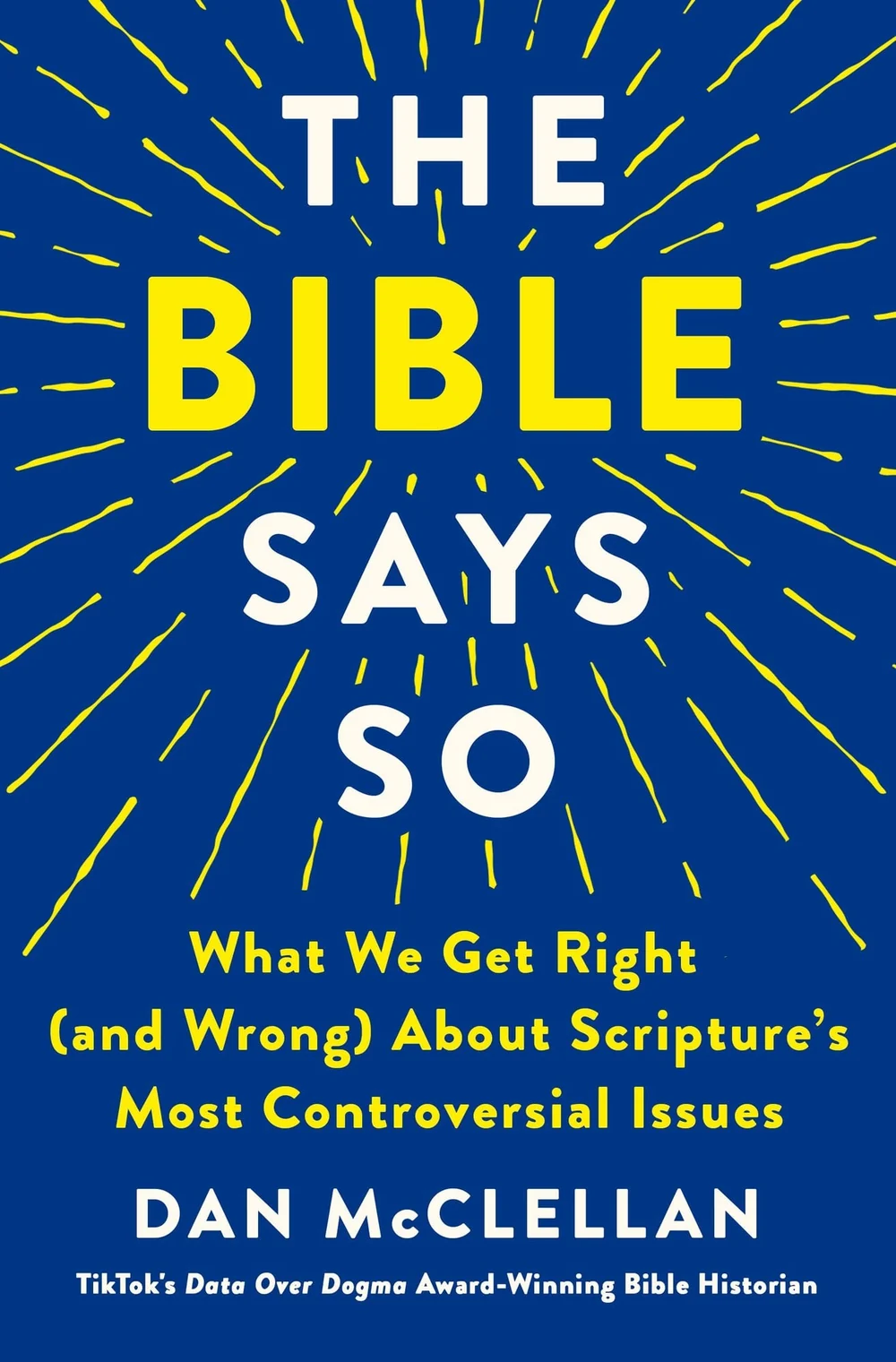
All episodes
The Demon Haunted Bible
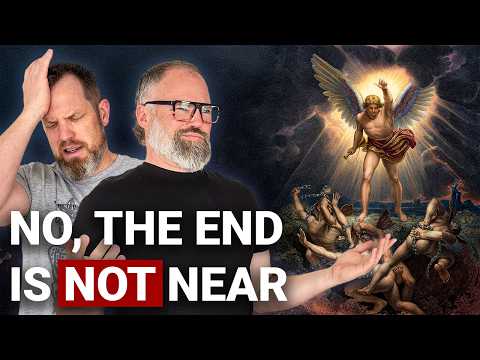
DEMONS! We're at an interesting crossroads in history. As science is able to explain more and more about how the universe works, and more specifically how we humans work, we find ourselves using supernatural explanations less and less. When, for example, we understand the erratic behavior of a friend as being part of their mental health journey, we're far less likely to turn to hurtful and dangerous religious tropes for our understanding. But that doesn't stop some people from continuing to turn to the idea of demons to explain the bad things in their lives. So where did this idea come from? What are demons, and what does the Bible have to say about them? Hold on to your apotropaic amulets, 'cause we're goin' demon hunting! For early access to an ad-free version of every episode of Data Over Dogma, exclusive content, and the opportunity to support our work, please consider becoming a monthly patron at:
Bonus Episode Recorded with this episode: read the full transcript $10 patrons · log in with PatreonTranscript — tap any word to jump the video there
Dan Beecher And of course, all of this is just something bad guys would say. So we're obviously in that latter category.
Dan McClellan Yeah.
Dan Beecher Oh, yeah.
Dan McClellan I get reminded every day that I am a demonic tool of Satan.
Dan Beecher Yeah.
Dan McClellan It warms the cockles- Me too ... of my demon-possessed heart. Hey, everybody, I'm Dan McClellan.
Dan Beecher And I'm Dan Beecher.
Dan McClellan And you are listening to the Data Over Dogma podcast, where we increase public access to the academic study of the Bible and religion and combat the spread of misinformation about the same. How are things, Dan Beecher?
Dan Beecher Things are great. I'm enjoying... It's the fall season. It's an exciting time when all the pretty things die and go away, and all of the bad weather haunts us and takes over, and I try to enjoy it, but it's tricky. But it's a good time, I think, for a spooky show.
Dan McClellan Yes. It's a good time when we're recording this for a spooky show. When anyone is listening to it, the spooky time will have passed because- Okay.
Dan Beecher Okay.
Dan McClellan Okay.
Dan Beecher Fine ...
Dan McClellan we don't plan. We are recording on Halloween.
Dan Beecher Yes. We both have ADHD. You can't expect us to think that far into the future so that we record a show and it comes out in a timely fashion.
Dan McClellan Yeah.
Dan Beecher That's just not how we do.
Dan McClellan I just watched "Hot Ones" earlier, and it's Jimmy Fallon, the episode that came out today, and it's a Halloween special.
Dan Beecher Oh.
Dan McClellan And I was like, "They probably recorded this in July."
Dan Beecher Yeah.
Dan McClellan And so I was like, "They have a clue what they're doing."
Dan Beecher Look, if we had producer money, maybe we'd be able to do this. But as of yet, we're not quite that rich. You guys haven't shared us with all of your friends, and you haven't all signed up to be patrons yet. So until that point, spooky show comes when spooky show comes, and that am now.
Dan McClellan Yeah. So We barely have production money.
Dan Beecher Yeah, exactly. So anyway, but it's a fun one. We're going to be diving into a subject that a lot of our listeners/viewers have requested.
Dan McClellan Hmm.
Dan Beecher So I'm excited about it. So let's just dive right in.
Dan McClellan Yes, let's.
Dan Beecher So here's the thing, Dan, when we decided we were going to talk about demons on the show. Here's the thing about this show. What I have learned from doing this show for a year and a half is that, A, everything I thought I knew about the Bible is probably not right, and B, a lot of the things that you hear the most about, especially from certain fringe areas of Christian or theological study, I can dismiss it. Like for instance, when I hear people screaming that the Bible says abortion is the murder of babies and that it's very clear on this, I know that's nonsense.
Dan McClellan Mm-hmm.
Dan Beecher Or if they say that the Bible is anti-LGBT and you should be, too. I know that that's nonsense. I'm used to thinking that when the fringes are really emphatic about something, they've probably really put a whole lot of lenses on it- Yeah ... to get to this thing. So when I started researching demons, I was like, "I wonder if that's even in the Bible." And then I went and I was like, "Oh, it's in the Bible. Holy cow."
Dan McClellan Yeah.
Dan Beecher So it's not that. It's not one of those.
Dan McClellan Right.
Dan Beecher It's not one of those things that's not even really there. Oh, it's there. It's in the New Testament.
Dan McClellan Yeah.
Dan Beecher Yeah. The- Oh, that's an interesting point.
Dan McClellan Yeah.
Dan Beecher Yeah.
Dan McClellan And we'll talk a little bit about why.
Dan Beecher Okay.
Dan McClellan But yeah. But continue. I'm sorry I interrupted.
Dan Beecher No, no, no. I think that's a great place to start. Let's just dive right in. Let's talk about why I found all kinds of New Testament demonic verses, and you're right, didn't find much or hardly anything in the- Yeah ...
Dan McClellan Old Testament. So just like we have some stuff that's not in the Hebrew Bible, like hell. If you look in the King James Version, you see hell a bunch in the Old Testament, but that's just because it's a bad translation of Sheol, a Hebrew word that does not refer to the conceptual package that indexes the English word hell, and the same is true of demon. You don't have a Hebrew word for demon in the Hebrew Bible, mainly because demon is a Greek word. It originates in Greek. There is no Hebrew equivalent, and it comes from, the Greek word is daemon. So it's spelled a little differently than how we use it, but demon is how it's come into English, and the word daemon really only refers to a kind of divine influence. It's not the word theos, which means a god, a deity, but it's used to refer to the divine influence, power, agency of deities. So divinity- Oh ... might be that, and it's usually used to refer in Greek literature to the kind of influence where something might suddenly happen, good or bad, and you would say that's a daemon, that's the demon. But devoid of any kind of value judgment. We think of demon as a negative value judgment.
Dan Beecher Yeah.
Dan McClellan It's a bad thing.
Dan Beecher It's evil.
Dan McClellan Right.
Dan Beecher Yeah.
Dan McClellan In ancient Greek, it was not. It was neutral.
Dan Beecher Huh.
Dan McClellan You could have a demon that made something good happen, or you could have a demon that made something bad happen. But it was this kind of faceless, nameless, just mass of divine influence. And so, you could also equate it with the concept of a muse. Somebody's individual kind of divine inspiration could be- Mm ... referred to that way, could be understood as a type of spirit, something like that. And so that's the word that became what we now know as demon, and it gets picked up within Greco-Roman period Judaism, primarily in the Enochic and other pseudepigraphic literature. So 1 Enoch, Jubilees, some other texts from Greco-Roman period Judaism are the ones that first take this word and use it to render some different Hebrew concepts, but then to develop an idea of evil spirits. And that's what gets picked up in the New Testament.
Dan Beecher Okay.
Dan McClellan But it's also dovetailing with Mesopotamian concepts. So none of this is native to the Hebrew Bible. But in Mesopotamia, in the Akkadian language, you have all kinds of concepts of malevolent spirits and divine entities. And, to understand how they kind of organize their understanding of the divine world, you've got to understand the concept of center and periphery. So, think spatially about a civilization, and this is how I think about my neighborhood. Like the really nice houses are in the center, and then you've got the starter homes, and then you've got the condos, and then beyond that, you've got the apartments, and the bad apartments beyond that. You've got these concentric rings of increasing value and importance to the society, according to the people who live at the center anyway.
Dan Beecher Yeah.
Dan McClellan And anciently, they thought of the city as the center of civilization, as the pinnacle, the peak of civilization, and the further away you got from the city, the less order there was, the more disorder there was, and the less civilization was possible. And so as you get to the outskirts, you get to places that are less habitable, and then you get into the uninhabitable wilderness, and the sea and the desert are kind of the prototypical uninhabitable wildernesses where humans can't live and certainly can't build an ordered society.
Dan Beecher Right.
Dan McClellan So closer to the center, more order, more civilization. Closer to the periphery, less order, less civilization, more disorder. And that's the home of all of these malevolent spirits that occupy the wilderness and dance with the devil in the pale moonlight. And so, in Isaiah, you have the Lilith, Lilít in Hebrew. This only occurs in reference to this prophecy about how Jerusalem would become this desolate, uninhabitable wasteland occupied only by the screech owl, I think is how the King James Version renders Lilít.
Dan Beecher Mm.
Dan McClellan But it mentions all these kind of demonic forces. And, like even Azazel, that's the entity that's out in the desert that you're leading the scapegoat out to. So these disordered, malevolent entities occupy the uninhabitable wilderness. And so in Mesopotamia, they were always threatening the order of civilization, so you had to have a bunch of different ways to keep them at bay, and that was different charms and different kinds of magic that you would use, and women during menstruation had to make sure they were doing certain things because that provides a convenient portal for some of these demons. In Egypt, you wanted to make sure they didn't come in through the ears or through the nose because those were- Mm ... particularly susceptible orifices as well.
Dan Beecher So this kind of- They need a physical entrée into the body is what you're saying.
Dan McClellan Yeah. And in this time period, we don't yet have this dichotomy of material and immaterial. Everything is material in one way, shape, or form, but some things are a different kind of material and more pure.
Dan Beecher Right.
Dan McClellan Spirit was still material. Spirit was analogized as wind.
Dan Beecher Mm.
Dan McClellan Like even the word ruach, spirit, means wind. And so you can- Okay ... feel the wind, just like you could feel spirit, but it was also something, you can't grab the wind. Well, you can break wind, but you can't break the wind.
Dan Beecher Right.
Dan McClellan And so it's impervious.
Dan Beecher Can you paint with all the colors of the wind?
Dan McClellan Sometimes. Well, see, that's a different story.
Dan Beecher No.
Dan McClellan It has no color. And so these spirits are conceptualized as something like the wind, so they can get in you- Yeah ... if you're not careful. And this is what gets conflated with the Greek concept of the daimon within Greco-Roman period Judaism. They're taking some of the residual Mesopotamian influence from the exile and from the Persian period, and they're mixing it with some of the Greek concepts. And were also mixing it with some Hebrew Bible texts. So, for instance- Right ... the sons of God, they come down and they have children with the human women from Genesis 6:2-4. That's kind of the foundation of the Enochic tradition, which then reinterprets it and expands on it and generates this narrative where they come down and they have these children who are the giants, and the giants have children who are the Nephilim, and the spirits of the deceased Nephilim are the evil spirits that- Then become the demons.
Dan Beecher And so- Interesting.
Dan McClellan Okay. That isn't- According to one narrative. There are a bunch- Right ...
Dan Beecher of different narratives, but that's kind of- Yeah, and that doesn't seem to match up with the narrative that I got from multiple sources in my research- Okay ... about sort of the origin story of the demons.
Dan McClellan Okay. But I don't know.
Dan Beecher I guess we can just talk about that.
Dan McClellan Yeah.
Dan Beecher I found in a few places where it would say that demons are... And this one uses 2 Peter as its reference point for this, but it says, "Demons are angels that sinned- Yes ... and rebelled against God, and so they are destined for hell, and they're going to torment as many of us as they can before they have to go there," or something along those lines.
Dan McClellan Yeah. So there we have the idea of these angels. So in the Enochic tradition, and we see this primarily in Jubilees, the angels, they're created on the first day, and they watch the rest of creation, and they're the Muppet babies just kind of like, "Yay, everything's great." But then when you get the story of them descending, because they're just way too horny, that then leads to all this bad stuff. So they fall, and then you've got these named angels who are doing all this bad stuff.
Dan Beecher Oh, I see.
Dan McClellan And then in Enoch, God tells the other angels, like Gabriel and Michael and these others, "Go bind them under the earth for 70 whatever years of years."
Dan Beecher And- Oh, yeah ...
Dan McClellan and so they are imprisoned, and they're bound, and this is where we get the development of concepts of hell.
Dan Beecher Right.
Dan McClellan It's originally for the angels. So the disobedient angels are also another kind of conceptual template that dovetails in with the idea of demons.
Dan Beecher So- That's from Enoch. That idea comes-- What's fascinating to me about this, one of the fascinating things is that most of Christianity rejects the Book of Enoch as scripture currently.
Dan McClellan Yes. But it's very clear- Most of Christianity is also descended from the Book of Enoch.
Dan Beecher That's what I'm saying.
Dan McClellan Yeah.
Dan Beecher It's so clear how powerful the influence of that book has been when you look at the stuff that makes it into the New Testament.
Dan McClellan Mm-hmm.
Dan Beecher It references it all the time.
Dan McClellan Yeah. It's concepts of the devil, concepts of hell, concepts of heaven. It's all there.
Dan Beecher So the 2 Peter verse that I was talking about that was- Mm-hmm ... referenced in that article that I was reading is 2 Peter 2:4, which says, "For if God did not spare the angels when they sinned- In the days of Noah.
Dan McClellan Yeah ...
Dan Beecher but cast them into hell and committed them to chains of deepest darkness to be kept until the judgment." And I didn't know where that came from, but I guess it's an Enoch thing.
Dan McClellan Yeah. So that's a reference to Enoch. In the Book of Jude, you have a direct quotation from Enoch.
Dan Beecher Oh, yeah.
Dan McClellan Yeah. And here in Enoch chapter 19, "And Uriel said to me, 'There stand the angels who mingled with the women, and their spirits, having assumed many forms, bring destruction on men, and lead them astray to sacrifice to demons as to gods until the day of the great judgment, in which they will be judged with finality. And the wives of the transgressing angels will become sirens.'"
Dan Beecher Interesting.
Dan McClellan So this narrative is an opportunity to take all these loose threads and weave them together into this tapestry that becomes the backdrop of the development of Christianity. But actually, this reminds me, I want to focus on something because it says, "Led them astray to sacrifice to demons as to gods," meaning as if to gods.
Dan Beecher Mm-hmm.
Dan McClellan And this is quoting, well, kind of, this is paraphrasing Deuteronomy 32:17. And this is a very influential text in the development of the concept of demons because Deuteronomy 32 is the song of Moses. It went triple platinum. I think Pharrell probably ripped it off at some point or another, but I'm just kidding. I have nothing against Pharrell. But it says here, it's talking about Israel in the wilderness, things they did wrong, things they sinned on, and it says they sacrificed to shedim, and that's a Hebrew word that probably is related to an Aramaic word shadin, which is like a class of deity.
Dan Beecher Mm.
Dan McClellan And we see it in an inscription that was discovered called the Deir Alla inscription, which mentions Balaam, but that's probably a kind of secondary class of deities. And it says they sacrificed to shedim, not to God, comma, gods they did not know, to newly arrived ones whom your ancestors had not feared. And so this is condemning the Israelites because they were sacrificing to other gods, and- Mm ... it calls them shedim. And this might be, in fact, I think it's probably related to the root from which we get Shaddai. El Shaddai. I probably shouldn't sing that. But- So it's probably related to God's title, Shaddai- Yeah ... which may come from this specific class of deity. But when it came time to translate that into Greek for the Septuagint, they didn't really have an equivalent for shedim, and I think shedim probably occurs in maybe two or three other passages in the Hebrew Bible. Let me see. Yeah, it looks like it occurs also in Psalms 106:37. "They sacrifice their sons and their daughters to shedim." And they chose daimon or daemon to translate shedim, which- Huh ... meant that these... And there's an argument to make that it's probably because we don't know what kind of deities they are. They're just these nameless, faceless deities. Oh, well, daemon means kind of a nameless, faceless divine power. It's this undifferentiated mass of divinity, and so, well, that makes perfect sense. Let's go with that. But then the daemon becomes the object of false worship. It becomes false gods. It becomes wicked deities.
Dan Beecher Right.
Dan McClellan And that plays into the development of the Enochic tradition and Jubilees and stuff like that. And so by the time of the New Testament, all of this is coming together. And who is it that they sacrifice to? Oh, they sacrifice to demons. And so when you look in most English translations of the Bible now, because the Septuagint rendered daimones for shedim, they sacrifice to demons, not God.
Dan Beecher That's the NRSVUE.
Dan McClellan They sacrifice unto devils, not God. That's the King James Version. New English Translation, they sacrifice to demons, not God. So, now we have demons in the Old Testament- Okay ... because of the Greek translation. And so we're building this construction of demons going all the way back.
Dan Beecher Yeah, but that's a case of backfilling, right? That's unlikely that the newer concept of demon is what is meant with the shedim concept.
Dan McClellan Yes. Whatever shedim was intended to mean when that was composed in Hebrew, that has been overlaid with the much later concept- Right ... of the demon. So yeah, it is altering what's going on there. But most English translations are just content to say, "Yeah, we'll just use demons."
Dan Beecher Yeah.
Dan McClellan Whatever. Who cares?
Dan Beecher So let's move then to the New Testament and talk- Okay ... about what that idea is. Do we have a sense? I know demons are mentioned plenty of times- Mm-hmm ... in the New Testament, and almost casually in a bunch of ways.
Dan McClellan Mm-hmm.
Dan Beecher I'm thinking now of Luke 8, where in verse 2 it says... And Luke 8 has another demon thing. But in verse 2, it's talking about how Jesus was sort of walking, and he was accompanied by a bunch of people. And verse 2 says, "As well as some women who had been cured of evil spirits and infirmities, Mary called Magdalene, from whom seven demons had gone out, and Joanna, the wife of Herod's steward," blah, blah, blah, blah, blah. And it's just like, it feels so thrown, just sort of cast out. Oh, and then Mary, and boy, she had seven of them, but they got rid of those. It's no problem.
Dan McClellan Yeah.
Dan Beecher It just doesn't feel like, we don't hear that story. It's just like a side note that also she had a whole bunch, but we got rid of those.
Dan McClellan Well, there was probably a tradition that was in circulation back when Luke was, or at least the author of Luke, was gathering their sources. And so it's a throwaway line. It's referring to something that people at that time period would've known, but obviously, that story's been lost to us. But yeah, that's the world they lived in. It was a demon-haunted world- Uh-huh ... where because the wind blows and it might give you an earache, it might go up your nose. You might swallow a mosquito or something like that, and you might have a demon get in there.
Dan Beecher Yeah.
Dan McClellan And that might make you sick. If you feel depressed, maybe that's a demon. They were attributing an awful lot of different things to demonic possession, including mental health issues, and other pathologies I'm sure that we don't know about.
Dan Beecher And so- Yeah, I think that's the thing, right? I was going to get to that later on, but- Oh ... it definitely seems like, no, it's fine. It definitely seems like what a lot of this is, is just explanations for things that we now know are caused by entirely other things.
Dan McClellan Mm-hmm.
Dan Beecher For mental health issues or for disease or whatever. It seems like if someone just starts vomiting ferociously out of the blue, before there's germ theory, it's like, I don't know, probably a demon.
Dan McClellan Yeah.
Dan Beecher You know what I mean? What other explanation are you going to have if someone is having a psychotic break? You're not going to be like, "Oh, there's probably something wrong with their brain," or maybe they've had a- Yeah ...
Dan McClellan whatever.
Dan Beecher They're going to immediately jump to there's something external affecting them.
Dan McClellan Yeah. And I think we all have kind of an internal anti-contamination system that's kind of intuitively built in. And it's kind of why people hate the smell of flatulence, anybody else's anyway, because intuitively it's kind of like, "Ah, this is harmful." And it's not, but we all have that internal contamination system that is compelling you to perceive certain things to be harmful. And there can be, sometimes it has to do with food, sometimes it has to do with actions. There is a sexual disgust sensitivity is a part of that. People think certain sex can be contaminating. And so when you have that, that's sitting so close to the surface because they don't have better explanations for what's going on, and they're not really thinking scientifically according to how we understand the term. In other words, they don't have enough information for their reflective cognition to overrule the intuitive side of things. The intuitive side of things gets to drive. And that is going to, because of the proximity to these other ideas about a demon-haunted world, the gravitational pull is just going to be too great. And so your internal contamination detection system is going to very easily connect things you're afraid of and things that you might perceive to be the outcome of contamination to align with the notion that there are demons everywhere around us.
Dan Beecher And that they get inside of you.
Dan McClellan Yeah.
Dan Beecher That's the other thing is that, if you go further down in Luke, chapter eight, you get to a guy, in Matthew it's two guys, who's living in the tombs and who is possessed by demons.
Dan McClellan Yeah.
Dan Beecher Who is what we would call possessed. Somebody's actually living inside of him or a bunch of somebodies, as it turns out.
Dan McClellan Talk about that.
Dan Beecher Where did that come from? And this is the guy, just so we get the story, the broad strokes are this guy is a crazy hermit guy, lives out in the wilderness-ish.
Dan McClellan I guess. Or at least on the outskirts.
Dan Beecher Yeah.
Dan McClellan If there are tombs, this is on the outskirts, which again, you overlay that center periphery idea.
Dan Beecher Yeah.
Dan McClellan And it's like he doesn't belong in civilized society. He's got to occupy the outskirts.
Dan Beecher And anyway, Jesus approaches him and he cries out and fell down before him shouting, "What have you to do with me, Jesus, Son of the Most High God? I beg you, do not torment me." For Jesus had commanded the unclean spirit, that's singular, to come out of the man. For many times it had seized him, he was kept under guard and bound with chains and shackles, but he would break the bonds and be driven by the demon into the wilds. So he was crazy strong and would break the bonds, whatever they tied him up with. Jesus then asked, "What is your name?" He said, "Legion," for many demons had entered him. And Legion in this case, it's capitalized as though it's a proper name, but then legion does mean a troop or whatever.
Dan McClellan Right.
Dan Beecher So what are we talking about with that? Just so I understand.
Dan McClellan Well, he asked what his name is.
Dan Beecher Yeah.
Dan McClellan And he says Legion, but yeah, the idea is just the demon is identifying as a multiplicity of demons. So it's not just one demon because the number shifts.
Dan Beecher Right.
Dan McClellan He asked what his name is, and then he says, "Legion," because many demons had entered into him. And I think the daimonion. Yeah, as soon as he says that, it shifts to the plural. That's a neuter nominative plural, had entered into him. And then it says, where's the NRSVUE? It says- "They begged him not to order them to go back into the abyss," is what the NRSVUE. And so it's back to the plural. And so the idea is, upon first glance, this is a single demon, and Jesus is like, "Oh, yeah, we take care of this all the time. I can do this on a weekend." But then it's like, "Oh, no, it's a bunch of them." It's a bunch of them.
Dan Beecher And for whatever reason, I guess when they get cast out of the guy, they have to go back to the abyss if they can't find another place to be, and they beg Jesus. This is so weird that the demons are like, "Please, just put us in the pigs. Will you put us in the pigs? We would love that."
Dan McClellan Yeah.
Dan Beecher It's not Jesus like, "Ha ha, I condemn you to pig life." They're asking for it, and Jesus is like, "Yeah, go ahead. It's all right."
Dan McClellan Well, and it's fitting because what kind of demons are they or spirits are they? They're unclean. What is a pig? It's unclean. And so they're drawn to a more natural habitat. And this is why the demons are shoving the guy out into, what did you say? What does the King James said?
Dan Beecher I'm in the NRSVUE.
Dan McClellan They've driven him into the wilderness or driven him into the wilds.
Dan Beecher Into the wilds is NRSVUE.
Dan McClellan Yeah. And the word there in, I lost my place. Yeah, it's eremos, the wilderness. Because that's where demons are located.
Dan Beecher Yeah.
Dan McClellan Outside in the periphery.
Dan Beecher And they're un- So when they were in the man, they were making the man run out, go to the wilderness, go to their habitat, I guess.
Dan McClellan Yeah. So think Stranger Things.
Dan Beecher Yeah.
Dan McClellan He doesn't like... What is it that he doesn't like? He doesn't like the hot. He likes the cold.
Dan Beecher Ah.
Dan McClellan And so, he wants to crank up the air, and then you drive him out by making it all hot. And so it's the same idea. This is kind of a very intuitive, natural notion, and it comes from the very natural and intuitive notion of possession.
Dan Beecher Mm.
Dan McClellan Which is something that you find in all kinds of societies around the world and throughout time, this notion that, and I've talked about this a little bit, it's in my book, where the human body is conceptualized as a container.
Dan Beecher Mm.
Dan McClellan We have an inside, we have an outside, and the inside is where executive control is located. And because we have these unseen agents all around us, for good, for bad, or sometimes they can be neutral, and that's why you want to make sure your orifices are all taken care of, either through your apotropaic amulets or whatever spells, or whatever you have, that keeps them out so they can't get in, because if they get in, then that's where your executive function is located, and they can take it over.
Dan Beecher Right.
Dan McClellan And so, demon possession or spirit possession is something that is phenomenally widespread, trans-culturally, trans-historically. It's just something that we find all over the world. And this is just the first-century CE Greco-Roman Jewish manifestation of spirit possession. Only these spirits are unclean. And then prophecy is a product of spirit possession as well. Only the clean- The good side ...
Dan Beecher spirit of God.
Dan McClellan Yeah. I hadn't thought of that, but that's really interesting.
Dan Beecher Yeah.
Dan McClellan So, yes.
Dan Beecher I guess I had thought about it because when I was researching for this, I did stumble on a video, that was like, "Don't worry, though. Demons can't get into us good Christians because we're already filled with the spirit of God." Well, that's possession, right?
Dan McClellan Uh-huh.
Dan Beecher That's basically the opposite side of this coin.
Dan McClellan Mm-hmm.
Dan Beecher Which is, yes, it's good possession, but we're already filled up. There's no room for Legion in here.
Dan McClellan Yeah. Well, and you've got this metaphor. There's another part where they talk about the person's body as a house, and you've got the strong man who, and I'm forgetting precisely what the metaphor is, which is embarrassing. But you've got to tie him up.
Dan Beecher Mm.
Dan McClellan And you've got to sweep out all the unclean stuff. And so, yeah, this is just a function of this perfectly natural side effect of human cognition, is that we understand ourselves to be containers that can sometimes be taken over, and you look at the possession of Saul when Samuel says to Saul that God's spirit is going to, usually, the translation says something like overtake or overcome you or something like that, but the Hebrew root is salah, which means penetrate.
Dan Beecher Mm.
Dan McClellan God's spirit is going to penetrate you, non-sexually, or maybe it is sexually. And it says, "We'll give you a new heart, and that's how you will be anointed king, is you'll have a new heart."
Dan Beecher Mm.
Dan McClellan And so because the heart is conceptualized as the seat of cognition that is located internal to you, and so we think of the seat of cognition as the brain now. And so, we're going to switch brains, and then that changes who's in charge. For them, it was the heart. God's spirit is going to possess you, take you over, change out your own heart for a new one that belongs to God. And so it's the same thing, only we like this kind of possession.
Dan Beecher Yeah.
Dan McClellan Interesting.
Dan Beecher Yeah. Can I just bring up a silly side fact and just have you answer it for me really quickly?
Dan McClellan Maybe.
Dan Beecher You had mentioned that it makes sense that Legion is cast into the swine- Uh-huh ... because unclean goes into these unclean animals. But that herd of swine was owned by a person who was taking care of them and was presumably kind of upset- ... that his whole livelihood was then stampeded into the lake and drown.
Dan McClellan Yeah.
Dan Beecher So, there must've been people who were eating pigs at that time.
Dan McClellan Otherwise why would- Yeah, they're not in a Jewish-dominant territory right now.
Dan Beecher Oh, okay.
Dan McClellan They're to the east of the Sea of Galilee. Now, there's a traditional location for this that's right on the shore, but, depending on which manuscript you look at, it has different names for this location where they are.
Dan Beecher Mm.
Dan McClellan And when we've tried to locate places that went by that name in the first century, they're miles away.
Dan Beecher Mm.
Dan McClellan So it's like the pigs didn't just run off a cliff or down a hill. They would've been like, "Are we there yet?" "Shut up." And, yeah, the idea is that they drive the man out into the wilderness, and they're just like, "Hyah, let's get these pigs somewhere," and they just, who knows, accidentally or intentionally drive them into the water and kill them, and that's their just desserts. And when it says abyss- The word there, the Greek is abyss, but this is the netherworld.
Dan Beecher Yeah.
Dan McClellan This is where the wicked angels, the evil spirits were being kept. So, basically we need to occupy these humans, or we're going to go back to the chains and the darkness where we await judgment that is mentioned in the Enochic tradition, and then is picked up within the New Testament. So basically, we're out here joyriding, so that we don't have to... That's keeping us out of jail.
Dan Beecher Right.
Dan McClellan So we want to be joyriding, even if we have to get in the pig mobile.
Dan Beecher And then we're going to- And then the pigs immediately drown, presumably depriving them of their- Yeah ... of their mobile.
Dan McClellan Yeah.
Dan Beecher Presumably they- Off they go back to the abyss anyway.
Dan McClellan Yeah.
Dan Beecher I just wanted to provide the coda of that story- Yeah ... which I find hilarious, which is that the swineherds run back and tell everybody in the town what happened, and they're like, "Hey, Jesus, would you please leave?"
Dan McClellan Yeah.
Dan Beecher "We're uncomfortable with everything."
Dan McClellan Yeah.
Dan Beecher "We would like you to please go."
Dan McClellan Quite the buzzkill.
Dan Beecher You killed all this dude's... Yeah, you helped that one guy, but then all this dude's pigs are now dead. That's just not nice.
Dan McClellan Yeah.
Dan Beecher So let's talk a bit about how demons were meant to affect people, because we talked about the possibility or what I would deem the likelihood, that this demonic possession was just an etiology or a way of explaining various health/mental health- Mm-hmm ...
Dan McClellan afflictions.
Dan Beecher Yeah. Do we have a sense of what they were explaining? What things were happening to people?
Dan McClellan Yeah. We've got a few different things that are explained as demon possession, where Jesus heals people by casting the demon out.
Dan Beecher Right.
Dan McClellan As if it was simply a mechanical issue.
Dan Beecher Right.
Dan McClellan That, "Oh, here's your problem. You got this demon. Let me just okay, there we go."
Dan Beecher Yeah.
Dan McClellan So like in Matthew 9 verse 32 starts, "After they had gone away, a demon-possessed man who was mute was brought to him."
Dan Beecher Okay.
Dan McClellan "And when the demon had been cast out, the one who had been mute spoke, and the crowds were amazed and said, 'Never has anything like this been seen in Israel.'" So he's making the deaf to hear, the mute to speak, and a lot of this is attributed to his authority over demons.
Dan Beecher Mm-hmm.
Dan McClellan And so this is a way to signal that he has this power over demons, and can just, boom- Yeah ... you're healed. The demon is gone. See there? He's got away. And presumably they go to the abyss or whatever. But then in verse 34, it says, "But the Pharisees were saying, 'By the ruler of demons, he casts out the demons.'" And this comes up later where they accuse him again of casting out demons by Beelzebul, which is- Oh, meaning he's summoning the power of big daddy demon.
Dan Beecher Yeah.
Dan McClellan This is all just a grift.
Dan Beecher Uh-huh.
Dan McClellan He's just like they're in league together. And he's like, "I've got to cast you out so I can dupe them into thinking that I have power over you." "Yes, sir."
Dan Beecher And- Right ...
Dan McClellan so that's the accusation that they're making. And then Jesus gives the famous, "A house divided against itself cannot stand. How can I cast out demons by the prince of demons?" Which was, yeah, great movie, Kevin Costner. No, that was "Prince of Thieves." Never mind. And Beelzebul is an interesting story. So Beelzebub is how most people are used to hearing that.
Dan Beecher Yeah.
Dan McClellan And that's probably how a lot of translations actually of the New Testament render it. But the Greek is Beelzebul or Ba'al Zebulb, and that's because it is based on the Northwest Semitic storm deity Baal.
Dan Beecher Mm-hmm.
Dan McClellan And the title would've been Zebul-Baal. That's a title that we know from the Ugaritic literature, which just means Prince Baal or Prince Lord.
Dan Beecher Okay.
Dan McClellan But they've altered it. Beelzebub means Lord of Flies.
Dan Beecher Right.
Dan McClellan So it's a way to make fun. It's like the pejorative nicknames that certain presidential candidates give people that give him trouble. It's just a way to mock and deride.
Dan Beecher Yeah.
Dan McClellan But that's one example of a pathology or a condition, or a disability that is attributed to demonic possession. There's another one in Matthew 15:22, "Just then a Canaanite woman from that region came out and started shouting, 'Have mercy on me, Lord, Son of David. My daughter is tormented by a demon.' But he didn't answer her," and this is where we get, "It's not fair to take the children's food and throw it to the dogs." And she says, "Yes, Lord, yet even the dogs eat the crumbs that fall from their master's table." And the very problematic xenophobic dismissal of the Syrophoenician woman. And he basically says, "Woman, great is your faith." And then from that hour, her daughter was healed.
Dan Beecher Mm-hmm.
Dan McClellan And elsewhere, we have them describe this as scratching oneself and not being able to walk and all this kind of stuff. So obviously, severe mental health issues are also being attributed to demon possession.
Dan Beecher Yeah. It's funny because I think a lot of people might think that It's harmless. These ideas are just interesting, but who are they hurt? It's not hurting anyone, but this is still talked about today. I saw lots of videos in my research and found lots of examples of people who were saying... There was a recent, oh, I don't remember what state. There's a candidate for office in a Midwestern state somewhere, I think, who's a pastor, and a video just resurfaced of him saying mental illness is just demon possession.
Dan McClellan Yeah.
Dan Beecher And the treatment, and don't take your kid who's suffering to a doctor when what they need is a priest who's willing to do an exorcism, that sort of idea. And A, that means the people who need help aren't getting available help. There is available help, and they're not getting it. And B, it also sort of oddly puts the blame onto the victim. The person experiencing really difficult things is suddenly blamed for it, like they weren't spiritual enough. They weren't filled enough with the spirit of God, and thus they allowed this demon inside of them, and it's their own fault.
Dan McClellan Mm-hmm.
Dan Beecher And I think both of those two ideas combined. Exorcism is actually on the rise currently- Yeah ... as a performed rite, a religious rite, and that freaks me out.
Dan McClellan Yeah. I've definitely seen a lot more folks on Twitter talking about exorcism as the go-to fix for problems, particularly for children.
Dan Beecher Yeah.
Dan McClellan I'm seeing it a lot associated with people's kids. They're like, "Don't take them to a doctor. They'll pump them full of drugs, and then they'll turn trans."
Dan Beecher Right.
Dan McClellan "So you need to take them to an exorcist." And I've even had some self-proclaimed exorcists tell me, "Oh, this is real. This is totally real." And yeah, that's phenomenally harmful. People die because of that kind of thing.
Dan Beecher Or experience just massive loads of trauma that they will have- Yeah ... to unpack for the rest of their lives because they were a child, and they were told that they were possessed by a demon.
Dan McClellan Yeah.
Dan Beecher And that's not easy to wrap your head around as an eight-year-old or whatever.
Dan McClellan No. It's horrifying that that kind of thing continues to, the kids are conditioned to think that way. Because I mentioned that this is kind of a natural, intuitive way of thinking about contamination and stuff like that when you don't have enough education for your reflective cognition to overrule those intuitions. We have plenty of that now, but if you are conditioned, you can actually condition your intuitive cognition to then overrule the reflective cognition. And that's what happens when you're raised to believe these things and taught that if you don't believe these things, that that is the influence of demons, and that is unrighteous, and that that is what is going to ensure that you don't make the rapture- Yeah ... or that you're going to go to hell. And so it creates this internal war between the reflective and the intuitive cognition, and it allows all of the progress that humanity has made in treating preventable diseases, disability, all of these conditions, so that they are on the rise. It's basically an anti-vax position on- Well- ... things that are not vaccinated.
Dan Beecher How many times did we hear demonic discussions in relation to COVID? In relation to instead of go out and get the vaccine and- Mm-hmm ... there was a bunch of the anti-vax sort of rhetoric was centered on religious reasons why this was coming to pass- Yeah ... this pandemic was happening. And so if there is a spiritual cause, then the only cure that's available must also therefore be spiritual.
Dan McClellan Yeah.
Dan Beecher I guess what I'm getting at, because I'm in no way trying to talk people out of believing, out of their Bible beliefs. But I think it's really important to point out that as this idea of demonic possession was very clearly a New Testament innovation, it was something that didn't exist throughout the- Well, at least the- ... hundreds of years of the Old Testament.
Dan McClellan Yeah. Well, at least the identification of these things as demons. There was certainly- Right ... the notion of spirit possession, and in other societies, they certainly also had those ideas. That's why you have these magical texts from Mesopotamia and Egypt that are like, "Here's the spell to get rid of the demon that's clogging up your uterus or whatever."
Dan Beecher Right.
Dan McClellan So they certainly had that. But yeah, there are no demons in the Old Testament. That's for sure.
Dan Beecher So to me, the idea isn't you have to give up your belief in Like this shouldn't shake someone's faith if they want to keep believing. What it should do is at very least make people think, "This is one explanation for a series of issues."
Dan McClellan Yeah.
Dan Beecher We've had 2,000 years to come up with much better explanations for those things.
Dan McClellan Mm-hmm.
Dan Beecher It doesn't mean that the Bible is wrong, but it was wrong about this. You know what I mean?
Dan McClellan Yeah.
Dan Beecher That mute guy wasn't possessed by a devil.
Dan McClellan Yeah.
Dan Beecher He wasn't possessed by a demon.
Dan McClellan Well, yeah. And the story is a literary creation. Jesus did not heal a mute person. This was just a way for them to have Jesus fulfilling the prophecies that existed or were thought to exist at the time regarding the coming of the Messiah.
Dan Beecher Well, now you've gone too far.
Dan McClellan I wanted to bring up one final thing.
Dan Beecher Okay.
Dan McClellan I wanted to talk about a way that Bible translation uses demons for the sake of colonialism.
Dan Beecher Oh, hells.
Dan McClellan Yes.
Dan Beecher All right.
Dan McClellan Let's- Yeah. There's this really cool paper that I came across while I was doing research on demons. It was for my book, but it was actually dovetailing with stuff I was doing at work. And I found this- Your book.
Dan Beecher Wait. Do you mean your book, "The Bible Says So?"
Dan McClellan Available for- No, my previous book.
Dan Beecher Oh.
Dan McClellan But "The Bible Says So" is my forthcoming book, available April 10.
Dan Beecher Available now for pre-order.
Dan McClellan Yes. Pre-order at the link that we have in my Linktree and also in- And in the show notes of this- ... in the show notes ...
Dan Beecher and every upcoming episode.
Dan McClellan Yes.
Dan Beecher Yes.
Dan McClellan But I read this fascinating paper because I was looking at cultural imperialism and colonialism and this kind of stuff as it related to Bible translation. And there are- Ooh ... a bunch of, not a bunch, but there are some really good books on this. One's called "Translating the Message" that is about translations of the Bible and colonialism and stuff. But there's this wonderful scholar, Musa Dube, who wrote a paper called "Consuming a Colonial Cultural Bomb: Translating Badimo into Demons in the Setswana Bible." And what this is about is the fact that when they were translating the Bible into Setswana back in the 19th century, they chose a specific word to render the word demon in the New Testament. Now, in Setswana, they had a word for evil spirits. They didn't use that word. They chose badimo. And I may not have the accentuation right. That may be badimo. I'm not positive. But that was a word that refers to benevolent ancestral spirits- Mm ... that helped people, that inspired people, that they sought out for divinatory purposes and all different kinds of things like that, for healing and stuff like that. And so the argument is that the choice to render badimo was based on the desire to eliminate the influence of the benevolent ancestral spirits from this community of Botswana or Setswana speakers.
Dan Beecher So Botswana- So sort of a poison pill to go back and degrade their old concepts- Right ... and their old religious practice. So, yeah, exactly that.
Dan McClellan A way to try to use the Bible translation as a tool of extracting these unwanted cultural residues that they thought were not consistent with Christianity. And the problem is it didn't work- Oh ... because their traditions associated with the badimo were too strong. And so rather than understand the badimo as evil spirits, they understood the Bible and these references to the badimo as another instrument for facilitating the aid of the badimo.
Dan Beecher Interesting.
Dan McClellan And so they would use the Bible translation as spells, as incantations- ... in order to invoke the badimo, and they understood that Jesus was kind of a facilitator of accessing the badimo.
Dan Beecher Interesting.
Dan McClellan And so the Bible translation became a tool of divination associated with the badimo because the... And there's this theory of host-guest ideas of translation where the target culture is the host and the translation is the guest. And basically, the host took over, appropriated the little poison pill that the guest was trying to bring in. And so I think- I love that ... it's a wonderful illustration of how something as ostensibly benign as Bible translation can be a tool for cultural imperialism, but also how it can go sideways if- I love it ... yeah, if you don't get it right.
Dan Beecher And- One wonders if they read the story of the demons being cast into pigs and started to try to communicate with their ancestors through pigs after that.
Dan McClellan I'm trying to see if the... They do talk about that.
Dan Beecher Yeah.
Dan McClellan So they use badimo in that part where he sends them into the pigs.
Dan Beecher Okay.
Dan McClellan So, no, she doesn't give any examples that use that particular story. But yeah, they do use the Bible as kind of an icon, as a bit of an idol in that regard to facilitate the access to the badimo.
Dan Beecher I think that's a heartwarming moment for me. When the ancestral thing, when the thing that's trying to be subsumed then does the subsuming, that's kind of fun.
Dan McClellan Yeah. And there are all kinds of examples of using vernacular translation for the sake of cultural imperialism, particularly in Africa, with Portuguese languages, for instance, as well as in places like the Philippines and elsewhere. So yeah, it's a messy business- Yeah ... surprisingly enough.
Dan Beecher But yeah. It's not surprising at all.
Dan McClellan Yeah.
Dan Beecher So I guess one of the takeaways for me on this is just that if you were raised with demon fear, and I think so many people were raised with a lot of fear of demons and sort of the other side... Now the rhetoric is all political, too. You see people like Lance Wallnau talking about how Kamala Harris is demon-possessed and using demon magic to get where she is, and all of this stuff, and I think we can release it. I think we can safely, gently release the demon fears back into the wild, cast them into a pig.
Dan McClellan Go find yourself- Or allow them to sail into the abyss.
Dan Beecher Yeah. Cast them back into the abyss because you don't need that anxiety in your life.
Dan McClellan Yeah.
Dan Beecher That's not what they were meant for, and it's certainly not useful for you.
Dan McClellan And it's such a pathetic way to try to cut off thoughtful discourse as well.
Dan Beecher Yeah.
Dan McClellan To just frame someone as demonic. It's dehumanizing. It's a thought-stopping cliché. It reduces everything to this zero-sum binary game where there are good guys and there are bad guys, and there's nothing in between.
Dan Beecher Right.
Dan McClellan That is such a corrosive, destructive way to look at the world.
Dan Beecher And of course, all of this is just something bad guys would say. So we're obviously in that latter category.
Dan McClellan Yeah.
Dan Beecher Oh, yeah.
Dan McClellan I get reminded every day that I am a demonic tool of Satan.
Dan Beecher Yeah. Me too.
Dan McClellan It warms the cockles of my demon-possessed heart.
Dan Beecher Well, if your cockles have been warmed and you would like to become a part of keeping this show going, we'd love to invite you to become one of our patrons. If you can afford it, go over to patreon.com/dataoverdogma and throw a few shekels our way. We would certainly appreciate that. You could get access to an early and ad-free version of every show, and the after party, which is extra content that we make just for our $10 a month and up patrons. Also, if you'd like to reach out to us, it's contact@dataoverdogmapod.com. Thanks so much. Hope your demons do well this week, and we'll talk to you again next week.
Dan McClellan Bye, everybody.
Further reading recommended in this episode
Affiliate links: the show earns a small commission at no extra cost to you. See all book recs