Watch on YouTube
 Apple Podcasts
 Spotify
All episodes
The Book of Enoch
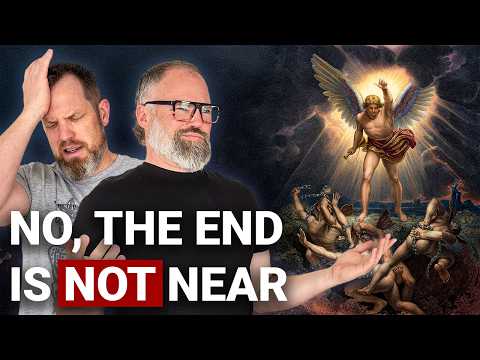
It's the book that didn't make the cut. Enoch (or first Enoch, if you're nasty) is an important book, both historically and religiously. As a matter of fact, New Testament writers considered it scripture. So why, when you open your Bible at home, is Enoch nowhere to be found? This week we're exploring the mysteries of the book that got the boot. Where did it come from? Was it really written by Enoch the patriarch (hint: no)? Why was it not included in the popular canons? Is there anyone that still considers it scripture (hint: yes)? For early access to an ad-free version of every episode of Data Over Dogma, exclusive content, and an opportunity to support our work, please consider becoming a monthly patron at:
Bonus Episode Recorded with this episode: read the full transcript $10 patrons · log in with PatreonTranscript — tap any word to jump the video there
Dan Beecher If you feel inclined to start conspiracy theories based on this book, get on with your bad self. You're just giving Dan fodder for his TikToks.
Dan McClellan It's just job security at this point.
Dan Beecher That's right. You should be embracing this, Dan. I don't know why you're fighting it.
Dan McClellan Oh. I don't know why you do this to me. Hey, everybody. I'm Dan McClellan.
Dan Beecher And I'm Dan Beecher.
Dan McClellan And you are listening to the "Data Over Dogma" podcast, where we increase public access to the academic study of the Bible and religion, and we combat the spread of misinformation about the same.
Dan Beecher Sure do.
Dan McClellan Sure do.
Dan Beecher Indeedly do.
Dan McClellan And how goes the thing, Dan?
Dan Beecher Stuff's good, man. I'm stoked. This week, you and I, Dan, are going to be talking about a thing that you have mentioned many times on this show.
Dan McClellan Mm-hmm.
Dan Beecher You even maybe explained to me what it is, and it's- Multiple times ... never really sunk in. I don't get it.
Dan McClellan Yeah. I don't know why.
Dan Beecher Yeah, so I am very excited to have all of this cleared up. We're going to be talking about a book that has been shunted aside, that has been left out of the canon, and we're going to call this segment "Left Behind."
Dan McClellan Dun, dun, dun. Not to be confused with the book series that has been- Right ... probably, I think, one of the most successful book series of the history of books. No, this is a series all about texts that were considered authoritative, historical, important at some time or another, but for whatever reason, were left out of the canon.
Dan Beecher Yeah.
Dan McClellan And today, it's a big one. It's 1 Enoch, the first book of Enoch. The book of Enoch, if you will.
Dan Beecher And something- Yeah, it's funny that the first book of Enoch and Enoch can be used interchangeably because- Yeah ... you would think that if there's multiple books of Enoch, you have to say the first thing, but- Yeah ... you kind of don't, right?
Dan McClellan So, it's not like first and second Corinthians or first and second Samuel, where they're written by the same authors, and they are consecutive, the one follows after the other. You do have a first, a second, and a third Enoch, and then other pretenders. But they're written in vastly different time periods. And really, when people are talking about the book of Enoch, they're talking about first Enoch.
Dan Beecher Right.
Dan McClellan When somebody wants to refer to second Enoch or third Enoch, they're going to say second or third Enoch, if they know what they're talking about. But this is a phenomenally influential piece of pseudepigrapha- Hmm ... which means false writing, which means it's something that was attributed to some towering figure from Jewish or Christian history that was very clearly not written by that person.
Dan Beecher Which is funny because I think a lot of people might consider that reason enough to dismiss it from the canon of the Bible, but plenty of Bible books that are part of the canon are pseudepigrapha as well.
Dan McClellan Exactly. And additionally, some of the texts that are in the Bible considered Enoch to be authoritative and historical.
Dan Beecher Okay.
Dan McClellan For instance, the Epistle of Jude, that we find in the New Testament, directly quotes from 1 Enoch, and it says, "Enoch, the seventh from Adam, said," and then directly quotes a passage from 1 Enoch. And so at least the author of the Epistle of Jude considered it to be authoritative, considered it to be historical, but it fell out of favor a couple centuries after that. And we're going to talk about how that happened, I think, toward the end of the show. But I wanted to start by talking about where this text comes from, and then go through a brief outline of the text, and then we'll talk about how we came about discovering it and all that kind of stuff.
Dan Beecher So, by where it comes from, you mean it comes from the seventh descendant of Adam, right?
Dan McClellan Well, this was one of the concerns with some of the early Christians who were, as a concern for what was canonical and what was not began to grow. This book purports to come from before the flood.
Dan Beecher Hmm.
Dan McClellan And so actual manuscripts of this book would have to have been preserved since before the flood. But Enoch is mentioned, and I think we have Enoch in both the genealogy in Genesis 4 and the genealogy in Genesis 5.
Dan Beecher Because in Genesis 4- You mean the person Enoch, not the book.
Dan McClellan Correct.
Dan Beecher The person Enoch.
Dan McClellan Let's just lay the canonical foundation first.
Dan Beecher Right.
Dan McClellan In Genesis 4, we have in verse 15, "The Lord set a mark upon Cain lest..." Oh, that's the KJV. I don't want to read that crap.
Dan Beecher You almost made a cardinal mistake, a cardinal sin.
Dan McClellan I'm being facetious, everybody. In Genesis 4:15, "Adonai put a mark on Cain so that no one who came upon him would kill him. Then Cain went away from the presence of Adonai and settled in the land of Nod, east of Eden." And again, in Genesis 4, this narrative is not written from a perspective that understands Adam and Eve and their children to be the only people on Earth.
Dan Beecher Right.
Dan McClellan Genesis 4 is written from the perspective of the Earth is already populated.
Dan Beecher Right.
Dan McClellan And then in verse 17, "Cain knew his wife, and she conceived and bore Enoch. And he built a city and named it Enoch after his son- Enoch.
Dan Beecher Wait, after his son, Enoch?
Dan McClellan No, I think Cain built a city.
Dan Beecher Okay.
Dan McClellan And named it Enoch after his son, Enoch. To Enoch was born Irad, and Irad was the father of Mehujael, and Mehujael, the father of Methushael, and Methushael, the father of Lamech. And then, Lamech, we get Ada and Zillah and blah, blah, blah, and we go on. And we talked a bit about these genealogies a long time ago- Yes ... how these are two different genealogies, and we tend to try to conflate them. And so, if we go to Genesis 5, we get Adam bore Seth, Seth bore Enosh, Enosh bore Kenan, Kenan bore Ivory Wayans.
Dan Beecher Mm-hmm.
Dan McClellan No. Kenan, where do we go? Bore Mahalalel, Mahalalel bore Jared, Jared bore Enoch.
Dan Beecher And then- Wow. That is a very different-- Well, it could just be a different Enoch.
Dan McClellan That's the rationalization. But this is the idea of the seventh from Adam.
Dan Beecher Right.
Dan McClellan And it's not Cain's line, it's Seth's line, because- Yeah ... this is the more righteous line. And then Enoch became the father of Methuselah, and so Methuselah was the longest living- Right ... of the patriarchs according to the Book of Genesis. And then in Genesis 5:22, it says, "Enoch walked with God after the birth of Methuselah 300 years and had other sons and daughters. Thus all the days of Enoch were 365 years. Enoch walked with God. Then he was no more, because God took him." And the Hebrew is , which is the verbal root that means "to take." Because God took him. So Enoch is one of the patriarchs who doesn't die.
Dan Beecher So that wording is unusual. That wording is not used for people. When we say, "God took Grandma," we mean that she just died.
Dan McClellan Right. Here, it doesn't seem to indicate that. And the tradition is that this is someone who was snatched up- Right ... in some way. And it doesn't say this about anybody else.
Dan Beecher Okay.
Dan McClellan So we're dealing with somebody who's supposed to come from very early in the primeval history.
Dan Beecher And he lived fewer than 400 years, which for that time, among these patriarchs, that's actually paltry. He must've gotten in a car accident or something, because- Something like that, yeah ... his son lived 960 some odd years, so.
Dan McClellan And it says 365 years, which would be a year of years, basically.
Dan Beecher Yeah.
Dan McClellan Oh, yeah.
Dan Beecher Sure.
Dan McClellan And we talked about the significance of some of these numbers in that episode, which was, oh gosh, I forget the name of the episode. But if anybody wants to go check it out, it was, "Oh, I Knew a Man Who Was So Old."
Dan Beecher Yeah, something like that.
Dan McClellan Is that the name of the episode? So anyway, the Book of Enoch is purporting to tell a story from the perspective of Enoch. And scholars agree that the earliest layer of it, it came together over a long period of time. The earliest portions of it probably date to around 300 BCE, and probably originally written in Aramaic, and then later translated into Greek. But the earliest portions are coming from the beginning of the Hellenistic period. So Alexander the Great has already conquered everything and then drank himself to death, and so now we have the Diadochi, the wars of succession afterwards, and Greek is becoming the lingua franca. And we're also starting to see the influence of Greek literature, Greek myth, and Greek philosophy on things. But we lay our scene around 300 BCE, and the latest part of the Book of Enoch, the very last chapter, which is called the Final Book of Enoch, chapter 108, was probably written around the time of some of the New Testament, toward the end of the first-century CE.
Dan Beecher Oh, wow.
Dan McClellan And so it's coming together over the course of several centuries, but in pretty large chunks. Although portions of it, scholars think, have been edited and redacted as it's coming together.
Dan Beecher I would hope so. If you've got 300 years, you better get some edits done.
Dan McClellan Yeah. But scholars generally divide it into five to seven different segments, and the first segment is known as the Book of Watchers.
Dan Beecher Oh.
Dan McClellan And this is a reference to the angels who descended from heaven as the Watchers. And one thing I should probably make clear, that I should've made clear earlier, this is basically taking the story from Genesis 6 regarding the bene Elohim, the children of God, who come down and they have children with human women, and those children are, what does it say? The mighty men of old, and there were Nephilim in the earth in those days, and afterwards as well. So we got that story, and Enoch is basically taking that and then just blowing it up into 108 chapters, where we're talking about what happened, why it happened, what was the outcome. And it's basically trying to account- This is fan fiction, is what we're talking about. It's fan fic, yeah. And with just as much sex.
Dan Beecher Nice.
Dan McClellan But it's looking down on it. Not as in from above, but as in it is- It condemns ... disapproving of it, yes.
Dan Beecher Yes.
Dan McClellan Okay.
Dan Beecher And so it- This isn't "Fifty Shades of Enoch?"
Dan McClellan No, no.
Dan Beecher Okay.
Dan McClellan There's no Mr.
Dan Beecher Grey.
Dan McClellan But what happens is it is using this as a lens for contemplating the problem of evil. Where does evil come from? Well, it comes from these angels who make this decision. In fact, they make a pact, a covenant, to go descend to Earth, and they end up coming down, hundreds of them, on Mount Hermon, and then everything goes from there. And that story is told a couple times over. And then it explains that these angels, they taught humanity about weapons of war. In fact, go a little bit into the Book of Watchers. The first few chapters are an intro, and then chapters 6 through 11 retell Genesis 6 through 9, so starting with these angels. And in Genesis 6, they're bene Elohim. They're gods, children of gods. They're gods. They get renegotiated. The pantheon gets reduced, gets renegotiated, and they become angels. And in chapter 6 through 11, Asael is the head malevolent angel. Now, this head malevolent angel is going to later turn into what the New Testament knows as Satan.
Dan Beecher Mm.
Dan McClellan But in the Book of Enoch, they go by different names, and at least at the beginning, it's Asael is the head angel. And then chapters 12 through 16 reinterpret chapters 6 through 11. So basically, we tell the story in 6 through 11. 12 through 16, we're like, "Hang on, I'm going to tell that again." And tell it all over again.
Dan Beecher Which never happens in old texts, in ancient texts.
Dan McClellan Yeah. And so now we have evil spirits in the Greco-Roman world. And so the Watchers, when they die, their spirits leave their corpses and become the evil spirits that- Oh ... possess people, that compel people to do bad things.
Dan Beecher Oh.
Dan McClellan That's very nice. Now, in chapters 17 through 32, we get a bit of a travelogue. Here's where Enoch is being taken on this eschatological tour, where an angel is acting as Enoch's psychopomp. We've used that word before on the show.
Dan Beecher But define it again. No, don't define it. You'll kill me if I say that, but what are we talking? What's a psychopomp again?
Dan McClellan Psychopomp is the angelic or divine guide that explains- Okay ... what the eschatological visions mean and represent and all that kind of stuff.
Dan Beecher It's the dragon in Mulan.
Dan McClellan Something like that. And, oh, now I'm-- Jiminy Cricket- Yeah, there you go.
Dan Beecher Yeah ...
Dan McClellan to some degree could be represented that way. There are other examples, but anyway.
Dan Beecher Every Disney movie's got a psychopomp.
Dan McClellan But Enoch is shown a bunch of weird places, and kind of like, "Spirit, what does this mean?" He's shown all these smooth places, three smooth places, and one of them is the place where these are the souls of the righteous, and they're waiting upon judgment. And these are the souls of the sinners who did not receive judgment during their life, and they're going to go on to another place. And then there's another smooth place, where these are the souls of the sinners who did receive judgment in life. So, he's basically seeing the postmortem divine punishment and reward that is going to be set up for people, as well as for these wicked angels.
Dan Beecher Okay. What does smooth mean in this case?
Dan McClellan It just says smooth.
Dan Beecher No idea.
Dan McClellan Okay. Yeah, it's not a rocky terrain. It's just like a big bowl, and everybody's just hanging out in the bowl.
Dan Beecher It's just got people in their smooth place, waiting to go to hell or whatever.
Dan McClellan But the angels, the wicked angels, are also to be punished. And Enoch witnesses Raphael being commanded to go bind the four head angels and throw them into darkness, and put jagged rocks underneath them, and throw them into this cursed valley, and all this kind of stuff. And a lot of this imagery, whether it's they're going to be in a fiery place, or they're going to be in a smooth place, or they're going to be in a dark place, or they're going to be covered in jagged rocks, this imagery gets picked up in imagery about hell- Mm ... as these concepts further develop. So, Enoch is where we get a lot of the imagery that gets picked up in the New Testament related to hell. And then books 33 through 36 summarize parts of the Book of Luminaries, and we're going to talk a little bit about those a little later on. The next book, though, is the Book of Parables. I guess I should just list all the books in the seven.
Dan Beecher Sure.
Dan McClellan So, George Nickelsburg and James VanderKam are scholars who wrote the two volumes of the Hermeneia commentary on the Book of Enoch, and if you want a very detailed, very technical discussion, I would highly recommend that. But they divide it into the Book of Watchers, the Book of Parables, the Book of Luminaries, the Dream Visions, the Epistle of Enoch, the Birth of Noah, and then the final Book of Enoch. So, we talked a little bit about the Watchers. In the Book of Parables, we've got a series of journeys again. We have similar structure to the Book of Watchers, where we have all these wicked angels who have covenanted to come down, and they're going to teach evil things to humanity. And by the way, one of the evil things that the angels teach to humanity is eye shadow.
Dan Beecher Oh, really?
Dan McClellan Yes. So, when you go into I believe it's chapter eight.
Dan Beecher Okay.
Dan McClellan Yeah, chapter eight. "Asael taught men to make swords of iron and weapons and shields and breastplates and every instrument of war. He showed them metals of the earth and how they should work gold to fashion it suitably, and concerning silver, to fashion it for bracelets and ornaments for women." Satan created jewelry.
Dan Beecher Okay.
Dan McClellan "And he showed them concerning antimony and eye paint and all manner of precious stones and dyes."
Dan Beecher Dun-dun-dun.
Dan McClellan "And the sons of men made them for themselves and for their daughters, and they transgressed and led the holy ones astray."
Dan Beecher That's just so weird. What do you people have against looking pretty? I like a bit of good fashion.
Dan McClellan Yeah.
Dan Beecher I enjoy a nice shirt every now and then, a nice piece of jewelry. Who knows? I just think that's a- A nice piece of fish ... very funny thing. But apparently, it's from those evil scamps.
Dan McClellan Yeah.
Dan Beecher The angels.
Dan McClellan Yeah. And so in one of the first parables, I think there are two main parables, but the unrighteousness that was let loose on the world by the Watchers drove wisdom back to heaven. So wisdom is personified as one of the works of God, and wisdom is like, "This party's dead. I'm out," and goes back to heaven.
Dan Beecher And then- They're all wearing eye paint.
Dan McClellan I'm out of here.
Dan Beecher Yeah.
Dan McClellan And we also have visions related to Daniel. We talk about the Son of Man, we talk about wisdom. We're pulling from the Book of Isaiah some of the frameworks. We see a great judgment. The flood is kind of the outcome of the great judgment. So the deluge, Noah's flood, is interpreted as God's judgment on the angels and humanity, which decided they were just going to get fully out of pocket and wear eyeshadow.
Dan Beecher Mm-hmm.
Dan McClellan And then Enoch is taken from the earth. Enoch summarizes his ascent to heaven and presentation as the Son of Man. Now, we've talked about this Son of Man title before, because Jesus picks up the Son of Man title in the- Right ... New Testament. And this is in Daniel, the apocalyptic parts of Daniel, where Daniel sees the Son of Man coming to the Ancient of Days. And this is kind of this mediator figure of some kind, who in at least the one version in the old Greek, it says, "The Son of Man came to the Ancient of Days." Well, that preposition is altered by one letter so that it says in one version of the old Greek, "The Son of Man came as the Ancient of Days."
Dan Beecher Hmm.
Dan McClellan And suddenly it's like, oh, the Son of Man is the Ancient of Days? What's going on here? So we have this mediator figure who their identity is kind of blurred with the identity of God. But Enoch is identified with this character, at least in this part of Book of Parables. And then we get the Book of Luminaries. This is basically about the calendar and about celestial bodies. So we talked previously when we were talking about the flat Earth, I mentioned that in Enoch, you got this part where he's like, "So in the firmament on the east, there are three holes, and the sun comes out of the hole and follows the track and then goes in the west. It leaves the firmament- That's right ... through another hole."
Dan Beecher And- This was the cuckoo clock part of the- Right ...
Dan McClellan of the Yeah.
Dan Beecher Firmament theology.
Dan McClellan Yeah. So just like in the ride Pirates of the Caribbean, where you see the people who are on a track come out, I think it's a woman with a rolling pin chasing- Right ... one of the pirates or something like that.
Dan Beecher Or the glockenspiel if you want to get- If- If you want to get- If you're nasty.
Dan McClellan Sure.
Dan Beecher Fun about it.
Dan McClellan If you want to get Teutonic about things. But Enoch is with another angel, Uriel, who reveals details of the calendar and the four ruling luminaries. So we got a 364-day year that is laid out here. That's the solar year, or 364-day solar year. And then we also have a 354-day lunar year.
Dan Beecher Oh.
Dan McClellan So we've got two different years.
Dan Beecher Yeah.
Dan McClellan And it's divided up into 12 months of exactly 30 days for each month. And then we have extra days in the third, sixth, ninth, and 12th month, adding up to 364 days in the year. And then the 354-day lunar year, that divides into 12.
Dan Beecher Okay.
Dan McClellan Sun moves through six gates in the east, starts in the east, settles in the west. Not to intentionally quote the great poet that is the Red Hot Chili Peppers. And then there's a part about the luminaries kind of breaking down. I've been on the Pirates of the Caribbean when it has broken down and they make you- We have all been on the Pirates of the Caribbean.
Dan Beecher Yeah. If you've been on the Pirates of the Caribbean.
Dan McClellan But did they walk you outside to the back lot where you had to walk around?
Dan Beecher No.
Dan McClellan Oh, yeah.
Dan Beecher We- I just had to sit and wait for 45 minutes and then finally go again.
Dan McClellan They turned all the lights on and they were like- Oh ... "Everybody up." And we had to go across a catwalk above the thing and then out to some back lot, and it was like a bunch of the boats were turned over and just sitting in this back lot.
Dan Beecher How dare they? They've broken the magic.
Dan McClellan Yeah.
Dan Beecher I was- The magic is broken.
Dan McClellan I was like, "I can't deal with this anymore. I need a churro." But there's a part where things seem to malfunction, and this is in chapter 80. And some scholars think this is a later interpolation because the whole point of this book is everything works perfectly.
Dan Beecher Right.
Dan McClellan Nothing breaks down. And that's also the only eschatological- ... part of that book. So the point is, uh-oh, things are breaking down. It's all coming to an end. Luckily, that's not what happened when we had to leave the Pirates of the Caribbean ride.
Dan Beecher But that wasn't particularly eschatological?
Dan McClellan No, no.
Dan Beecher Okay. I mean, coming outside to the bright sunshine of- It can feel like the end of the world ...
Dan McClellan of Orange County, California. Yeah, it was a little jarring.
Dan Beecher Okay.
Dan McClellan And then we move on to the dream visions, which are chapters 83 through 90. And we have two main visions here. One has to do with the flood, the other has to do with what's called the animal apocalypse. And that's the cool one, because that's basically retelling the same story all over again, about the angels and everything, only now everybody's animals.
Dan Beecher Hmm.
Dan McClellan Oh.
Dan Beecher So, yeah.
Dan McClellan The one part that I think is cool is, not the one part, but the main part that I think is cool is chapter 86. Oh, and by the way, if you want a good translation, you can find all kinds of cheap translations of 1 Enoch. Most of them are from the 19th century- Oh ...
Dan Beecher or are garbage.
Dan McClellan Okay. But I mentioned Nickelsburg and VanderKam. Part of their commentary was a translation, and so they took the translation and just published it separately. This is, like, 14 bucks.
Dan Beecher Okay.
Dan McClellan So, 1 Enoch, the Hermeneia translation, good deal, and that's the most academic translation that's available today.
Dan Beecher Because this isn't going to be found in, if you buy a copy of the NRSV or whatever- No ... you're not going to find this.
Dan McClellan This is not a part of the Apocrypha. But we'll get to the whole canon issue in a bit.
Dan Beecher Okay.
Dan McClellan So, 1 Enoch 86:1. This is Enoch talking. "And again, I saw with my eyes as I was sleeping. I saw the heaven above, and look, a star fell from heaven, and it arose and was eating and pasturing among the cattle."
Dan Beecher Wow, I did not see that coming for a fallen star.
Dan McClellan "Then I saw those large and black cattle, and look, all of them exchanged their pens and their pastures and their calves, and they began to moan one after the other. And again, I saw in the vision, and I looked to heaven, and look, I saw many stars descend and cast themselves down from heaven to that first star. And in the midst of those calves, they became bulls, and they were pasturing with them in their midst." And so we've got calves and we've got bulls starting off.
Dan Beecher And- I am so confused about what you just read.
Dan McClellan Like, I- So this is the head angel. So Asael- Yeah ... in 1 Enoch 6. Elsewhere, they're referred to as Shemihazah. If you've seen Darren Aronofsky's Noah, I just appeared on a podcast called Escape Hatch, where we talked all about this, and they are actually basing a lot of that on 1 Enoch and the story of the Watchers. So Semyaza is the name there. Azazel is another name for the head angel. So they got a few different names. But that head angel is a falling star.
Dan Beecher Shoom.
Dan McClellan Right. And then, if you go look in the Book of Revelation, it says, "I saw the great dragon fall from heaven, like a star. And then with their tail, they swept with them a third of the stars of heaven, which also fell to Earth with them." So Book of Revelation is drawing directly from what we're seeing in the Book of Enoch, where the head malevolent angel falls, and then all the other angels go tagging along after.
Dan Beecher Do they also become cows in Revelation?
Dan McClellan So Adam through Noah are all represented as bulls in the animal apocalypse.
Dan Beecher And then Ham and- It feels like there's going to be another section that's going to be the VeggieTales. But okay. So now all of the patriarchs are cattle.
Dan McClellan Well, up through Noah.
Dan Beecher Okay.
Dan McClellan Because Noah survives the flood, but Noah had three sons, according to the tradition: Ham, Japheth, and Shem.
Dan Beecher Yeah.
Dan McClellan Ham and Japheth, their offspring are all kinds of different animals and birds.
Dan Beecher Oh, wow.
Dan McClellan Shem is the only one whose offspring are all bulls. So now we start to notice a theme.
Dan Beecher Oh.
Dan McClellan Hmm. The Semites, the fathers of the people of Israel, are staying in that lane of bulls. But Ham and Japheth, because they deviated, they're all different kinds of animals.
Dan Beecher Okay.
Dan McClellan And then we go all the way down to Isaac, and then Isaac produces a wild boar.
Dan Beecher Okay.
Dan McClellan And this is Esau. And then Isaac produces sheep, or a sheep, and this is Jacob. And then Jacob's 12 offspring are all sheep. And so this is the 12 tribes of Israel.
Dan Beecher Right.
Dan McClellan And so they're sheep. And sometimes they go astray, sometimes they're blinded, sometimes they're killed by wild beasts. And so the wild beasts are obviously all of the offspring of the children of Ham and Japheth.
Dan Beecher Right.
Dan McClellan In other words, these are the Gentiles.
Dan Beecher Right.
Dan McClellan So the Gentiles are causing problems. And this is political commentary because they're in a period after Alexander the Great has died. You got the Seleucid Empire, you got the Ptolemies. They're fighting over this land, and the Judeans are stuck in the middle of it, and they're getting the short end of the stick, and they're being oppressed heavily. And this vision is probably written during the Maccabean period when Antiochus IV Epiphanes was pushing hard on the Judeans, trying to stamp out Judean traditions. Things like circumcision, things like whatever they were using as identity markers. He's trying to stamp them out.
Dan Beecher Right.
Dan McClellan So the animal apocalypse is all about this, and then it's all going to come to a head right around the same time that Antiochus IV Epiphanes is hopefully going to be defeated. So it's very similar to the Book of Daniel in that regard. Unfortunately Things don't work out that well.
Dan Beecher It's the same as Daniel, other than the fact that everyone in Daniel stays people.
Dan McClellan Yeah. It's got to have a hook. Somehow it's got to have a hook.
Dan Beecher Right.
Dan McClellan You can imagine these people sitting around a table. What if it was Daniel, but animals?
Dan Beecher But critters.
Dan McClellan Yeah.
Dan Beecher Somebody called Julie Taymor, or whoever did "The Lion King" musical. We need to do a version of this.
Dan McClellan And then the next book is the Epistle of Enoch from chapters 91 to 105, and this is Enoch warning his sons.
Dan Beecher Hmm.
Dan McClellan Writing these epistles as the epistolary warning to your offspring as- Right ... that old canard.
Dan Beecher If you haven't written an epistle to your offspring yet- Yeah ... warning them of whatever, get on that.
Dan McClellan And it's primarily being written to Methuselah. And here we have another apocalyptic text, only this is called The Apocalypse of Weeks, and this is where we have 10 periods, like the whole existence is divided into 10 periods of weeks. So, this is sounding kind of like Daniel.
Dan Beecher Hmm.
Dan McClellan And also sounding kind of like different kinds of apocalyptic imaginings, that there are 6,000 years, and so there are six dispensations, and all that kind of stuff. Only here, the weeks are not all of the same length of time. So, there's a bit of an accordion thing going on here.
Dan Beecher Those are less useful weeks. When you don't know how long a week's going to end up being, it's hard to rely on that.
Dan McClellan Yeah.
Dan Beecher "I'll see you in a week" doesn't necessarily... I have friends for whom "I'll see you in a week" can mean anything from tomorrow to six months from now. So, I guess it makes sense.
Dan McClellan Put it in the dictionary because that's- Right ... a couple of days used to mean two days, now it's like a week or two.
Dan Beecher Yeah. Who knows?
Dan McClellan At least from an academic point of view, that's how we communicate. And then in the Epistle, we have two sets of woes.
Dan Beecher Oh.
Dan McClellan One of them is woeing or lamenting, idolatry, consuming blood, blasphemy, cursing, perverting or disregarding the divine law.
Dan Beecher Woe.
Dan McClellan Woe indeed. The second woe is woeing rich and powerful, abusing the righteous.
Dan Beecher Hmm.
Dan McClellan Big houses, banqueting in luxury- Uh-oh ... hoarding food and wealth, and wearing expensive clothing and jewelry, and also lying.
Dan Beecher This is why Bezos and his ilk have really gotten- ... tried to get Enoch out of everything.
Dan McClellan Yeah. But this is interesting because dividing it into two is kind of similar to later ideas that we see about the two great commandments.
Dan Beecher Hmm.
Dan McClellan Love God and love your neighbor, and these two woes happen to do with ways that you sin against God, and then ways that you sin against your neighbor. And there's a real kind of social justice vibe to the second woe that is probably being pulled from Isaiah, but also is a reflection of their perspective under the boot of the Greek, well, not even Greek, the Hellenistic empires that are oppressing them. And then it ends with a warning and then an instruction to pass these things on, so later generations have it. And then we have this awesome story. The next book is the Birth of Noah, which is just chapters 106 and 107.
Dan Beecher And basically- Noah was Methuselah's son, right?
Dan McClellan Lamech or Lamech.
Dan Beecher Oh. So, there's somebody between them.
Dan McClellan Yeah. So, Methuselah is Noah's grandfather.
Dan Beecher Right.
Dan McClellan And that's relevant here. So, when Noah's born, his body is all white and red.
Dan Beecher Oh, okay. He's got white- He's a candy cane.
Dan McClellan He's got white curly hair, exactly. He's got pepperminty flavor. But when he opens his eyes, his eyes shone like the sun, and then immediately after being born, he stood up and praised the Lord.
Dan Beecher Wow. That's a precocious kid.
Dan McClellan Yes. At which point, Lamech or Lamech freaks out and says- As you might- Yeah ...
Dan Beecher in that situation.
Dan McClellan And amazingly says, "This ain't my son." "This looks like one of the sons of angels." He's afraid that his wife has been knocked up by one of the- He turns to his wife and is like, "Uh."
Dan Beecher Yeah. "How angelic does the milkman look?"
Dan McClellan Because- ...
Dan Beecher I don't look like this.
Dan McClellan So, he goes to Methuselah and is like, "Dad, I don't know what's going on here." And Methuselah goes to Enoch, and Enoch says, "No, no, it's your son."
Dan Beecher "It's cool. Don't worry."
Dan McClellan "You can see it in the eyes." And Enoch tells him that he's going to survive the flood, but that great evil will return to the Earth afterwards.
Dan Beecher So it- I like that, A, they know that the flood is coming.
Dan McClellan Mm-hmm.
Dan Beecher Because it doesn't seem like that was common, in the other things, it doesn't seem like that was common knowledge.
Dan McClellan Well, no, God announces it to Noah shortly beforehand.
Dan Beecher Right.
Dan McClellan So, yeah.
Dan Beecher So, A, they know that the flood is coming, and B, they know, "Oh, it doesn't work."
Dan McClellan Yeah.
Dan Beecher It's not like it works. Don't worry.
Dan McClellan Yeah. And then the final book of Enoch, which again, was probably written around the same time as the New Testament. So, this text is kind of coming together cumulatively. It's accreting more and more chapters, but it's still in circulation- Sure ... as it's accreting these chapters. The final book is a summary, an interpretive conclusion of the whole book, and then it promises this eschaton, the end times, the believers will be delivered, the sinners will be eradicated. And you have a few different perspectives on postmortem divine punishment. There's some like, "Oh, they're going to be destroyed as if they never existed." And then you've got, "They're going to be punished, and then they're either going to be destroyed, or they're going to achieve some kind of salvation." Or you've got the idea of eternal conscious torment. So, because there are many different people contributing to the book, you've got many different perspectives on postmortem divine reward and punishment, which then get taken up in the New Testament, and they don't really get systematized until afterwards. So- But- ...
Dan Beecher sorry, one of the things that I'm picking up on here, and you can correct me if I'm wrong, but I've been doing this show for over a year now, and I have learned a couple things. Not a lot, but I've learned a couple things. And one of the things that I'm picking up on is, though this book purports to have been written from before the flood, it's got a lot of ideas that were very late ideas.
Dan McClellan Yeah.
Dan Beecher Like all of this eschaton stuff. I remember you talking about those are late BCE ideas.
Dan McClellan Correct?
Dan Beecher Yeah.
Dan McClellan These are conceptual packages that get put together comparatively late. So, they're coming Persian period, perhaps influenced by Zoroastrianism. Certainly, the afterlife concepts are being influenced by Greek and Roman mythology in the Greco-Roman period. So, this is all pretty late stuff. And, as you pointed out, if you've got Enoch saying, "Hey, remember the flood thing that's going to come up?"
Dan Beecher Right.
Dan McClellan That's very clearly someone writing from the perspective of well after all of that. It's basically assuming the knowledge of someone who is coming after almost the entire Hebrew Bible has already been composed. And so, yeah.
Dan Beecher Right.
Dan McClellan It has a bunch of giveaways that it is quite late. And this is what- Yeah ... worried some of the early Christians. So again, Jude quotes from 1 Enoch. We have 11 different manuscripts, fragmentary manuscripts, just shards and fragments, but different manuscripts that were found at Qumran, meaning, of all the books of the Bible, the only books that were better represented than the Book of Enoch, 1 Enoch, by the way, would be Genesis, Deuteronomy, Isaiah, and Psalms.
Dan Beecher Oh, wow.
Dan McClellan So, 1 Enoch is big time at Qumran.
Dan Beecher Yeah.
Dan McClellan It's big time for the early Christians.
Dan Beecher And I'm just going to remind people that when we say at Qumran, we're talking Dead Sea Scrolls here.
Dan McClellan Dead Sea Scrolls, right. This little outpost, northwest shores of the Dead Sea- Right ... where they hid the Dead Sea Scrolls. And so, within early Christianity, this is very influential text, but I think that one of the most pivotal things that happened within early Christianity as it relates to the biblical text is in the second century, you had people who were either raised Christian or converts to Christianity, who were embedded in the Greco-Roman intelligentsia. They were part of the elite. They were educated. They were literate. They were familiar with philosophy. They were familiar with philosophy, and we generally refer to these folks as the apologists, because their main project was basically to convince the Greco-Roman intelligentsia that the Christian gospel merited their consideration.
Dan Beecher Mm.
Dan McClellan Merited taking seriously. So, they're basically trying to intellectualize, philosophize, systematize the gospel and the scriptures. And they're largely responsible for figuring out where things are going to go with which text. And probably between the third and the fourth century, well, it probably starts in the second century, but in the third and the fourth century, you get these concerns for, hey, this book has a lot of internal contradictions. It tells the same story a bunch of different ways. And they're also concerned for the fact that this book would've had to have survived from before the flood, and that just doesn't pass muster for a lot of them.
Dan Beecher And so sometimes- I mean, it could've been on the boat. Why not?
Dan McClellan Yeah. As long as we're just ginning up scenarios that are not in evidence, yeah, it could've been.
Dan Beecher But that doesn't- Noah would want to keep his great-grandpa's writings. That makes sense to me, but you know.
Dan McClellan His baby pictures are in there- Right.
Dan Beecher ...
Dan McClellan where he's all white and red and looks like a candy cane.
Dan Beecher It's got that lock of bright white hair or whatever it is.
Dan McClellan But, they get suspicious about this. And so, by the fourth century, most everybody is like, "Yeah, we probably don't need to keep doing this.
Dan Beecher We get it."
Dan McClellan However, when some Syrian missionaries took the Septuagint, so the Septuagint is the Greek translation of the Jewish scriptures, and at the time, it wasn't just one volume, it was a bunch of different scrolls. And 1 Enoch had been translated into Greek, so it was a part of this collection. Probably beginning to the middle of the fourth century CE, some Syrian missionaries take Septuagint manuscripts, and they go down to what was then known as the Kingdom of Aksum, now Ethiopia, and they bring the Book of Enoch and the Book of Jubilees, a similar production from mainly the middle of the second century BCE, that's riffing on, it's fan fiction of both Genesis and Exodus. But they take those books down there, and Christianity takes root in what we now know as Ethiopia. And so all of the canon debates that are going on up north, in Northern Africa, in Syria, in Rome, and all- And everywhere in between, they're having these canon debates, and the Kingdom of Aksum is just happy to keep on doing their thing- Right ... and be left alone.
Dan Beecher And so the Ethiopian- So, they're not sending delegates to the various things or whatever?
Dan McClellan Yeah. They're not at Nicaea and stuff like that.
Dan Beecher Right.
Dan McClellan In fact, Nicaea probably happened right around the time those missionaries are first getting down there. But, yeah, there's contact back and forth, but for the most part, they're like, "We're doing fine all by ourselves." And so the Ethiopian Orthodox Tewahedo Church has the most expansive canon within Christendom, and it includes the Book of Enoch.
Dan Beecher Mm.
Dan McClellan In fact, our earliest copies of the entire Book of Enoch are all in a language that we refer to as Ethiopic or that we refer to as Ge'ez. They're both references to different periods of the same language. But these medieval copies of Enoch are our oldest versions of this, except for a handful of old Greek manuscripts that some of the patristic authors seem to have been aware of, and some Aramaic copies, those that we found at Qumran. Now the- Right ... the stuff we found at Qumran makes up 1%, if that, of the entire all 108 chapters of the Book of Enoch. And just in case you're wondering, it's roughly the same size as the Book of Isaiah, so the chapters are a lot shorter. I think there are chapters with six verses in the Book of Enoch. But it was largely unknown to the world until 17th, 18th century, we start to have these references bubble to the surface. So Sir Walter Raleigh, you remember that guy.
Dan Beecher That brave explorer/pirate or whatever he was.
Dan McClellan Yeah. So in 1616, he wrote a history of the world while he was imprisoned in the Tower of London, as one does.
Dan Beecher Yeah, sure. You got time.
Dan McClellan And he told about how Origen and Tertullian, two very influential early Christian authors, wrote about the Book of Enoch, which contained the course of the stars, their names, and motions. So that's that Book of Luminaries.
Dan Beecher Right.
Dan McClellan So he seems to have some knowledge of this, but we don't have anything by Origen that mentions any such thing at all.
Dan Beecher Huh.
Dan McClellan And then in the 17th century, we have some explorers who come back from Ethiopia saying, "Hey, I saw this weird manuscript down there. They got some stuff that sounds like it might be what Jude was quoting from," or something like that. And then there's a Scottish traveler named James Bruce, came back to Europe in 1773 and had three copies of a Ge'ez or Ethiopic version of the Book of Enoch with him. And these three copies disagreed quite a bit with each other. So they're pretty late manuscripts. They're not very trustworthy manuscripts.
Dan Beecher Mm.
Dan McClellan But people start making translations from these. We get a German translation in 1801, and then the first English translation comes out in 1821, and then we get revisions in later years. And then, 1838 was when we have the first Ethiopic text of 1 Enoch that is published- Mm ... in Europe. And it's divided into 105 chapters, and then later on it gets re-divided into 108. And then the first critical edition comes out in 1851. So a critical edition would be like an academic edition. We're trying to reproduce as accurately as we can what the manuscript says. And then, there was a German translation that was released in 1853. And then most people today who go to a bookstore or go online to try and find a version of the Book of Enoch are going to find R.H. Charles' translation, which was originally published in 1906. And then in the early '50s, we have the first Aramaic fragments that were discovered among the Dead Sea Scrolls that were published. And then you can actually see all of those fragments if you go pick up a copy of the, there's a multi-series set called "Discoveries in the Judean Desert," which is the critical editions of all the Dead Sea Scrolls. And a 1976 volume, edited by Józef Milik, is the one that contains all of the Enoch fragments.
Dan Beecher Mm.
Dan McClellan And then we've had a number of other translations have appeared. Hebrew, Italian, Spanish, French, and other languages. And then the 2001 Nickelsburg and VanderKam Hermeneia commentary I think is the most up to date. But scholars are still trying to pick apart the significance of all of this. But, yeah, this was originally written in Aramaic, then translated into Greek, then translated into Ethiopic, and so our best witnesses are in Ethiopic. But we can go back to some Greek fragments that we've got scattered around as well as these Aramaic fragments to compare what we have. And I think it's just one of the most fascinating kind of mysteries, puzzles, that is still being put together by scholars today. And one of the most interesting things is it is so significant to the discussion of early Christology because of the Son of Man character.
Dan Beecher Right.
Dan McClellan But to really dig deep into it, you have to learn Ge'ez. It's a Semitic language.
Dan Beecher Okay.
Dan McClellan It's more closely related to Hebrew and Arabic than it is to Egyptian.
Dan Beecher Interesting.
Dan McClellan But the script is entirely different. It is a different language. But scholars are trying to learn Ge'ez, Ethiopic, so that they can delve a little deeper. Now, there's also Slavonic- versions of this text, that are another language, another tradition that scholars- I don't know ... are also looking at.
Dan Beecher What's Slavonic? Where is that from?
Dan McClellan So, it is a Slavic language.
Dan Beecher Okay.
Dan McClellan So, Old Church Slavonic is- I was going to guess that, but I- ... a Slavic language ...
Dan Beecher I didn't know.
Dan McClellan Okay.
Dan Beecher Slavonic.
Dan McClellan And so, it's this interesting little kind of outlier. It was considered authoritative for a long time among early Jewish folks as well as early Christian folks. It was phenomenally influential. Our concept of Satan, our concept of hell, our concepts of angels, our concepts of so many different things that we find in the New Testament are- Our concepts of bulls, cows ... are, yes.
Dan Beecher Smoothness. All of these.
Dan McClellan It's all deriving, in some way or another, from this Enochic tradition. It's at least playing a role in how these things are developing. And, it was totally unknown to the vast majority of Christendom for 1,700 years.
Dan Beecher Wow.
Dan McClellan And we're just now getting back to the point where we're taking it seriously, and where scholars are digging into it to see what it can tell us about early Judaism as well as early Christianity.
Dan Beecher Yeah.
Dan McClellan But a caveat- Oh ... it's not historical.
Dan Beecher Right.
Dan McClellan One of the things I deal with every day on social media are videos from people who are like, "They've been hiding the Book of Enoch for us, and now we have all the answers." And it's like, "Aliens visited earth, and oh, and they had- And turned people into cows. And they had spaceships, and they had this and that and the other.
Dan Beecher And, first it- I mean, you can't prove that they're wrong.
Dan McClellan So now we're back to Russell's teapot.
Dan Beecher Yeah.
Dan McClellan Why do I always find myself at Russell's teapot?
Dan Beecher But- It's a useful metaphor.
Dan McClellan Yeah, it is. And so, it is a fascinating text. It is a weird text.
Dan Beecher Yeah.
Dan McClellan It is a phenomenally influential text, but it is not a historical text. So, for folks who want to go into Enoch, you're going to find a lot of stuff that inspired the discussions that were going on related to eschatology, related to early Christology, related to salvation and damnation and Satan and all these things. It's not about aliens. It's not about spaceships.
Dan Beecher It is- I mean, it might be about those things, it's just that they never happened.
Dan McClellan That's, I mean- Oh, and the giants as well.
Dan Beecher Yeah.
Dan McClellan The Kandahar Giant is not real.
Dan Beecher Oh, how dare you, sir. How dare you? So the- What about Andre the Giant? He was real. That is a myth.
Dan McClellan No such person. Kerry Elwes was performing against a green screen.
Dan Beecher That's right.
Dan McClellan Okay?
Dan Beecher That- That's right. It was a blue screen back then.
Dan McClellan Because they hadn't discovered the color green yet.
Dan Beecher They hadn't figured out green yet.
Dan McClellan Yeah. But if you want a wonderful translation, I highly recommend the Hermeneia translation by Nickelsburg and VanderKam. If you just want to get elbow-deep in the scholarship, go get the two volumes of the Hermeneia commentary. And yeah, amaze friends and confound enemies- Right ... at your next party by knowing all about the Book of Enoch.
Dan Beecher Or do the opposite. You can also confound your friends and amaze your enemies. You can do anything you want.
Dan McClellan Yeah. And there's a lot of semantic overlap between the concept of amazement and confounding, so.
Dan Beecher Yes, indeed.
Dan McClellan Yeah, we're not here to tell you how to amaze. We're just here to give you the tools and the resources- The tools.
Dan Beecher That's right ...
Dan McClellan so that you can amaze and confound all at the same time. It's- So that's 1 Enoch.
Dan Beecher And then we- I think it's so fascinating. I think it's really cool. I think that it's so... Because we've had, you have referenced it, guests have referenced it, as though, and I've been confused because those references have been as though it were, almost treating it as though it's just a book of the Bible.
Dan McClellan Yeah.
Dan Beecher Because, influentially, it kind of is. It's source material for a lot of ideas, for a lot of, and as you say, like in Jude, apparently, it's treated as scriptural.
Dan McClellan Mm-hmm.
Dan Beecher The author of Jude counts it as part of the canon, as part of the scripture, so.
Dan McClellan Yeah.
Dan Beecher Fascinating.
Dan McClellan Yeah. It's a fascinating text. But please, stop pretending it's historical.
Dan Beecher I mean, but you could say that about a lot of the canonical books.
Dan McClellan Like- Yeah, no, I'm just uniquely frustrated at how much misinformation I have to respond to that is related to the notion that the Book of Enoch is the secret story that- Yeah ... everybody's been hiding from us, and that you suddenly can unlock all the keys to the universe because you have the Book of Enoch.
Dan Beecher Well, I mean, yeah, I can see where you could come at that, though. If you are to say that all of the Bible is to be taken literally, if you're a Bible literalist- Mm-hmm ... and this book was that influential within that framework, and was touted as actual scripture by the authors of scripture, I could see the argument. It's obviously silly, but I could see it. I could see why they do it. I say- Oh, yeah ... if you feel inclined to start conspiracy theories based on this book- ... get on with your bad self. You're just giving Dan ammunition for fodder for his TikToks.
Dan McClellan It's just job security at this point, I think.
Dan Beecher That's right. You should be embracing this, Dan. I don't know why you're fighting it.
Dan McClellan Oh. I don't know why you do this to me.
Dan Beecher All right. Well, that is fascinating. I really have enjoyed that. And you and I are going to talk about it a little bit more, and we're going to answer some patrons' questions in our Patreon bonus episode, the after-party that we do every week. If you friends at home would like to become a part of that or just help to make the show go, or get access to an early and ad-free version of every show, you can go to patreon.com/dataoverdogma, and then sign up. And if you would like to reach us, contact@dataoverdogmapod.com is the way to do that. And other than that, hey, have a great week.
Dan McClellan Bye, everybody.
Further reading recommended in this episode
Affiliate links: the show earns a small commission at no extra cost to you. See all book recs