Watch on YouTube
 Apple Podcasts
 Spotify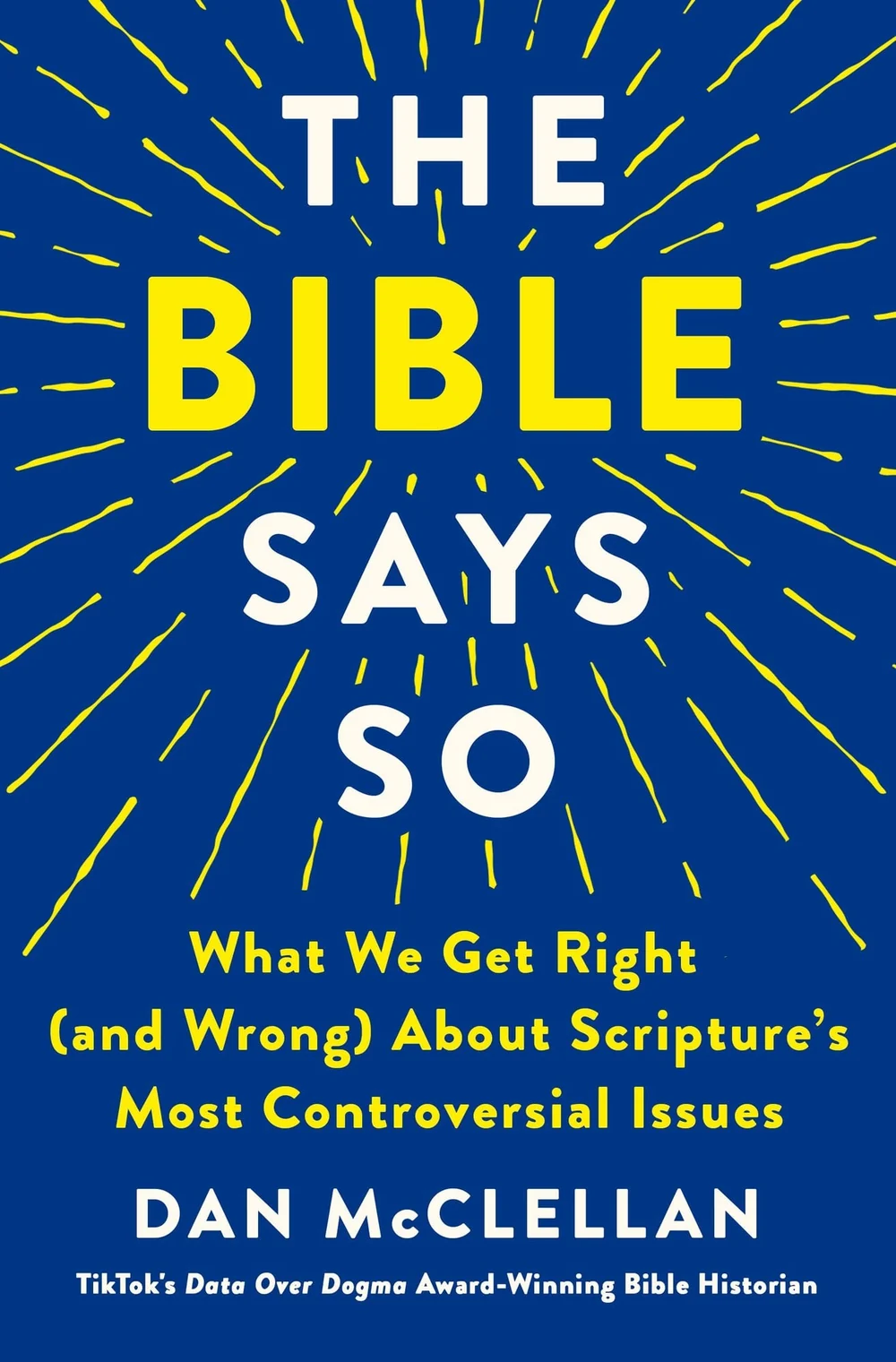
All episodes
Spare the Rod... Please!
Does the Bible really say that parents should beat their children? Yes. Yes it does. AH! But couldn't that verse in Proverbs mean something else? Something a little less abuse-y? Something about a shepherd guiding their sheep? On this week's episode, we'll look at what the author of Proverbs REALLY meant when they said that a parent who spares the rod hates their child. Then, what is Satan's job? Is it to enact the eternal torment of sinners? Or is it possible that Satan's lake of fire has a far less sinister purpose? We'll explore what Paul wrote about this, and you won't be surprised to learn that it's nowhere near as obvious and clear-cut as we'd all like it to be. For early access to an ad-free version of every episode of Data Over Dogma, exclusive content, and the opportunity to support our work, please consider becoming a monthly patron at:
Bonus Episode Recorded with this episode: read the full transcript $10 patrons · log in with PatreonTranscript — tap any word to jump the video there
Dan McClellan Once you build up this brittle foundation of it's all perfect and all true and all inspired, any problem with it just brings the whole thing crumbling down. It is a house of cards, and you just have to ignore that you already have taken cards out and just hope that it stays together. Hey, everybody. I'm Dan McClellan.
Dan Beecher And I'm Dan Beecher.
Dan McClellan And you are listening to the "Data Over Dogma" podcast, where we increase public access to the academic study of the Bible and religion and combat the spread of misinformation about the same. How are things today, Dan?
Dan Beecher Things are good. It was Thanksgiving.
Dan McClellan It was.
Dan Beecher I gave some thanks.
Dan McClellan Awesome.
Dan Beecher For us. It's been a minute for the listeners- Yes ... and viewers since Thanksgiving. But you and I just had our Thanksgiving, and I had a lovely time.
Dan McClellan I had a lovely time as well. We'll talk about this in our after-party.
Dan Beecher But yeah. We'll hear the travails of the McClellan family in- ... the land of the Magic Mouse.
Dan McClellan Yes, and what a land it is.
Dan Beecher It is one, for sure. It's actually several lands, it turns out.
Dan McClellan Of all the lands, it is definitely one of them. Yeah, actually, you're right. It is several of them, so... But for those of you who aren't our patrons, we're just going to have to dive into some Bible stuff.
Dan Beecher All right. So first, we're going to take issue with something in the Bible, in our segment Taking Issue. You know what? The whole show's about punishment.
Dan McClellan Yeah.
Dan Beecher We're just talking about punishment sort of as a concept.
Dan McClellan Mm-hmm.
Dan Beecher We'll keep it in the family for the first part and then go sort of a wider view of punishment.
Dan McClellan There's some within-the-family stuff that's part of the reason there's a punishment in the second one, but we'll get to that.
Dan Beecher Yeah. Oh, that's true.
Dan McClellan Wow.
Dan Beecher All right. Well, with all of that mystery, let's dive into Taking Issue. So we're going to take issue with something.
Dan McClellan Yeah.
Dan Beecher It's a pretty common thing. It's funny because when we were talking about this, you said, "Hey, there's this thing in Proverbs. Do you want to look at that?" And I was like, "Sure." And you said, "It's about the hitting of children or whatever." And I said- Yes ... "Is that the spare the rod, spoil the child thing?" And you said, "Well, that's not the actual biblical phrase." It does have the phrase spare the rod.
Dan McClellan Right.
Dan Beecher The thing that freaked me out when I actually got to Proverbs, what is it, 13?
Dan McClellan 13:24, yep.
Dan Beecher Is that it sounds worse than spare the rod, spoil the child.
Dan McClellan Yeah.
Dan Beecher It's way harsher than that.
Dan McClellan Yeah. So let's talk about those who spare the rod hate their children.
Dan Beecher Yeah.
Dan McClellan And just to kind of fill in the blanks for the people who are like, "What's this spare the rod, spoil the child thing?" That's the idiom that everybody has heard, which does not come from Proverbs. It's obviously inspired by Proverbs.
Dan Beecher Right.
Dan McClellan But that actually comes from a poem that was published between 1663 and 1678 called "Hudibras" by a gentleman named Samuel Butler.
Dan Beecher Hmm.
Dan McClellan And it is a satirical poem written in a mock-heroic style, and a lot of people who quote the spare the rod, spoil the child part are probably not aware of the context because it's actually one line of four lines that are talking about how to spice up a problematic sex life- ... where it says, "What medicine else can cure the fits of lovers when they lose their wits? Love is a boy by poets styled, and spare the rod and spoil the child." And the idea here seems to be drawing from the Proverbs thing- Right ... where he who spares the rod hates his child. In other words, beat your kids vigorously.
Dan Beecher Right.
Dan McClellan But here, the idea is if your love life has gotten a little lackluster, maybe try spanking.
Dan Beecher Do you own a whip? Do you have a riding crop somewhere- Yes ... on the premises?
Dan McClellan Flagellation is the key.
Dan Beecher Yeah.
Dan McClellan So yes, it's a rather interesting context for people to pull that. One of those sayings that people are like, "Well, I think I know what it means," and then it's like, well, if you look at where it comes from, you don't know what it means.
Dan Beecher Yeah.
Dan McClellan Like the doofus who keeps saying, "Vox populi, vox Dei," voice of the people is the voice of God, which if you go look at the earliest Latin context, the person who's saying it is basically saying, "Only idiots say the voice of the people is the voice of God."
Dan Beecher Right. Not unlike the idea of pulling oneself up by their bootstraps.
Dan McClellan Right. Which is also- You've got to do that.
Dan Beecher It's like, well- Which is also an impossibility, that it's making fun of the whole concept.
Dan McClellan Yes.
Dan Beecher This happens a lot.
Dan McClellan Yes. It would be ironic if we understood ironic by the sense that Alanis Morissette used in her song "Ironic."
Dan Beecher Ironically non-ironic.
Dan McClellan All right.
Dan Beecher Let us then reel ourselves back- Yeah, okay ... to Proverbs.
Dan McClellan If we must.
Dan Beecher I was going through some of the chapters surrounding this chapter.
Dan McClellan Mm-hmm.
Dan Beecher I found this chapter intensely hard to read- Yes ... as well as the chapters previous- Mm-hmm ... because it's just these one-liners, and it just hits you with them. Boom, boom, boom- Yeah ... boom, boom. There's no narrative line or structure or anything.
Dan McClellan It is just- Nope It's aphorism after aphorism after aphorism.
Dan Beecher Yeah.
Dan McClellan Yeah.
Dan Beecher Eventually, your brain starts to turn into oatmeal and your eyes cross, and it doesn't really work anymore.
Dan McClellan Yeah.
Dan Beecher Especially if you have ADHD like me, it's not- Like me do ...
Dan McClellan like me do.
Dan Beecher And I struggled to pay attention.
Dan McClellan Yeah.
Dan Beecher Chapter 13 of Proverbs opens with, it's kind of a bookend, actually. It opens with, "A wise child loves discipline, but a scoffer does not listen to rebuke." So that part, it feels like, okay, we're going to have a whole chapter about disciplining one's child.
Dan McClellan Mm-hmm.
Dan Beecher And then we don't- Right ... have a whole chapter about that. And then at the very end, we come back to the idea of disciplining children.
Dan McClellan Yes. And the whole verse, and this is from the NRSVUE reads, "Those who spare the rod hate their children." And in the Hebrew, it's actually in the singular, "The sparer of his rod hates," or "is a hater of his son" is literally what it says. "And those who love them are diligent to discipline them." And discipline here very clearly has reference to beating them with a stick, which is problematic.
Dan Beecher When I was looking at different people talking about these verses- Mm-hmm ... there was a lot of variance on how people were interpreting them, what that word rod- Mm-hmm ... in the original Hebrew actually meant, how it was used. Everyone wants to get as far away from this verse as they possibly can. Most people do. Most people. I guess not everybody, that's true. We'll get to some woof.
Dan McClellan Yeah. I have a chapter in my forthcoming book, The Bible Says So, out April 29th, 2025, pre-order now.
Dan Beecher There's a link to pre-order in the show notes. You can just click the link in the show notes to pre-order the book. It's so easy.
Dan McClellan We've made it so efficient, so easy for you. But in the chapter on this, I was like, "I wonder who's out there going, let's beat our kids." Because I was like, "Somebody's got to be saying this." Uh-huh. And it did not take long.
Dan Beecher No.
Dan McClellan It did not take long for me to find some people. But of the many different people saying this, I picked a tweet from John Piper, who is not just famous but infamous.
Dan Beecher So even more than famous then?
Dan McClellan Yes. He's not just famous. But on Twitter a few years ago, quoted Proverbs 13:24, and then said, "Spanking is not abuse, it is love."
Dan Beecher Yeah.
Dan McClellan And John Piper's own son is someone I follow on social media who is- Yeah, me too ... quite a clever dude. I think he would probably disagree with his dad about what spanking your kid is.
Dan Beecher But- Well, and the thing is that even that is a toned-down version of messaging that has been around for centuries.
Dan McClellan Yeah. Oh, absolutely.
Dan Beecher Because spanking is one thing. This isn't talking about spanking. This is talking about getting a physical rod, getting- Yes ... a weapon and hitting your child with it.
Dan McClellan Yes, a rod of discipline. And- Or is it?
Dan Beecher Or is it?
Dan McClellan Or is it?
Dan Beecher Yes.
Dan McClellan Because- I think this is a sign of some maturation in our society where we have a lot of people who recognize that this is dumb and harmful, and just- Yeah ... a pretty dirt bag thing to do. And so we have a lot of people now who are trying to renegotiate their understanding of the text and are arguing that when you look at the word shevet in Hebrew, in the Hebrew Bible, it is frequently used to refer to a shepherd's staff- Mm ... which is used not to wail on your sheep, but to gently guide and correct. And so there's a lot of rhetoric out there, particularly on social media, particularly on things like TikTok and Instagram and things like that, where they talk about this as actually saying not to beat your kids, but to gently guide your children and correct them.
Dan Beecher And- Which is much nicer and much closer to what modern psychology would tell you is an okay way to raise your child.
Dan McClellan Yes. And it is very well-meaning, and it is an effective means of trying to renegotiate what we want this text to mean, but it's wrong. It is demonstrably not the case.
Dan Beecher Okay, fine.
Dan McClellan Sorry to throw cold water on that argument. I've had to do that a handful of times on social media. But it is true that the word shevet can be used to refer to a shepherd's staff. It can also be used to refer to a threshing stick, stick that you would use to thresh wheat and things like that.
Dan Beecher Hmm.
Dan McClellan It can be used to refer to a spear that is used in battle. Whether or not this refers to the bo staff of Ninja Turtle fame, we don't know for sure. That's still up in the air.
Dan Beecher But it can also- We would have to ask Michelangelo? I don't remember which one uses the bo staff.
Dan McClellan And I'm going to get in a lot of trouble because I don't remember.
Dan Beecher I could- If it is Michelangelo, everyone has to give me nerd points for that one. And take a couple away from Dan.
Dan McClellan I'm almost positive it's not Michelangelo. I think it's Donatello, but I'm- Oh, it might be.
Dan Beecher I'm not sure ...
Dan McClellan I could text Rob Paulsen and ask him because he was the voice of two different Ninja Turtles. And, and by the way, he has a blurb on the back of my book too.
Dan Beecher Perfect.
Dan McClellan So he's going to be mad at me as well.
Dan Beecher That's why we have to include as many Ninja Turtle references as we can in the show.
Dan McClellan Yes. Pizza dude's got 30 seconds. And it can also be used to refer to a cane used for corporal punishment by a slave master, a parent, or even God.
Dan Beecher And- Oh, shoot.
Dan McClellan God.
Dan Beecher Yes.
Dan McClellan Oh, yeah. God, in Spanish, at least when I was in Uruguay, they would say, "Bajar la caña," which means to lower the cane, which is what you do when your donkey or mule or whatever is not moving you. Bajar la caña.
Dan Beecher Wow.
Dan McClellan So yes, God is known to bajar la caña from time to time.
Dan Beecher Wow.
Dan McClellan But when you look in Proverbs, the word shevet occurs a grand total of eight times. Seven other times, in addition to our one occurrence in Proverbs 13:24. And unfortunately, every single occurrence is explicitly a rod of discipline.
Dan Beecher Hmm.
Dan McClellan You have Proverbs 10:13, "On the lips of one who has understanding, wisdom is found, but a shevet is for the back of one who lacks sense."
Dan Beecher Wow.
Dan McClellan So very clearly this is about- Yeah ... striking someone with this stick. Proverbs 22:8, "Whoever sows injustice will reap calamity, and the rod of anger will fall."
Dan Beecher Hmm.
Dan McClellan So another clear example of that. Proverbs 22:15, "Folly is bound up in the heart of a child, but the rod of discipline drives it far away." So beat the whimsy and the mischief and the creativity right out of your kids.
Dan Beecher Yeah. Absolutely not. We will not be having any shenanigans, thank you.
Dan McClellan Yeah. You want that far, far away. Proverbs 26:3, "A whip for the horse, a bridle for the donkey, and a shevet for the back of fools." Proverbs 29:15, "The rod and reproof give wisdom, but a mother is disgraced by a neglected child." And then here are the two most explicit ones. One verse right after the other in Proverbs 23, verses 13 and 14. "Do not withhold discipline from your child. If you beat them with a rod, they will not die. If you beat them with the rod, you will save their lives from Sheol."
Dan Beecher Wow.
Dan McClellan That is every occurrence of the word shevet in the Book of Proverbs.
Dan Beecher And- And save their lives from Sheol. I mean, Sheol is the concept of hell, right? That's what we're saying.
Dan McClellan Not in the Hebrew Bible. Sheol was just the abode of the dead, but the idea here is death. The idea being that bad behavior leads to an early death, something like that. And so by beating their whimsy and their childlike innocence out of them, you are lengthening their life.
Dan Beecher Hmm.
Dan McClellan So they will not die because they stole money from the wrong guy or something like that.
Dan Beecher It's an intense... I guess what I'm getting at is that they're not going lightly with this. That is heavy-handed. They're saying this is the most important thing. You absolutely have to beat your kid.
Dan McClellan Yeah.
Dan Beecher Especially if they're dumb.
Dan McClellan Yeah. You want to just beat the dumb out of them. Just beat the dumb out of them- Yeah ...
Dan Beecher is what they're saying.
Dan McClellan Give them some wisdom welts.
Dan Beecher Yeah.
Dan McClellan And yeah, they weren't shy about this. This wasn't like the 20 or 30 years ago where it was like, you got to sometimes... This was like, "Oh, yeah, beat the crap out of them. They're not going to die."
Dan Beecher Yeah.
Dan McClellan And this is supposed to be, Proverbs is wisdom literature. This is supposed to be words to live by. This is supposed to be follow these aphorisms and this stuff, and you'll live a wise and an influential life. This is the how to win friends and influence people of the fifth or the fourth centuries BCE. And they are heartily two thumbs up for beating your child with a stick.
Dan Beecher Yeah. And specifically with a stick. Like you could hurt your knuckles.
Dan McClellan Yeah. You got to be careful with your- You're going to need Tommy John's if you're using your hand too much.
Dan Beecher Yeah.
Dan McClellan Yeah. It's pretty gross. And it's a part of the Bible that as we've pointed out, some people are trying to domesticate, some people are trying to rehabilitate, but these verses are always going to fall back into recidivism. These verses cannot be rehabilitated. They are all in on beating your kids.
Dan Beecher Yeah.
Dan McClellan And you just have to say, Bible got it way wrong here.
Dan Beecher Yeah.
Dan McClellan Whether you think this was King Solomon writing this or somebody else, by the way, it wasn't King Solomon writing this. They just straight up got it wrong.
Dan Beecher Yeah. And I think a lot of people really struggle with that. Especially if they've been taught concepts of univocality, concepts of infallibility.
Dan McClellan Right.
Dan Beecher It's hard to square that sort of thing, but I want to remind people that they've already done that. You've already concluded that slavery is wrong. You know what I mean?
Dan McClellan Oh, yeah.
Dan Beecher We've all concluded that, and that's That is going explicitly against things that are very much in the Bible.
Dan McClellan Yeah.
Dan Beecher So it's okay to also go explicitly against this part of the Bible.
Dan McClellan And so many people want to have it both ways. There's so much cognitive dissonance among folks who are like, "Slavery bad. I've just got to ignore that the Bible says slavery is good."
Dan Beecher Right.
Dan McClellan And then because of the implications. As the great poet once said, "Because of the implication."
Dan Beecher The- That's an "Always Sunny" reference. Is that what that is?
Dan McClellan That's an "Always Sunny," yeah.
Dan Beecher Yikes.
Dan McClellan Yeah. A bad one. But also got to reject those ideals as well. Because once any part of the Bible can be wrong, any part of the Bible can be wrong.
Dan Beecher Right.
Dan McClellan And so the implication is that the Bible is not a sufficient, infallible, inerrant, historical, univocal, authoritative guide for life, spiritual or temporal or anything in between. Once you build up this brittle foundation of it's all perfect and all true and all inspired, any problem with it just brings the whole thing crumbling down. It is a house of cards, and you just kind of have to ignore that you already have taken cards out, and just hope that it stays together.
Dan Beecher Yeah.
Dan McClellan So yeah, very problematic.
Dan Beecher I think that it's interesting. I think I realized as I was sort of researching for this episode that it may not be immediately obvious to some of our listeners why we're saying that these verses should be categorically thrown out and not just like John Piper says, taken to mean spanking's not a problem, spanking's okay or whatever.
Dan McClellan Yeah.
Dan Beecher So I started to dig into some of the research, and we have well over 50 years of good psychological research about what is good for children psychologically in terms of discipline, in terms of how children are corrected, et cetera, and what is detrimental, deleterious to their mental health, to their psychological wellbeing- Yeah ... going forward throughout life.
Dan McClellan Yeah.
Dan Beecher Because as you raise a child, obviously you're building the brain infrastructure for the rest of their lives.
Dan McClellan Mm-hmm. And it's very clear.
Dan Beecher There is literally no doubt that any amount of hitting your child is harmful.
Dan McClellan Yeah.
Dan Beecher It doesn't matter if it's open hand on the bum. And I was spanked as a kid, and my parents were very kind, good people. It's understandable that more social ideas are going to change over time, and that's not a bad thing. That's a good thing.
Dan McClellan But yeah.
Dan Beecher So it's so funny you hear all these people of my generation, your generation, saying, "I was spanked as a child, and I turned out great."
Dan McClellan You hit children. You did not turn out great.
Dan Beecher Yeah. So I feel like I turned out well.
Dan McClellan Mm-hmm.
Dan Beecher And in the moment, I don't think that the spanking felt like it did that much harm to me. When I was very little and I was spanked, I would cry.
Dan McClellan Right.
Dan Beecher But it didn't feel like deep trauma. And yet there are studies that... I read one study, or I read about a study that was done by some Harvard psychologists- Mm-hmm ... who did fMRI scans of children and as they looked at images of different faces, and they looked at kids who had been spanked and kids who hadn't been spanked, and strangely, the kids who had been spanked had very similar responses as kids who had been harshly beaten.
Dan McClellan So it- Yeah ...
Dan Beecher basically causes fear neural pathways instead of nurtured neural pathways.
Dan McClellan Mm-hmm.
Dan Beecher It's genuinely bad.
Dan McClellan Yeah. And one of the things that it does that the subject is not really conscious of is it changes your neural pathways when it comes to threats.
Dan Beecher Yeah.
Dan McClellan You respond differently to threats if you've had a history of that. I actually cite a few things in the footnotes in this chapter of my book. There's an interesting one, "Physical Punishment and Child Outcomes: A Narrative Review of Prospective Studies" from The Lancet just a couple of years ago by Anya Hileman. There's "Corporal Punishment and Elevated Neural Response to Threats in Children" by Jorge Cuartas et al from a couple of years ago as well, a journal called Child Development. Yeah, there's no debate. It's harmful. There are no positive outcomes.
Dan Beecher And we have better alternatives now.
Dan McClellan Yeah. Much better alternatives. So despite what the Bible says, and it says it quite explicitly, and it says it quite emphatically- In multiple places In multiple different ways and in multiple different places, and yes, is very excited about it as well. Please don't lay your hands on your kids.
Dan Beecher Yeah.
Dan McClellan It's not a good thing, irrespective of what the Bible says. The Bible is wrong.
Dan Beecher If your household has a rod of anger, maybe that should go away.
Dan McClellan Yeah.
Dan Beecher Maybe don't have that rod.
Dan McClellan What you do is get a fishing rod- Yeah ... and take your kids to the creek, for crying out loud.
Dan Beecher Yeah.
Dan McClellan To the river. Take them up into the mountains.
Dan Beecher Yeah. Get some sheep, and then get a shepherd's rod if you want to.
Dan McClellan But no hitting. A little crook.
Dan Beecher Yeah.
Dan McClellan A little shepherd's crook.
Dan Beecher Yeah.
Dan McClellan Teach them how to raise some sheep. By the way, you do not swaddle them and put them in a manger.
Dan Beecher I'm going to swaddle a sheep, damn it. I'm going to do it.
Dan McClellan All right. Let's- Dispite what you hear. And don't anoint them with oil, because that's not going to help either.
Dan Beecher Well, all right. That was a little depressing, that whole thing. Beating children is not a fun topic. So, let's move on to a really interesting chapter and verse. So, we're starting this chapter and verse in 1 Corinthians 5. Am I right about that?
Dan McClellan Chapter 5.
Dan Beecher Yep. Johnny 5, still alive.
Dan McClellan Drive 55, arrive alive.
Dan Beecher Just nonsense '90s references pour out of you in amazing ways. Actually, Johnny 5 is probably '80s, huh?
Dan McClellan Is it? That's probably '80s. I don't know. There was a sequel- Yeah ...
Dan Beecher wasn't there?
Dan McClellan Who knows?
Dan Beecher Anyway, 1 Corinthians 5, what we're not going to be talking about, because there's a lot about... The heading, the subheading, or the chapter heading in the NRSVUE says- Mm-hmm ... "Sexual immorality defiles the church." But that's not the point that we're most interested in- No ... I think, as we talk about this. What we're interested in is a moment where, and is this Paul? Is that who we're talking about?
Dan McClellan This is Paul, yeah.
Dan Beecher And Paul is writing, and he starts with, "Oh, you naughty Corinthians. You guys have somebody among you who is living, a man is living with his father's wife."
Dan McClellan Yeah.
Dan Beecher Dun-dun-dun. Da-da-da-da.
Dan McClellan Yeah.
Dan Beecher This is- Are we meant to believe that the father is dead now?
Dan McClellan Or it's just- No, I think what we're probably meant to understand is that this is the dude's stepmother.
Dan Beecher Mm-hmm.
Dan McClellan So, there's a whole genre of- ... this kind of thing.
Dan Beecher On certain websites that exist on the internet, you might find some stepmom stuff. Don't look it up. Mom, don't look it up if you're watching.
Dan McClellan And just some background. Paul is writing this. These are epistles, letters that Paul is writing, where he's gone through, he's been on his mission trip, he's established a church. He's like, "All right, guys, you got it from here." And then he gets a letter months or years later, and they're like, "Dear Paul, we've been having an issue with so and so, and then..." And so, he's writing back, and he's like, "We talked about this." And then he's giving them some advice and everything. And here, he actually mentions that he had written a previous letter to the Corinthians, and we don't have it.
Dan Beecher So, there's a zeroth- So, this is actually second Corinthians ...
Dan McClellan Corinthians.
Dan Beecher Well, yeah.
Dan McClellan You could say there's a zeroth Corinthians- ... if you were a moron like me. But there was an earlier letter, and he's getting something back, and they're evidently talking about some dude who is living with his stepmother. And in this time period, you would have second marriages if a man divorced his wife or his wife died or something like that. Second marriages, as with a lot of folks today, the second marriage is to a woman who's much younger.
Dan Beecher Mm.
Dan McClellan And so, there would be a lot more age proximity between stepmothers and the oldest child in first-century Rome. And so, shenanigans- Mm-hmm ... with stepmothers were probably not all that uncommon. And stepmothers, they're the classic villain of Disney movies- ... and all kinds of fairy tales. Excuse me. The stepmother is the villain. So, we're dealing in pretty common tropes here. But evidently, Paul is particularly upset with them because they're kind of proud of it or something?
Dan Beecher Yeah, it's tricky. He says, "And you are arrogant. Should you not rather have mourned so that he who has done this would've been removed from among you?" He's very upset.
Dan McClellan Yeah.
Dan Beecher Yeah, they seem to be, "It doesn't matter," or something. Anyway, he does not like their reaction to this whole situation.
Dan McClellan And this is right out of Leviticus 18:8, is one of the thou shalt nots- Mm ... is thou shalt not engage in shenanigans- ... with your father's wife.
Dan Beecher With your stepmom.
Dan McClellan Yeah. And in this period, a lot of people think everything went back in first-century Rome or in earlier Greek society. But no, there were laws against this kind of incest in this time period. And so, Paul recognizes that even the Romans think that this is- ... out of pocket. So, Paul's like, "What is wrong with you all? I thought I raised you better."
Dan Beecher Yeah.
Dan McClellan I avoided the hitting.
Dan Beecher Yeah.
Dan McClellan And he goes on, "For I, though absent in body, am present in spirit. And as if present, I have already pronounced judgment in the name of the Lord Jesus on the man who has done such a thing. When you are assembled and my spirit is present with the power of our Lord Jesus..." And so, basically saying, "Look, next time you guys meet, you are to hand this man over to Satan."
Dan Beecher Yeah, that's a crazy thing. It's not, "Make sure that this guy gives himself over to God." He says, "You guys hand this man over to Satan for the destruction of the flesh."
Dan McClellan Yeah.
Dan Beecher But it's what he says next that's fascinating.
Dan McClellan Yeah.
Dan Beecher Because Satan is apparently going to destroy his flesh so that the spirit may be saved in the day of our Lord, or the day of the Lord, rather.
Dan McClellan Yeah. We got a couple of different ways to read this because- Yeah ... some texts say Lord Jesus.
Dan Beecher Mm.
Dan McClellan And actually, I'm going to look up which those are.
Dan Beecher We're going to the book. We're going to the book.
Dan McClellan Yeah. I'm pulling out my Nestle-Aland 28th edition to pull this up and see what we've got here. So at the end of verse five, we've got Kyriou, the genitive of Kyrios, and yeah, so P 61, Sinaiticus, a handful of others read Jesus, or add Jesus, so Lord Jesus. Some add Lord Jesus Christ.
Dan Beecher Mm.
Dan McClellan Some add our Lord Jesus Christ. So yeah, a bunch of different readings.
Dan Beecher And those are just all the things that you just said, those lists of numbers and letters or whatever.
Dan McClellan Yeah, those are manuscripts of the New Testament.
Dan Beecher Are various ancient versions of this that we have at least fragments of or something.
Dan McClellan Yeah. But that's just an interesting text critical question. But ultimately, the point is, what the hell is going on here?
Dan Beecher Right.
Dan McClellan Yeah.
Dan Beecher It does sound like a description of the afterlife, question mark, that I have not heard.
Dan McClellan Yeah, because, well, there are a couple different ways to read both clauses. Well, at least a couple. There are multiple different ways. Hand this man over to Satan for the destruction of the flesh. Satan wasn't just around like, "I'll kill anybody you want. Just hand them over, and I'll kill them." So there are scholars, and I think if you look at, there's an old Hermeneia commentary series on 1 Corinthians from the '70s, where I think he says this obviously refers to death. These days, I think more scholars would suggest that probably doesn't seem to be in view. They had no authority to execute anybody.
Dan Beecher Right.
Dan McClellan And the last thing Paul was going to do would engage in extrajudicial capital punishment. So it seems to be we're going to kick him out from the protective shell of the Christian community, like he's no longer going to be a part of the body of Christ, and so he's going to be under the influence of Satan out there in the wild and wooly world. Whatever wooly means, and that is, I think, definitely an '80s reference. Bull Durham was from the '80s.
Dan Beecher Good.
Dan McClellan That was a deep cut.
Dan Beecher Yeah.
Dan McClellan But a lot of scholars today would suggest the idea seems to be he's going to be subjected to the buffetings of Satan, at least his flesh, his body will. And this reveals kind of the Platonic dualism that Paul seems to be promoting, where the fleshly existence is the baser, corrupt one- Right ... and then the spiritual existence, your divine spirit is the higher one. And the two happen to be together in life, but ideally, you want to transcend the flesh and return to the spirit. And so maybe the idea is the buffetings of Satan and the punishment of the flesh, either it results in your purification, like a refiner's fire. This purifies your spirit. You undergo these punishments, and then you've paid your debt to God, and then you are saved. That the spirit may be saved in the day of the Lord. Maybe that's what it is. There are other scholars who suggest by being subjected to the buffetings of Satan, they're going to repent- Mm ... and come back to the fold, and in that way, the spirit may be saved in the day of the Lord. And that brings up the question what it means for the spirit to be saved in the day of the Lord, because as a lot of scholars have pointed out, Paul does not say his spirit. Paul just says the spirit.
Dan Beecher Right.
Dan McClellan And does that mean the man's spirit? Does it mean the congregation's spirit? There's this notion that the church has a spirit that is governing and guiding it, and so is it about ensuring that you have purged the community of this leaven? Because Paul talks about, in the very next verse, "Your boasting is not a good thing. Do you not know that a little yeast leavens all of the dough?" And so the idea may be, talking about another saying that a lot of people get wrong, a bad apple. A lot of people say, "Oh, he's just a bad apple. No big deal." Well, what does the bad apple saying mean?
Dan Beecher Right.
Dan McClellan A bad apple ruins the bunch.
Dan Beecher Yeah.
Dan McClellan Which is the same as a little leaven. A little yeast leavens all the dough. In other words, if you keep this corrupt influence within the body of the church, you're going to corrupt the entire body of the church. And so the idea is purge him, boink, pop him like a zit so that- ... the body of the church, and its spirit is able to be saved. I don't know which one it is.
Dan Beecher Yeah.
Dan McClellan Scholars are still arguing over this. But I think the reading that certainly seems to make sense is that in some sense, this has to do with this man's own salvation. I think it's certainly a plausible reading. And so some people have talked about this as an example of universalism.
Dan Beecher A fancy Greek word for this is apocatastasis, which Which feels like you just did a magic thing.
Dan McClellan Yeah. Or I just made it up. But yeah, it's a word that actually occurs in the Book of Acts, but it means the restoration. Usually it's used to refer to restoration of all things. The idea, and we have some early Christians who talk about this, is that ultimately the goal of all of this is that everyone be saved. And so you have Christians like Origen and others. Origen's probably the most influential Christian theologian of the first five centuries, well, probably up to Augustine. But was ultimately branded a heretic and condemned well after- As will happen.
Dan Beecher That'll happen.
Dan McClellan Yeah. But they took a lot of his insights with them.
Dan Beecher Sure. Yeah, obviously you're not going to throw away the insights. You're just going to- Right ... hang the guy as a heretic. That's all.
Dan McClellan Well, it was long after his death, actually.
Dan Beecher Oh, okay.
Dan McClellan It was a posthumous- Hanging ...
Dan Beecher condemning.
Dan McClellan Yeah, hanging. We figuratively hang thee until thee are dead. But yeah, he advocated for, in some sense, a brand of universalism, and some people think Paul is doing the same. He talks about the restoration of all things elsewhere. He talks about all being saved- Yeah ... in Christ. And so for some folks, this is just another reference to this idea that even if someone is handed over to Satan for the destruction of the flesh, the ultimate end of that process is that the spirit is saved.
Dan Beecher Yeah. I got to say, when I read it, my initial impulse was that what it was saying was-- So initially, my brain said, "This is posthumous. After this guy is dead, he is going to be handed over." And I'm not saying that this is correct, but this is where my brain went.
Dan McClellan Yeah.
Dan Beecher After he was dead, he would be handed over to Satan. His flesh would be destroyed by Satan, and that seemed, in my mind-- And I love this interpretation. It's not correct, but I think it's so much better than the concepts of hell that I've heard before. But the idea that Satan has a job, and that job isn't eternal conscious torment, it's destruction of the bad parts, the corrupt parts of the self- Uh-huh ... so that the spirit can then go on and be exalted- Yeah ... in some way. That's how I read it.
Dan McClellan Yeah, you might say that he's the cancer treatment. If sin is the cancer, he's the treatment that, yeah, sure, it makes you lose your hair, but hopefully it gets rid of everything, and then you get to go on and be saved in the end.
Dan Beecher Satan is chemo. I like it.
Dan McClellan Yeah.
Dan Beecher It does seem like the idea-- I just love the idea that this guy is bad, that his behavior is abominable, and we need to do whatever the work is for him to be saved.
Dan McClellan Yeah. And Paul never seems to-- The only part of the Pauline epistles that makes any kind of plausible reference to any notion of hell is something that is in 2 Thessalonians, I think, which a lot of scholars don't even believe was written by Paul, where it just talks about eternal destruction.
Dan Beecher Mm.
Dan McClellan And which could mean a couple of different things. You're destroyed and it's permanent, like annihilationism.
Dan Beecher Right.
Dan McClellan Boom, that's the end. That's not changing. Or- You just don't exist anymore.
Dan Beecher Right.
Dan McClellan Or it could mean, a lot of people who think that we already have unilaterally eternal conscious torment represented throughout the New Testament will say, "No, it means this process of destruction that lasts forever."
Dan Beecher Yeah.
Dan McClellan But I don't think that's supported by anything. Paul never uses any of the three words for hell anywhere.
Dan Beecher Mm.
Dan McClellan And so whether it's Gehenna, Tartarus, or Hades, they never occur in any of Paul's writings. And so a lot of people think, "Well, he has no concept of postmortem divine punishment. If he does, it seems to be annihilationism anyway." And so yeah, some people just want to lean into universalism.
Dan Beecher Yeah.
Dan McClellan And we have within some of the Gnostic literature an idea that the punishment that you undergo is actually intended to be an education and a purification, so that ultimately you have the knowledge that is saving so that you achieve salvation. So there are streams of tradition within Gnosticism that are universalist as well.
Dan Beecher I think it's also worth mentioning that at no point in this story does Paul say, "Call him to repentance. Give him X, Y, and-- Give this sinner X, Y, and Z work."
Dan McClellan Mm-hmm.
Dan Beecher It's not saying any of that. It's just saying, "You guys need to shun--" It does say shun him. It says sort of like, "We need to socially shame this and kick it out from among us." But- At no place does it say he needs to do X. It just says, "You guys kick him out, leave him to Satan. Satan will destroy his flesh, and then his spirit may be saved in the day of the Lord."
Dan McClellan Yeah. And Paul goes on, verses nine through 13, "I wrote you in my letter not to associate with sexually immoral persons." And then he gives kind of a caveat that I think is funny. "Not at all meaning the sexually immoral of this world, or the greedy, and swindlers, or idolaters, since you would then need to go out of the world." He's basically saying, "Don't associate with sexually immoral people. I don't mean all the Gentiles that are around you. You kind of got to deal with them." "But now I am writing to you not to associate with anyone who bears the name of brother or sister who is sexually immoral, or greedy, or an idolater, reviler, drunkard, or swindler. Do not even eat with such a one. For what have I to do with judging those outside?" Meaning outside the church.
Dan Beecher Right.
Dan McClellan "I'm not judging the Gentiles. Are you not the judges of those who are inside? God will judge those outside. Drive out the wicked person from among you." So his concern seems to be for the reputation of the church- Yeah ... and for what he perceives to be the spiritual health of the church. Basically saying, "Hey, you guys, you're functioning as a group, and you need to pop this guy like a pimple, and get him out of there. Get him out from underneath your skin, because otherwise that yeast is going to leaven the whole lump."
Dan Beecher It's also very important to point out, so what we have is a chapter in which sexual immorality is explicitly judged as being really bad.
Dan McClellan Mm-hmm.
Dan Beecher And the only example given has nothing to do with homosexuality. It is explicitly a heterosexual, but just naughty relationship.
Dan McClellan Yeah.
Dan Beecher An unsanctioned relationship.
Dan McClellan Yeah. And he refers to it, so the NRSVUE uses this word sexual immorality to translate the Greek word porneia, which is where we get the word porn from.
Dan Beecher Mm-hmm.
Dan McClellan And in the oldest, most widespread usage, it primarily referred to sex work or to adultery, which were kind of the two prototypes of inappropriate sexual activity in the ancient world. And then as it was used more and more, the gaps were kind of filled in with any other sexual activity that was considered unseemly by a given social group. So a lot of people want to know, does the Bible say anything explicitly about sex before marriage? And the answer is, not directly, but probably an awful lot of them thought that porneia was an umbrella term that included sex before marriage, as long as the social group considered that to be an inappropriate sexual activity. And Paul was one who thought everybody should be celibate anyway.
Dan Beecher Right.
Dan McClellan Paul was obviously- It's all porneia to him ...
Dan Beecher yeah.
Dan McClellan Yes. It's all porneia to him and, oh, shoot. I can't remember the name of the Supreme Court justice. Who knows it when he sees it?
Dan Beecher Yeah. Who knows it when he sees it.
Dan McClellan Yeah. I actually cited that Supreme Court case in a paper once where I was talking about why you can't define conceptual categories, but that's- Right ... a classic example of that. But Paul knows it when he sees it, and it's everything, basically.
Dan Beecher And does it involve sex?
Dan McClellan Then it's porneia. Porneia, porneia, porneia, porneia. But that is a glimpse into at least one of the examples of something that he condemns as porneia, and it is something that is explicitly condemned in Leviticus 18:8. So he's well within the Jewish sexual ethic when he's talking about problems with stepmother stuff.
Dan Beecher There you go.
Dan McClellan Yeah.
Dan Beecher In order to sort of do some research for this segment, I actually went back and listened to an older episode of a very good show that I listen to sometimes called "Data Over Dogma" where I went and listened to our episode from over a year ago about hell.
Dan McClellan Yeah.
Dan Beecher Because this seems to present, like you say, there's a possibility here. One of the things that we discussed in that episode was just that there are so many different conceptualizations of what the afterlife looks like- Mm-hmm ... whether there is punishment for the wicked, et cetera. And I just like that this muddies that water a little bit further.
Dan McClellan Yeah. There was no single authoritative concept. Everybody was basically, and I go back to "Talladega Nights." "I think of Jesus as a..."
Dan Beecher Wearing one of them tuxedo T-shirts.
Dan McClellan Yeah. Or a baby, and he's got this eagle with these big old wings. But everybody's just sharing their own opinion.
Dan Beecher Yeah.
Dan McClellan And the accident of preservation, what gets into the Bible, what doesn't, and then later literature. My 15-year-old, I was driving her to school this morning, was talking about how they were reading "Dante's Inferno" at school.
Dan Beecher Mm.
Dan McClellan And I was like, "Really? I didn't get to read that when I was in high school." And she was like, "That dude was messed up." And I was like, "Yes." But that kind of literature is what solidifies a lot of that kind of stuff, is what creates these consensus views that then go from de facto doctrine to de jure doctrine.
Dan Beecher Yeah.
Dan McClellan Because if you take the Bible at its word, it has a ton of different, often self-contradictory things to say about how God punishes the wicked after death. And this is a good example of a rather confusing thing that Paul says about what goes on with people who mess around with their stepmoms.
Dan Beecher Yeah.
Dan McClellan All right.
Dan Beecher Well, there you go. Don't look up stepmom porneia unless you want to. But yeah, fascinating stuff. I love it. I think that that's good. Don't hit your kids also.
Dan McClellan And stepmoms, don't spank. Are you spanking them?
Dan Beecher You can spank your stepmom- Unless it's consensual. Wait a minute.
Dan McClellan Okay.
Dan Beecher You know what? You're all going to have to sort yourselves out. We'll figure it all out in the after-party.
Dan McClellan Yeah.
Dan Beecher And you guys can come along to that if you want to. You can become a patron of this show over on patreon.com/dataoverdogma, thereby gaining access to an early and ad-free version of every episode of the show, plus at the $10 a month level or higher, you can hear the after-party, which is us having a bunch of fun. If you guys would like to write into us, you can do so at contact@dataoverdogmapod.com, and we'll talk to you again next week.
Dan McClellan Bye, everybody.
Further reading recommended in this episode
Affiliate links: the show earns a small commission at no extra cost to you. See all book recs