
 Watch on YouTube
 Apple Podcasts
 Spotify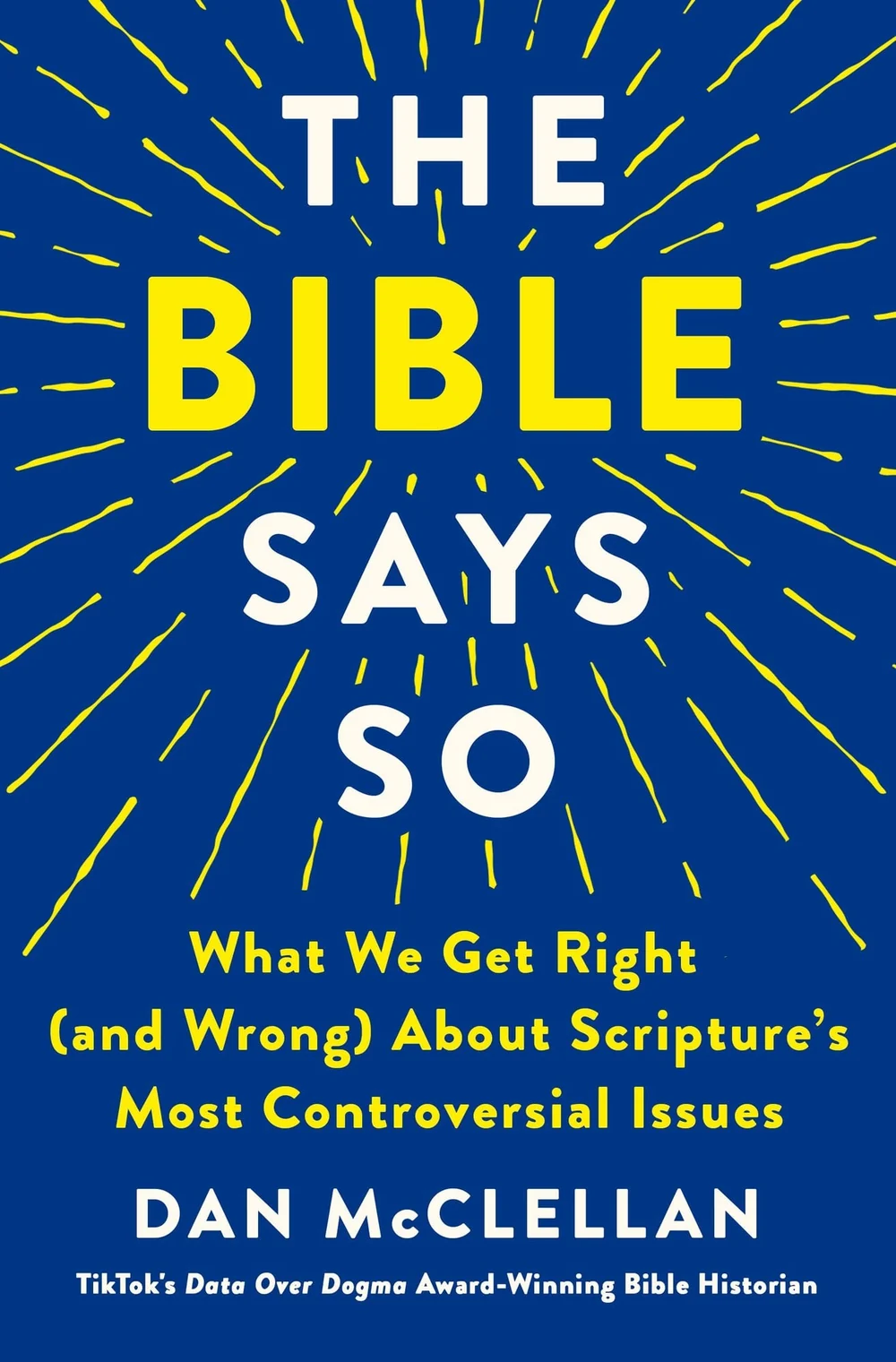
All episodes
With Counter-Apologies
Did NASA confirm the date of the birth of Christ? Are most translations of the Bible wrong about the order of the creation? Will Dan M ever be able to say the word smorgasbord? This week on the Data Over Dogma show, we're honoring the Bible by shredding some bad apologetics! As we say every week on the show, one of our goals is to combat misinformation. Sometimes that means that we combat bad attempts to refute the Bible, and sometimes that means we go up against bad attempts to make the Bible seem more irrefutable. This week, it's the latter. For early access to an ad-free version of every episode of Data Over Dogma, exclusive content, and the opportunity to support our work, please consider becoming a monthly patron at:
Bonus Episode Recorded with this episode: read the full transcript $10 patrons · log in with PatreonTranscript — tap any word to jump the video there
Dan Beecher Why do you hate the Bible, Dan?
Dan McClellan Well, it's because I hate God, can't you tell?
Dan Beecher It's all that Satan worship you've been doing.
Dan McClellan Hey, once you pop, you can't stop. Hey, everybody, I'm Dan McClellan.
Dan Beecher And I'm Dan Beecher.
Dan McClellan And you're listening to the Data Over Dogma podcast, where we increase public access to the academic study of the Bible and religion, and we combat the spread of that ever-present, I forget ...
Dan Beecher Misinformation is the word you're looking for.
Dan McClellan Misinformation of the same. We'll just put some added posts.
Dan Beecher It's amazing that you would forget that particular word, because today is all about misinformation.
Dan McClellan It's a veritable smorgas-- I don't know what the word is. It's a cornucopia of misinformation- All right. This is going to be- And bad apologetics ...
Dan Beecher a fun episode if Dan doesn't know how to word today.
Dan McClellan Yeah. This is going to be a tricky one.
Dan Beecher But yeah, we're doing a bit of a grab bag of apologetics. I'm going to call it, I don't know, something along the lines of My Apologies. What do you think of that? Should we do that?
Dan McClellan Ah, yes, that works.
Dan Beecher My Apologies. Yeah, because we're going to be talking about a lot. Look, there are plenty of fine apologetics out there. There are plenty of ways of looking at the stories of the Bible and harmonizing them with your worldview and whatever. There are also some really, really bad ways of- Lots of them, yeah ... trying to take what's in the Bible and mold it to what we actually know about the world around us, and- Mm-hmm ... it doesn't always work.
Dan McClellan Yeah. It's highly problematic, and mostly because we-- And a friend of mine on Facebook, a scholar friend of mine, was talking about this yesterday. You've heard the term exegesis?
Dan Beecher Mm.
Dan McClellan And then we also talk about eisegesis.
Dan Beecher One is- Explain them both.
Dan McClellan Okay. So exegesis, the idea would be interpretation out of. You're reading from. You're basically trying to figure out what the text means. Eisegesis would be reading into.
Dan Beecher Mm.
Dan McClellan You're putting stuff into the text. And the concern that my scholar friend was expressing was the notion that these were a strict dichotomy, because there's not. Because there's no such thing as pure exegesis.
Dan Beecher Right.
Dan McClellan Because we're not just extracting meaning from a text. You are generating meaning with the text, something that I have harped on many times. And so all interpretation is eisegesis to one degree or another. And so when all engagement with the text to one degree or another is remaking the text in our own image, the difference is what are our concerns and our goals and our methodologies. Are we trying to reconstruct the text in a way that we think is going to most closely approximate what the original authors and audiences would've understood, or are we trying to construct meaning in a way that serves our own interests today? And this is something that I point out in the introduction to my forthcoming book, "The Bible Says So."
Dan Beecher Gosh, you're good at squeezing that in. That's awesome.
Dan McClellan Yes.
Dan Beecher Pre-orders available now.
Dan McClellan Yeah. "What We Get Right and Wrong About Scripture's Most Controversial Issues," coming out April 29th, 2025.
Dan Beecher Link in the show notes, baby. Everybody pre-order. We want this thing on the New York Times bestseller list.
Dan McClellan Yeah.
Dan Beecher We want to rocket this to stardom.
Dan McClellan Yeah, we want it coming out number one. But one of the things I point out is that if you are not willing to let the Bible mean something that you disagree with, then you're not really concerned for the Bible.
Dan Beecher Right.
Dan McClellan You're just concerned for the Bible as a proof text. You just want it to be the authorization for your own dogmas. And that's what bad apologetics, that's the foundation of bad apologetics, is where- Yeah ... really, you're only attempting to perform a concern for context or history or textual things like that. It's a performance. You want to make it look like you are concerned for all those things, but in reality, the Bible is not allowed to contradict your dogmas.
Dan Beecher Yeah.
Dan McClellan And we're going to see a bunch of ways that apologetics does that in today's show.
Dan Beecher Indeed. So let's start at the very beginning. It's a very good place to start. In Genesis- Mm-hmm ... one of the things that you proposed to me, as we were looking through ideas that we could explore today, was- It was an indecent proposal, one might say. Yeah, indeed. But- It is ways that certain Bible translations can fudge the translation to harmonize what they think the book is supposed to be saying, rather than to present what the book actually says.
Dan McClellan Yes.
Dan Beecher Is that a fair description of what we're looking at here?
Dan McClellan Yeah, I think that's a fair description. We're talking about Genesis 2, right?
Dan Beecher Yeah.
Dan McClellan Yeah.
Dan Beecher Okay.
Dan McClellan So, and this kind of came up because of some videos that I made recently. One of them, I was talking about the difference between the creation account in Genesis 1, and then the creation account in Genesis 2 and 3. These are two entirely different creation accounts. And we've talked at length about this. In fact, I think our very first show talked about the differences between these two creation accounts. But- That's right Inevitably, there was pushback from folks who suggest that they are one and the same narrative, and that they are entirely harmonious.
Dan Beecher Yeah.
Dan McClellan And that we just need to stop hating the Bible and just succumb to the dulcet tones of their harmony.
Dan Beecher And- Why do you hate the Bible, Dan?
Dan McClellan Well, it's because I hate God, can't you tell?
Dan Beecher It's all that Satan worship you've been doing.
Dan McClellan Hey, once you pop, you can't stop. So, and this comes from the main verse I want to talk about is Genesis 2:19, but also Genesis 2:8- Okay ... is a companion verse to this, because there was a video that was made. It actually, I don't think was responding to me. I think it was responding to a comment from another comment on my video or something like that. But the person said that the notion that these two texts contradict is a product of a misunderstanding or a mistranslation or misinterpretation of Genesis 2:19. And, in the Hebrew, Genesis 2:19 is just carrying on the narrative of God's creation of the Earth. So, we have God taking the man and put him in the Garden of Eden to till it and keep it, and the Lord God commanded the man, you may all that stuff.
Dan Beecher Mm-hmm.
Dan McClellan "It is not good that man should be alone. I will make him a helper as his partner." And then Genesis 2:19 says, "So out of the ground, the Lord God formed every animal of the field and every bird of the air, and brought them to the man to see what he would call them. And whatever the man called every living creature, that was its name." And this is an attempt to find a suitable companion, an ezer kenegdo, a helpmeet, for Adam. And it fails. God is like- Right ... "Ugh, back to the drawing board. What if I just tore a piece of his flesh off?"
Dan Beecher Yeah.
Dan McClellan And that's where we get woman. But if you go look at the NIV and the ESV, two translations with which we have quibbled on our show.
Dan Beecher So this is the New International Version and the English Standard Version.
Dan McClellan Right. And funny enough, the English Standard Version exists because certain white men were like, "Hey, the NIV is too woke." Although they used whatever they would've used for woke back in the '90s.
Dan Beecher Right.
Dan McClellan But the New International Version in verse 19 says, and here's the reason this is a bad thing, because according to Genesis 2, God creates Adam, then creates all the animals.
Dan Beecher Right.
Dan McClellan But in Genesis 1, the animals are created before humanity is created.
Dan Beecher That's right.
Dan McClellan So we've got a pretty clear contradiction. Genesis 2:19 in the New International Version says, "Now the Lord God had formed out of the ground all the wild animals and all the birds in the sky."
Dan Beecher Oh, we're getting down to the minutiae again. We're hinging on a single word again.
Dan McClellan But- Yes, a helper verb, had- Yeah ... which communicates in the English, what is known as the pluperfect tense, where instead of just talking about a simple past tense, we are talking about a past that is anterior to the past tense, called the pluperfect. The idea being, this creation of the animals had already taken place- Right ... before the story we're telling you right now, and so there's no contradiction. The problem is, that is not a valid translation of the verb form at the beginning of this verse. It's what's called the Wayyiqtol verb form, or some people call it the imperfect verb form. Some people call it the prefix verb form. It's a way to say it's incompleted action, but because of its form, it's kind of thrown in the past tense.
Dan Beecher Hmm.
Dan McClellan And this is part of, in Hebrew, what's called past-time narrative sequence. When you're telling a story in Hebrew, it goes, this happened, and then this happened, and then this happened, and then this happened, and then this happened, and thus and so. But if you want to interrupt it to provide some background information like a pluperfect thing, now he had done this, then what you would do is you would interrupt that sequence of Wayyiqtol verbs with what's called a Qatal verb, which is the perfect, the completed action, the affix form, whatever you want to call it.
Dan Beecher And we don't- I don't want to call it any of those things.
Dan McClellan That's fair. That's totally fair. Neither do any of the students I've ever taught Hebrew, but that is how you would indicate a pluperfect, but we don't have that here.
Dan Beecher Okay.
Dan McClellan And we do have it in Genesis 2:8, oddly enough, because- Oh ... Genesis 2:8 says, "And the Lord God," Adonai Elohim, "planted a garden in the east, in Eden, and there He put the man He had formed." So the formation of Ha-Adam, the human, occurred before the planting of this garden. And if you look in the Hebrew, it's the Wayyiqtol at the beginning of the verse, and then it's the Qatal, that interruption of the past-time narrative sequence to indicate this has an anteriority to the current narrative.
Dan Beecher So what that means is that that's putting the creation of Adam before planting the garden.
Dan McClellan Yes, which is another contradiction.
Dan Beecher Another contradiction, right.
Dan McClellan Yes. If you go look at the beginning of Genesis 2, well, Genesis 2:4B is where this creation account begins. "In the day that Adonai Elohim made the earth and the heavens," verse 5, "when no plant of the field was yet in the earth and no vegetation of the field had yet sprung up." For Adonai Elohim had not caused it to rain upon the earth, and there was no one to till the ground, but a stream would rise from the earth and water the whole face of the ground. And then God makes the human, and then God plants a garden in Eden, and there places the human that he had created.
Dan Beecher Right.
Dan McClellan And because of this issue, because Genesis 1 also says plants were on the earth before humanity as well, guess what the NIV does? Translates Genesis 2:8 as a pluperfect as well, but not the second verb. Well, it does translate the second verb as a pluperfect, but also the first.
Dan Beecher Okay.
Dan McClellan So, in the NIV, it says, "Now the Lord God had planted a garden in the east, in Eden, and there he put the man he had formed."
Dan Beecher They're both... He had done all of this. He likes to front load the effort.
Dan McClellan Yeah.
Dan Beecher And then just plonk it all in.
Dan McClellan There's a lot of resumption, a lot of reflection, a lot of illusion backwards to things that are nowhere described in the text.
Dan Beecher Right.
Dan McClellan Well, except for in Genesis 1. And so, the NIV, you don't get a pluperfect from a Wayyiqtol verb. You get a pluperfect from interrupting a Wayyiqtol verb with a Qatal verb, and then in verse eight, they're just like, there is a Wayyiqtol verb that is interrupted by a Qatal verb. And they're like, "Nah." Both of them are pluperfect. So, it's like, well, there's no interruption with the Wayyiqtol, and then the interruption with the Qatal you're interpreting is carrying on the same sense as the Wayyiqtol, so it's doubly stupid.
Dan Beecher Yeah.
Dan McClellan But the NIV's priority, as it explicitly says in the introduction, is the inspiration, the inerrancy, the univocality, the historicity of the text. That is their priority.
Dan Beecher Right.
Dan McClellan What the text says is secondary.
Dan Beecher Yeah.
Dan McClellan Which is the biggest problem with all this. It's like you want what the text says. Sola scriptura, the text is all that matters. The text, the text, the text. But then you're telling the text what- But not that the...
Dan Beecher Yeah.
Dan McClellan You're telling the text what it is and is not allowed to say.
Dan Beecher Right.
Dan McClellan So, in reality, it's your tradition that is the authority, and the text is just the proof text, and it's going to say what you tell it to say.
Dan Beecher Right.
Dan McClellan And in this case, you're telling it not to contradict Genesis 1 because it do contradict Genesis 1.
Dan Beecher Yeah. I understand the impulse. When this book contradicts itself, that feels really scary if you've already decided that this book isn't allowed to contradict itself.
Dan McClellan Yeah.
Dan Beecher It feels obvious to me, though, that the answer to that is to just deal with your emotions about the contradictions rather than fixing it.
Dan McClellan Yeah.
Dan Beecher That's not what they think they're doing. They think they're honoring it in some way, but really all they're honoring is their emotional discomfort.
Dan McClellan Yeah. And then you've got a bunch of scholars who will then go out in search of arguments that the Wayyiqtol can communicate the pluperfect or the past perfect sense.
Dan Beecher Right.
Dan McClellan And so there are publications that are like, "We're certain that this can communicate the pluperfect." And then there are other scholars who are just saying, "No, it doesn't."
Dan Beecher No.
Dan McClellan And they bring up a handful of examples, and all of them are contested by other scholars.
Dan Beecher Right.
Dan McClellan Other scholars are like, "Yeah, no, that doesn't have to be read as a pluperfect. None of that works." But it shows that apologetics is not about following the data where the data lead. It's certainly not about giving priority to what the text says. Apologetics is always about defending a predetermined conclusion, defending a dogma against the data.
Dan Beecher Right.
Dan McClellan Saying, "The data doesn't stop us from arriving at our predetermined conclusion."
Dan Beecher Right.
Dan McClellan "You can't prove it's impossible." And there's that ginning up of the tiniest little sliver of not impossible where apologetics lives and breathes and has its being.
Dan Beecher Yeah.
Dan McClellan So, that's a particularly bad one.
Dan Beecher But- I feel like one of the interesting things about this particular thing, Genesis 2- Mm-hmm ... and these pluperfect moments, is that it makes it so clear how utterly unqualified all of us who aren't you and the people that we talked to at SBL.
Dan McClellan Mm-hmm.
Dan Beecher The rest of us are completely unqualified to make comment on this. So many people are like, "I don't have to listen to the experts, so-called experts about things because I could do my own research." No, you can't. Unless you learn as much ancient Hebrew as you know, Dan. And I'm not willing to devote as much of my life to this study as you are. You pursued multiple degrees in it, and I'm not going to be doing that. So, we all have to figure out which experts we believe- Yeah ... it makes it a very difficult pursuit.
Dan McClellan And the same is true of the experts.
Dan Beecher Yeah.
Dan McClellan None of us are capable of Gathering the experiences and the resources and the data and the training to be able to drill down to the bedrock of every single argument related to every single issue related to the Bible. At some point, even the people who are the most expert in certain fields are just relying on the judgment of other experts. And for folks who don't know these languages or the secondary literature or the archaeological or the textual or the other data very well at all, they're just unilaterally relying on the judgment of other experts. And so it's always going to come down to who you're going to accept as an expert. And so, yeah, that's a reality for all of us. And so, yeah. For the folks out there on YouTube and in the TikTok comment sections and Instagram and Bluesky and Threads and Mastodon, is that still a thing? The folks out there who are like, "Well, I just have to read the text." It's like you can't read a single syllable of the text until one of those experts has translated it for you, and you are relying entirely on their ability to accurately translate it.
Dan Beecher Right.
Dan McClellan And all the arguments from the translation are just appeals to the authority of the translator until you can drill down to that bedrock, which very few people have the ganas, have the desire, the resources, the time, or the interest in acquiring. So, yeah. We have a problem is what we have- Yeah ... those of us who do want to be able to drill down to the bedrock of all of this.
Dan Beecher So, speaking of expertise, let's move on to another thing in which neither of us has any expertise. Not you nor I.
Dan McClellan Mm-hmm.
Dan Beecher Let's go to NASA.
Dan McClellan NASA. Doesn't that mean to deceive in Hebrew?
Dan Beecher I'm pretty sure it does. Or at the very least, I've definitely seen it claimed that the word NASA means... Do you want to just answer that really quickly since we're on it? Oh, yeah.
Dan McClellan So, no, it doesn't mean to deceive. There is a verbal root that a lot of people will look this up in Strong's Concordance or something like that, which anybody who- Your favorite.
Dan Beecher Yeah.
Dan McClellan It's what I give out every year for Christmas to all my friends and family. But people will look it up, and they will look for words that mean deceive, and they will see N-A-S-A, and they will think, "Aha!" Although what they will entirely ignore is the diacritics on these letters, including a little chevron above the S, a downward-facing kind of arrow carat shape.
Dan Beecher Yeah.
Dan McClellan That indicates that is not pronounced S, like "ss," it's pronounced S-H, "sh." So nashah is a verbal root that can mean deceive, but only when it occurs in a particular verbal stem. And in Hebrew, like in English, we have these helper verbs, had, did, cause to, all these different ways to give nuance to our verbs.
Dan Beecher Yeah.
Dan McClellan In Hebrew, you actually change the word itself. And so, one of these stems, the causative stem, turns a verb from to do into cause to do. So, like the verb to see, if you put it in the causative, it would be cause to see, and we would translate it as show or something like that.
Dan Beecher Okay.
Dan McClellan Sure. So nashah only means to deceive in the causative stem. But in order to put it in the causative, you actually have to change the letters.
Dan Beecher Okay.
Dan McClellan You add a he to the beginning, and with a verbal root that begins with a nun, like nashah, that creates a consonant cluster with the first two consonants, and the nun actually assimilates to the sh sound and becomes a second sh sound. And long story short, when this verb is used to mean deceive, it- It's not NASA ... one, has never been NASA, but it's not even nashah. It sounds completely different. The vowels change as well. So in Genesis 3, where people say, "Well, that's what Eve says in Genesis 3 when the serpent deceived me, beguiled me, tricked me.
Dan Beecher That's NASA."
Dan McClellan No, the verb there is hishiani. He deceived me.
Dan Beecher Okay.
Dan McClellan So basically, people who say NASA means deceive don't have the first clue what they're talking about.
Dan Beecher I feel like don't have the first clue what we're talking about is going to be a theme- ... as we move forward.
Dan McClellan It is going to be the through line, yes- ... of so much of apologetics, and particularly the bad apologetics.
Dan Beecher So, the claim that we're looking at, the specific NASA claim, isn't about NASA deceiving, but is really about believing NASA.
Dan McClellan It is. When the claims of NASA support your dogmas, then they are the most authoritative voice- Right ... in the discussion. And here it has to do with when Jesus was crucified.
Dan Beecher Mm.
Dan McClellan Because some people will go onto a website, eclipse.gsfc.nasa.gov, and there's a page, NASA Eclipse website, and there's a page that has lunar eclipses of historical interest. And they'll share the screenshot of this list of lunar eclipses of historical interest, and one of them is April 3rd, 33 CE. And in the description of the event on this page, it says, "Crucifixion of Christ?" And so people are like, "NASA has confirmed Jesus' crucifixion."
Dan Beecher Right.
Dan McClellan And then they'll go to the accounts of the crucifixion where it says it got dark for three hours.
Dan Beecher Right.
Dan McClellan And most of them, it's noon to 3:00 PM. The Gospel of John actually places the crucifixion earlier than that, but we ignore that because we're trying to not shaw the folks- Yeah, exactly ...
Dan Beecher out there.
Dan McClellan But anyway, they say, "Well, this eclipse probably is why it got dark for three hours." I feel like- Now, what's the first thing that jumps out at you here?
Dan Beecher I feel like you used a word early in this description- An adjective ... that might shed some, not light, that might shed some darkness on this thing.
Dan McClellan Not enough to make the Earth dark, but yes.
Dan Beecher No, you said it was lunar eclipses. Did you not?
Dan McClellan It's a lunar eclipse, yes. That's- And every time they show the screenshot, it says in big, bold letters on the very top of the screenshot, "Lunar eclipses."
Dan Beecher Lunar eclipses are cool and all, but A, it's not going to make it dark in the middle of the day- No ... because that's not how eclipses of the moon work.
Dan McClellan Right.
Dan Beecher So that's an issue.
Dan McClellan It's not going to happen in the middle of the day either.
Dan Beecher No. And also, first of all, looking for a scientific explanation for what is overtly meant to be miraculous- Yes ... seems backwards to me. Well, it- It seems like the exact opposite of what you want to be doing. But it's what we- You want there to be no scientific explanation.
Dan McClellan Right. But it's what we have been doing since the 19th century.
Dan Beecher Hmm.
Dan McClellan Because since the Enlightenment, the scientific method has gained an awful lot of authority, and has made an awful lot of advances, and people live longer, and we have medicine, and we put a man on yon moon- Right ... because of science. And in the 19th century, when people started scratching their heads about the age of the Earth and about evolution and things like that, it put the religious community on their heels.
Dan Beecher Yeah.
Dan McClellan Because it was like, "Whoa, we got to respond to all of this science." And what they did was adopt the scientific method in response and say, "Well, wait. We can use science to prove this." It's a way to try to beat them at their own game, and not because they wanted to, but because they had to. They had no other choice. And so ever since the mid-19th century, the goal has been to show that these things are rational, that these things are scientifically supportable, and all of this. Because if you just punt and say, "It's a miracle, we're not supposed to be able to explain it," then the other side is going to declare victory, and that is intolerable. So you have to be able to say, "No, we can explain. There was a gust of wind-" "... and the very shallow part of the Red Sea, the water was pushed back."
Dan Beecher Right.
Dan McClellan "And that created the dry ground that allowed Moses to march across." You got to come up with naturalistic explanations to satisfy a naturalistic worldview.
Dan Beecher But yeah. Can I just say, as someone who has a naturalistic worldview, I think that's exactly the opposite of the position you should be coming from.
Dan McClellan Yeah.
Dan Beecher Because it's so much less conv-- Well, in part because we know about lunar eclipses and what they can and can't do.
Dan McClellan Yeah. There's not a lot of wiggle room.
Dan Beecher Even if it was a solar eclipse, I've seen a full totality of solar eclipse, it lasts minutes.
Dan McClellan Yeah. It doesn't last- Max seven minutes.
Dan Beecher It doesn't last three hours.
Dan McClellan Not lasting three hours, no.
Dan Beecher You're not going to explain these things through natural means, and you shouldn't. The whole point is- ... unnatural things happened here.
Dan McClellan Yeah.
Dan Beecher And therefore, we can attribute them to a supernatural cause. And- It just seems so weird and backwards to me.
Dan McClellan I think it is, but a lot of apologetics is-- Well, one, the main goal of apologetics is not to convince skeptics.
Dan Beecher Hmm.
Dan McClellan Right. The main goal of apologetics is to make the people who already agree with you feel validated.
Dan Beecher Yes.
Dan McClellan Because they're on edge. They're like, "Mm. I have this belief." "I'm not sure the data support my belief," and you've got to make a case. And as I've stated many times before, usually all it requires is ginning up the tiniest little sliver of not impossible, because that gives them an opening.
Dan Beecher Yeah.
Dan McClellan That gives them that little tiny space where they can live, breathe, and have their being of at least it's not impossible. And that's the main goal of apologetics. Now, it has to perform validity within the broader academic world, but it just has to perform it for its audience- Yeah ... that does not know the broader academic world well enough to know if these arguments are valid. And for those of you who don't know, a lunar eclipse is where the Earth is in between the sun and the moon.
Dan Beecher Right.
Dan McClellan And so the sun is shining on the Earth and casting a shadow on the moon, and so what you're seeing is the moon with a shadow going across it.
Dan Beecher Right. And- With the Earth's shadow, which happens to- Be much bigger ... completely subsume it.
Dan McClellan Yes.
Dan Beecher All right.
Dan McClellan And then the solar eclipse is where the moon is in between the Earth and the sun, and then- You know, the moon actually exactly matches the size of the sun when it crosses in front of it for- Yeah, that's a fun little co-inky-dink. Isn't it?
Dan Beecher I love that.
Dan McClellan Yeah. And so, the other thing to know about this particular lunar eclipse is that in Jerusalem, it started around 6:20 PM.
Dan Beecher Right.
Dan McClellan Because lunar eclipses usually happen in the evening.
Dan Beecher Well- Yeah ...
Dan McClellan they happen in the evening or at nighttime, or in the early morning. And so, this was not at noon.
Dan Beecher No.
Dan McClellan This didn't last until 3:00 PM. It was in the evening, and things were already getting dark.
Dan Beecher Yeah.
Dan McClellan So, it did not cause any unusual darkness. And it can't.
Dan Beecher That's a good way to explain three hours of darkness, is nighttime. If you want a naturalistic reason why it might be dark for three hours- Nightfall. That's a good one.
Dan McClellan That just makes me think of the PJ Masks opening sequence, but that's for another time and place.
Dan Beecher Yes, indeed.
Dan McClellan What were you about to say?
Dan Beecher I have no idea. Let's move on to our next thing.
Dan McClellan Okay. Well, I just want to point out one other thing, though, before we go.
Dan Beecher Yeah.
Dan McClellan Some people are like, "Well, maybe there was a solar eclipse."
Dan Beecher Okay.
Dan McClellan Well, then the gospels are all wrong.
Dan Beecher Yeah.
Dan McClellan Because the gospels say that Jesus was crucified on the Passover, and the Passover is the new moon.
Dan Beecher Ah, yes.
Dan McClellan And here's a little thing about the new moon. The new moon is when the moon is on the other side of the Earth from the sun. It is literally and physically impossible to have a solar eclipse on the Passover. It's the exact opposite of the new moon.
Dan Beecher Yeah.
Dan McClellan So yeah, if there was a solar eclipse that caused darkness for 20 times the physically possible length of a solar eclipse, it didn't happen at the Passover, and so the gospels are all entirely wrong about when Jesus was crucified. So- Yeah.
Dan Beecher So- ... there's- Pick your thing what you think the gospels are wrong about. Go ahead and choose which one.
Dan McClellan Yeah. If it's going to be- If you're trying to come up with a naturalistic explanation for this.
Dan Beecher Right.
Dan McClellan All right.
Dan Beecher Well, I think that's a good moment for us to move into another weird claim.
Dan McClellan There are more of them?
Dan Beecher Look, we could just do a separate podcast entirely about weird apologetic claims, and maybe we should.
Dan McClellan Fair enough.
Dan Beecher But we're not doing that just yet.
Dan McClellan Okay.
Dan Beecher Right now, we're just going to focus on a few other things.
Dan McClellan Okay.
Dan Beecher Let's go to Isaiah.
Dan McClellan Isaiah.
Dan Beecher The Book of Isaiah chapter 40.
Dan McClellan Yes.
Dan Beecher Here's the thing.
Dan McClellan Chapter 40.
Dan Beecher For a long time in the world, it's been a while since this was the case, but for a long time in the world, the Earth was assumed to be a plane, a flat plane.
Dan McClellan Yes. Now, the idea of the Earth- Or at least that was the conventional wisdom.
Dan Beecher Right.
Dan McClellan We have evidence of awareness that things are of a spherical nature going back to probably the middle of the first millennium BCE.
Dan Beecher Right.
Dan McClellan But not widespread knowledge of this.
Dan Beecher Right, yeah. And that was Greece. That's its own...
Dan McClellan Right?
Dan Beecher I mean, that was the first- Yeah.
Dan McClellan These are philosophers, the original OGs of the natural sciences- Yeah ... who were measuring things and being like, "Well, that's peculiar."
Dan Beecher That's strange.
Dan McClellan Yeah. And coming up with a round Earth, but- Yeah ... yeah, that's not widespread knowledge.
Dan Beecher Right. So, I think we can assume safely, though it's not 100% clear, that the authors of the Bible, particularly the Hebrew Bible, were assuming a flat Earth.
Dan McClellan Mm-hmm.
Dan Beecher And if you look at the Genesis description of the Earth, you look at a flat-- It's basically because they've got that darn dome.
Dan McClellan Yeah.
Dan Beecher The sky is a dome.
Dan McClellan Yeah.
Dan Beecher So, talk a little bit about that. The Earth, it's got land and water and a dome over it- Mm-hmm ... and then more water on the other side of the dome. Am I right about that?
Dan McClellan Yeah. In most of the creation accounts from ancient West Asia, creation is basically a process of separation amidst chaotic waters.
Dan Beecher Mm.
Dan McClellan The primordial chaotic soup. There's a separation, and one thing that needs to happen is dry land needs to appear, and that either happens from the receding of the waters or it happens through the rising of the dry land. But one thing that you need for either of those things to happen is for space to be between the waters. And so, in the Hebrew Bible, this happens. The waters of creation are already there, and God creates a raqiya, which comes from a verb that means to hammer or flatten out, and the idea is think of hammering out a metal bowl or something like that. And this raqiya appears there, and God actually creates it. God says, "Let there be," and then instead of just saying, "And there was a raqiya," God makes the raqiya.
Dan Beecher Mm.
Dan McClellan And this suspends the waters above from the waters below, and this creates the space, and then later on, you have the separation of the waters, you have the appearance of the dry land. But that raqiya is basically a large crystalline dome. This is why it's blue and shiny and sparkly, and the waters above are suspended above. And then you have the waters beneath recede, and you have the dry land. And this is where the idea of Leviathan, or Rahab, or the sea, the dragon, the archaic battle between God and the sea monster are kind of a metaphorical representation of God's restraining of the waters of creation- Hmm ... which allow the dry land to appear. But what you have here in the ancient West Asian conceptualization of the Earth is this notion that there's more or less flat, dry land. There are mountains on it, but more or less, it's flat, and it's more or less circular in shape.
Dan Beecher Hmm.
Dan McClellan And then beyond the dry land are seas, which also are more or less circular in shape.
Dan Beecher Right.
Dan McClellan And at the edge of the seas, you have the edge of the dome. So think of "Truman Show." If you take a boat out there far enough, you're going to clunk into the side. You're just going to bonk.
Dan Beecher Yeah.
Dan McClellan Yeah. And that's going to be where the dome meets the seas, and then- Right ... it's going to go straight up, and you got the skies above. And so, this Earth, the land, was thought to be flat, and here in- Not that it ever says the word flat in reference to the Earth.
Dan Beecher No, no.
Dan McClellan I think this is a situation where to talk about a flat Earth, you got to have a concept of around Earth.
Dan Beecher Right.
Dan McClellan Because otherwise, it's just the Earth.
Dan Beecher Right, yeah.
Dan McClellan You don't have to qualify it unless there's an alternative.
Dan Beecher Yeah.
Dan McClellan So, yeah, it's just the Earth.
Dan Beecher It's so funny to me. As you say, it's been millennia that some humans have known that the Earth was a sphere. It's been hundreds of years since everybody agreed that the Earth was a sphere. And yet, it does seem like there definitely is a group of people who have sprung up who don't like that idea.
Dan McClellan Yeah.
Dan Beecher Yeah. And it feels like a lot of them, when I've drilled down on the flat Earth people, very many of them are, again, trying to justify what they read into their Bible reading.
Dan McClellan Yeah. Or it's a part of some conspiracy theory where the government is hiding everything from them.
Dan Beecher Right.
Dan McClellan Because I think they fantasize about this being "The Truman Show."
Dan Beecher Yeah.
Dan McClellan And they enjoy being part of a community that kind of enjoys the effervescence of this asinine conspiracy theory.
Dan Beecher Right.
Dan McClellan But yeah.
Dan Beecher However, there is a counter to that theory, theoretically a counter to it, from the Bible itself.
Dan McClellan Yes.
Dan Beecher There are people who say, "Nah, the Bible also disputes the flat Earth."
Dan McClellan Right.
Dan Beecher And that's where we get to Isaiah 40.
Dan McClellan Yes, and this is part of the apologetic that the Bible is inerrant.
Dan Beecher Right.
Dan McClellan And so even in matters scientific, it's going to be accurate, therefore, the Bible promotes a globular- ... a spherical notion of the Earth, and thus we turn, in the word, to Isaiah chapter 40 verse 22. And this is part of Deutero-Isaiah, which we have talked about recently, Second Isaiah, probably written in the late 6th or 5th century BCE. And we have Isaiah referring to the circle of the Earth.
Dan Beecher Yeah.
Dan McClellan "It is he who sits above the circle of the earth, and its inhabitants are like grasshoppers; who stretches out the heavens like a curtain, and spreads them like a tent to live in." So, this is talking about God, obviously.
Dan Beecher Yeah.
Dan McClellan And we have some people who say this word circle, chug, in Hebrew means globe or sphere.
Dan Beecher Yeah. A, no, it doesn't. Just not for nothing, but the word circle is-- We have two words for a reason. I suppose a translator could just use a word that means sphere and just say circle, but that seems weird. But yeah, so go on with what you were saying.
Dan McClellan Yeah. So, this word occurs, I think, three total times in the Hebrew Bible. Isaiah 40 verse 22, Job 22 verse 14, and Proverbs 8:27. And if you look this up in a lexicon, it's going to probably talk about a circle that would be drawn with a compass.
Dan Beecher Oh.
Dan McClellan Because the noun occurs anyway three times. You have a verb that means to describe a circle, and in, which one is it? I think, yes, Proverbs 8:27, it uses the verbal root chug. Chug, excuse me. Chug and chug, two different words.
Dan Beecher Okay.
Dan McClellan Chug means to inscribe or decree, and at the end of Proverbs 8:27, says, "In his inscribing of a chug upon the face of the deep." And the idea is The inscription of a circle, like you might use a compass to create. In other words, it's a flat circle.
Dan Beecher Right.
Dan McClellan And it is being inscribed upon the deep, basically to delineate the waters where the dome is going to encapsulate them- Sure ... in this circular shape. And so you don't draw a globe on the waters, on the top of the waters, the face of the waters. You draw a flat circle.
Dan Beecher Yeah.
Dan McClellan And so "chug," if you look it up in, for instance, the Hebrew & Aramaic Lexicon of the Old Testament, probably the most commonly used lexicon for the Hebrew Bible, it refers to "chug ha'aretz," the circle of the earth, and it says, "The earth conceived as a disc." So, very clearly, this is in agreement with the broader notion that the earth represents a flat, circular-shaped plane on which we have dry ground and water.
Dan Beecher It's the disc-dome theory of earth shaping.
Dan McClellan Yep.
Dan Beecher Yeah. So there you go.
Dan McClellan So you've got to imagine a snow globe.
Dan Beecher Uh-huh.
Dan McClellan And you've got a little circle of land, and some little mountains poking up in that little circle of land, and then around it is the waters.
Dan Beecher Yeah.
Dan McClellan And then over it, you've got this glass dome, and then you just go and shake it when the people start looking at naughty magazines and things like that, because there's nothing worse than that.
Dan Beecher Or every now and then, you've got to just open up the dome and let the waters come in and just drown everybody, and then suck it back out and- Yeah.
Dan McClellan ...
Dan Beecher and do that.
Dan McClellan We're starting all over. We're starting from scratch.
Dan Beecher Well, and finally, I want to bring us back to Genesis. All the answers are in Genesis. I don't know if you know that.
Dan McClellan All roads lead back to Genesis, ultimately.
Dan Beecher Yes. Where in the fourth chapter thereof, there's a moment where anyone who's reading for the first time and kind of paying attention, everyone just goes, "Hang on.
Dan McClellan What?
Dan Beecher What?" And that is that we have- Baking powder?
Dan McClellan Exsqueeze me?
Dan Beecher We've got Adam, we've got Eve. They have a few kids, and then their kids- Two children.
Dan McClellan Yes.
Dan Beecher Exactly.
Dan McClellan Yeah. They have Cain and Abel.
Dan Beecher Mm-hmm. Couple guys. And then suddenly, wives show up. Talk a bit about that. Let's just dive into that.
Dan McClellan Yeah. So, chapter four verse one begins, "The man knew his wife, Eve, and she conceived and bore Cain, saying," and this is the NRSVUE, "I have produced a man with the help of the Lord."
Dan Beecher Yeah.
Dan McClellan And you mentioned that you ran across something where the NIV had a different rendering. What does the- Yeah.
Dan Beecher The NIV- ...
Dan McClellan NIV say?
Dan Beecher ... on that, let me find it. Hang on. I think NIV says, "With the help of the Lord, I have brought forth a man."
Dan McClellan Yeah.
Dan Beecher But I don't think that the word "help" is in there.
Dan McClellan Is it?
Dan Beecher No.
Dan McClellan The word "help" is not in there. In fact, it's pretty short in Hebrew. "Vatomar," and she said, "Kaniti ish et Adonai." Which, "Kaniti" is the first common singular, "qatal," there's that word again, form of the verbal root "qana," which is generally associated with acquisition. You buy, you purchase, you receive, you get something. But there are scholars out there, I have argued this, I have a friend who has argued in print directly against this and directly against me, that it never has a procreative nuance.
Dan Beecher Hmm.
Dan McClellan Or at least it doesn't mean to create, whether or not it has a procreative nuance. But this verb occurs in Ugaritic as well, and there are certain times when it seems to mean procreate. And so she probably is saying, "I have procreated a man," and then "et Adonai." And "et" here is a preposition that means with.
Dan Beecher Mm-hmm.
Dan McClellan So she says, "I have procreated a man with Adonai." And so there are- That could be sketchy.
Dan Beecher Yeah.
Dan McClellan Adam's like, "Now, hold on a minute." Although, it does happen- "I seem to recall being a part of this."
Dan Beecher ... later in the book, there is a moment where a woman has a child, theoretically, without her husband's help. We do know that Jesus- Yes.
Dan McClellan The Holy Spirit, yes. The Holy Dove was moving too- Yeah ... according to the words of the great poet.
Dan Beecher Yes. So it's not unprecedented, the idea of a woman conceiving with God rather than with her husband.
Dan McClellan But- And there are scholars out there who suggest that this perhaps betrays the preservation of some kind of archaic myth, where the first woman was impregnated by God through sexual intercourse. I don't think that's the consensus view. The consensus view is that the idea here is that, as with most childbirth and child-rearing in the ancient world, it was so fraught with risk that any successful conception, gestation, delivery was attributed to the blessing of a deity.
Dan Beecher Sure.
Dan McClellan And so the idea is probably, "With Adonai's support and help- Right ... I have been able to- get a man or procreate a man or something like that.
Dan Beecher So even if the word for help is not in the original Hebrew- Right ... it might be elucidating the actual meaning of the thing.
Dan McClellan Yeah.
Dan Beecher Because if you- But that's a choice.
Dan McClellan Yeah. That's definitely a choice, and that is the translator saying, "This is the direction we're going here."
Dan Beecher And- I just noticed that NRSVUE also uses the word help in there.
Dan McClellan Yep, it does. And so literally you would say, "Whatever she has done, she has done with Adonai." So with Adonai, I've brought forth a man or something like that. But that lends itself to some other interpretations.
Dan Beecher Sure.
Dan McClellan But while I was a scripture translation supervisor for the LDS church, our mantra was maintain the ambiguity. The idea being it is better to default to an ambiguous reading rather than make a choice, and one, restrict the options that the reader has- Right ... but two, perhaps, make the wrong choice.
Dan Beecher Yeah.
Dan McClellan But anyway, we have Cain, then we have Abel. Now, it mentions the conception of Cain. Never says she then conceived Abel.
Dan Beecher Right.
Dan McClellan It says, "Later she gave birth to," or, "Next, she bore- Yeah ... his brother Abel." And yalad, to bear, is actually the process of delivering the child.
Dan Beecher Oh, okay.
Dan McClellan So there is a reading out there that she conceived twins.
Dan Beecher Oh.
Dan McClellan And then first gave birth to Cain, and then later gave birth to Abel.
Dan Beecher Oh, interesting.
Dan McClellan But they grow up and as brothers do, they fought.
Dan Beecher Yeah.
Dan McClellan And in short, Cain murdered Abel.
Dan Beecher Yeah.
Dan McClellan And then, God is like, "What the hell did you do that for?" I only have two of you.
Dan Beecher What are you doing?
Dan McClellan And God in verse 11, "Now you are cursed from the ground, which has opened its mouth to receive your brother's blood from your hand." Blah, blah, blah, blah, and then Cain says, "My punishment is greater than I can bear. Today you have driven me away from the soil. I shall be hidden from your face, and I shall be a fugitive and a wanderer on the earth, and anyone who meets me may kill me." And here's where a- ... thoughtful reader is going, "Anyone?"
Dan Beecher There's two other people.
Dan McClellan There are the three of you.
Dan Beecher Yeah.
Dan McClellan You killed the fourth guy.
Dan Beecher You reduced- It's your mom and your dad ...
Dan McClellan the world's population by 25%.
Dan Beecher Yeah.
Dan McClellan Yeah. So you know everybody on the planet. But any of them- We don't know how- Yeah ... and we don't know how Eve feels about this, but maybe that's what he meant. "Mom's going to kill me." And then God says, "No, whoever kills Cain will suffer a sevenfold vengeance." And Adonai put a mark on Cain so that no one who came upon him would kill him.
Dan Beecher Right.
Dan McClellan Yeah.
Dan Beecher This has nothing to do with- Let's not get into the mark of Cain. There's a whole- Yeah.
Dan McClellan No, we're not going to- ...
Dan Beecher kettle of fish there ...
Dan McClellan we've got to do the Curse of Ham, Mark of Cain stuff at some point.
Dan Beecher Yeah.
Dan McClellan We do.
Dan Beecher Taking note.
Dan McClellan Yeah.
Dan Beecher Let's- I'm writing it down- Yeah ...
Dan McClellan right now.
Dan Beecher Anyway.
Dan McClellan And then so verse 16 says, "Cain went away from the presence of the Lord and settled in the land of Nod, east of Eden." So there's a land that's named Nod, evidently, and then the very next verse says, "Cain knew his wife, and she conceived and bore Enoch, and he built a city- ... and named it Enoch after his son, Enoch." So Cain was evidently married.
Dan Beecher Yeah.
Dan McClellan And then he builds his son a city. And so again, the thoughtful reader is going, "They seem to be presupposing an already inhabited world."
Dan Beecher Yeah. There's a land of seemingly people.
Dan McClellan Yeah.
Dan Beecher Yeah.
Dan McClellan And then we have all these people being born and, "Adah bore Jabal. He was the ancestor of those who live in tents and have livestock. His brother's name was Jubal. He was the ancestor of all those who play the lyre and pipe." So we've got a bunch of different people who seem to be etiological ancestors of these different disciplines and industries and things like that.
Dan Beecher Yeah.
Dan McClellan But yeah, it seems very clear. And then Lamech said to his wives, "Adah and Zillah, hear my voice, you wives of Lamech. Listen to what I say. I have killed a man for wounding me, a young man for striking me."
Dan Beecher There are people around.
Dan McClellan So I made a video a bit ago where I said, "Hey, why does the author of Genesis 4 seem to presuppose an inhabited world, whereas Genesis 2 and 3 seem to describe Adam and Eve as the only humans on the entire planet?"
Dan Beecher Right.
Dan McClellan They are the first humans to exist, and that's it. And the answer is that these are two separate traditions.
Dan Beecher Right.
Dan McClellan One, the Adam and Eve tradition in the Garden of Eden, that's just the creation of humanity. Genesis 4, this is a separate tradition. Whether it's earlier or later, I don't know. But these are people who live in an inhabited world. And so Cain is worried because there are other people out there, and word spreads fast in small towns. And so, he's worried about other people killing, and he's got a wife because he's got a wife.
Dan Beecher Yeah.
Dan McClellan You took a wife when you became an adult in that time and place. And so they contradict each other in that regard.
Dan Beecher Yeah.
Dan McClellan And an awful lot of people just can't accept that. And so I had a bunch of comments that said, "Dan, you ignorant slut." "Adam and Eve had a bunch of other kids. It says it in the text." Incest wasn't a problem. And- Yeah ... this always gets into these problematic notions of- Yeah ... pure bloodlines and stuff like that.
Dan Beecher It's so funny. The idea that, "Oh, I'm very uncomfortable with two different stories being merged together in a way that doesn't quite make sense."
Dan McClellan Yeah.
Dan Beecher But I'm much more comfortable with a whole lot of incest until the place is densely populated?
Dan McClellan Yeah.
Dan Beecher That's more comfortable to you?
Dan McClellan Yeah. And the argument is that the bloodlines were pure. They had not yet been corrupted by something.
Dan Beecher Right.
Dan McClellan And sometimes it's- By DNA?
Dan Beecher Yeah.
Dan McClellan Sometimes it's the flood. After the flood, the atmosphere was dirtier or something.
Dan Beecher I don't know.
Dan McClellan Some people think that the bene Elohim, the children of God, in Genesis 6, these people corrupted the bloodlines. They introduced- ... impure blood. And so again, wildly problematic arguments.
Dan Beecher Right.
Dan McClellan Yeah. But not supported by any data, and Genesis 4 actually directly refutes that argument because here's what happens in verse 25. So we had Ha-Adam, the human, knew his wife. They did the horizontal mambo.
Dan Beecher Uh-huh.
Dan McClellan And then we had Cain and Abel.
Dan Beecher Right.
Dan McClellan Verse 25 says, "Adam knew his wife again."
Dan Beecher Uh-huh.
Dan McClellan So in Hebrew, that's od. It happened again. "And she bore a son and named him Seth," and this means appointed, "for she said, 'God has appointed for me another child instead of Abel because Cain killed him.'"
Dan Beecher Right.
Dan McClellan In other words, God has replaced the child that I lost because- Yeah ... they're like pairs of jeans. When you lose one, you just get another.
Dan Beecher Yeah.
Dan McClellan But the text is pretty clearly indicating that the birth of Seth represents the third child total, in toto, that Adam and Eve have had.
Dan Beecher Right.
Dan McClellan And Seth is the replacement of Abel.
Dan Beecher And that scripture comes after Cain has met all of these other people and blah, blah, blah.
Dan McClellan And Cain has already had a bunch of kids, and his kids have had kids and all that in the narrative.
Dan Beecher And immediately after that, Seth has a son.
Dan McClellan Yeah, Enoch.
Dan Beecher And unless that son was born to his mama, that means, I think we're meant to assume that Seth also gets a wife.
Dan McClellan Yeah. And if we go on to Genesis 5, and Genesis 5 is again, probably from another source, but if you want to read this all, if you're arguing this is all univocal, this is all one continuous narrative, Genesis 5:3, "When Adam had lived 130 years, he became the father of a son in his likeness, according to his image, and named him Seth." So basically, Adam was 130 years old when his third child was born, Seth.
Dan Beecher Right.
Dan McClellan "The days of Adam after he became the father of Seth were 800 years, and he had other sons and daughters." So this is that explicit mention that Adam had other sons and daughters, and it is after the birth of Seth. The birth of Seth occurred after the death of Abel.
Dan Beecher Right.
Dan McClellan So according to the narrative, these things all happen sequentially, consecutively, and in between child number two and child number three, Cain has a wife.
Dan Beecher Yeah.
Dan McClellan And Cain goes off to the land of Nod. Cain is afraid of strangers. Cain builds a city. All this stuff goes on when there should be a grand total of three people on the planet. So the text does not leave room for Adam and Eve to just be doing it like they do on the Discovery Channel- Right ... and just generating all these other people for his children to marry and raise children with. So it's another situation where the text is not the authority. The text is not the most important thing here. The most important thing is the dogma. The text is secondary. We will tell the text what it is and is not allowed to say because the text is just there to facilitate our dogmas, and that's what apologetics is doing with Genesis 4.
Dan Beecher All right. Well, I'm sure we're going to get some emails.
Dan McClellan Some lovely, lovely messages.
Dan Beecher Some comments in the comments section over on YouTube, et cetera. But, thank you, Dan.
Dan McClellan The apologists are mad, and we're- The apologists are always mad.
Dan Beecher But- That's kind of their thing.
Dan McClellan Hmm.
Dan Beecher But yes. If you friends appreciated these counter apologetics- ... then please feel free to become a patron of our show over on Patreon. You can do that where you can get a early and ad-free version of every episode of the show, as well as you can gain access to the after party, where that's bonus content every week- Woo ... that we make just for our $10 a month and over patrons. That would be patreon.com/dataoverdogma. If you'd like to write into us with your angry emails, then write to somebody else. But if you want to write into us- ... about anything else, go ahead and email us at contact@dataoverdogma.com, and we'll talk to you again next week.
Dan McClellan Bye, everybody.
Further reading recommended in this episode
Affiliate links: the show earns a small commission at no extra cost to you. See all book recs


