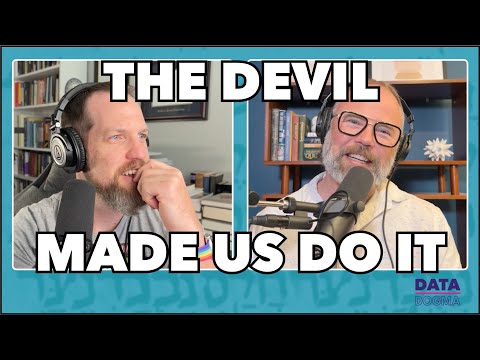
Watch on YouTube
 Apple Podcasts
 Spotify
All episodes
God's Wife with Francesca Stavrakopoulou
This week we interview the inimitable Francesca Stavrakopoulou. Author, scholar, and BBC documentary presenter, Dr. Stavrakopoulou discusses some big questions about the God of the Bible. Did He have a body? Did He have a wife? Did He demand child sacrifice? It's all big questions and some potentially surprising answers on this week's Data Over Dogma! Find Dr. Stavrakopoulou on Twitter here: https://twitter.com/ProfFrancesca If you want to support our work, please consider becoming a monthly patron at patreon.com/DataOverDogma (https://patreon.com/DataOverDogma) Also, follow us on the various social media places: facebook.com/DataOverDogmaPod (https://facebook.com/DataOverDogmaPod) twitter.com/data_over_dogma (https://twitter.com/data_over_dogma) Learn more about your ad choices. Visit megaphone.fm/adchoices (https://megaphone.fm/adchoices)
Transcript — tap any word to jump the video there
Francesca Stavrakopoulou I think that's kinda like one of the common misconceptions is that goddesses were all about fertility. They weren't. They were about warfare as much as they were about nurturing.
Dan Beecher Well, Dan, we are very fortunate today to have, uh, a, a renowned guest on the show. Uh, someone with whom you, Dan, are pretty familiar. Why, why don't you introduce our guest and tell our friends, uh, listening and viewing what, uh, who she is and, and what she's all about.
Dan McClellan Of course. So today I'm very happy to have my former dissertation supervisor, Francesca Stavrakopoulou, professor of Hebrew Bible and Ancient Religion at Exeter University, uh, former head of the Department of Theology and Religion, which is the, still the, uh, the name, uh, on my, uh, doctoral dissertation. Welcome to the show, Francesca, or Professor Stavrakopoulou. Pardon me. Uh, how has your day been? I hear it's a little hectic over there right now in the academic world.
Francesca Stavrakopoulou Yeah. Um, hi. It's, uh, it's really nice to be talking to, to friendly people. It's been... Things are kinda chaotic in the academic world, and we've been having various strikes and whatnot, so yeah. But it's very nice to, to talk to you today.
Dan Beecher Yeah. It's wonderful to have you.
Dan McClellan I know that one of your, uh, priorities is the, the welfare, the well-being of your students. Uh, and I ha- I think I've, I've met one or two of your students in the past as well as some colleagues of yours there, uh, in Exeter. I hope everybody is hopeful about the outcome of, uh, the discussions there, but it sounds like there's a lot of work left to do.
Francesca Stavrakopoulou Yeah. I, I absolutely think so. I think, you know, one of the things about academia, particularly in the UK, is that a lot of government funding has gone towards what we call STEM subjects, you know, so science and technology and engineering. Um, and it, it makes things harder for those of us in the humanities, particularly those of us who focus on ancient cultures, um, to kind of justify our existence sometimes. But, you know, as we know, things like the Bible, um, remain hugely relevant culturally. I mean, whether we believe it or not, um, the Bible is a cultural icon, um, and remains this incredibly important, um, collection of texts to which various people refer, and they, you know, they also use these texts to beat other people over the head with. Um, so yeah, it's, uh, it's kinda hard sometimes, you know, when you're trying to explain to your paymaster just qui- quite how important your... this work can be. Yeah.
Dan McClellan Yeah, we have similar concerns here with the corporatization of higher education, and ironically, the Bible is frequently embedded in the very ideological foundations of those movements towards that corporatization- Right ... uh, which seeks to try to invalidate some of the research that you and I and, and others are doing.
Dan Beecher Yeah, that's an interesting point, Francesca. You, you, you briefly mentioned that, you know, you said the Bible's important whether, whether you're a believer or not. You're not a believer, is that right?
Francesca Stavrakopoulou Yeah. Yeah. I'm, I'm... never have been, and, uh, you know, I n- I never will be. Does, does it...
Dan Beecher Do you find, uh, pushback in the world of biblical scholarship because of your atheism?
Francesca Stavrakopoulou That's a really interesting question because, I mean, I would say that most scholars in my field are religious in some way or another. You know, we have a lot of Jewish colleagues, a lot of Christian colleagues, and every kind of flavor therein, people that are studying these ancient texts and cultures and archeological sites. Um, but more often than not, people tend not to... Uh, well, I say that. There's no reason why somebody who has, um, a religious commitment or investment in these texts can't produce good scholarship. They absolutely can, and they absolutely do. On the other hand, sometimes, um, I think some people have found me unsettling or are a bit uncomfortable with me because I am quite outspoken about my atheism, but primarily because I'm on a, I'm often on a public stage or, you know, I've been, found myself on this public platform, and people always assume, "Oh, you study the Bible. You must be religious." And when they realize that I'm not, they just can't understand it. So people think, "Oh, did you, were you religious and you lost your faith through the academic study of the Bible?" Which is not the case at all. I, I never have been religious. I was just really interested in these texts. Um, or other people kind of feel that somehow the Bible doesn't belong to me. How dare I kind of ask these questions of these texts or interrogate these, these particular traditions. You know, what right have I got? But we all have a right to these texts, you know. As I said, the, the Bible is a cultural icon whether we like it or not, and it shapes and continues to shape so many of our cultural preferences and assumptions and our sort of ticks and twitches about the world. Um, and so we absolutely... I, I think it's our responsibility to, to engage with these texts, particularly if you're coming from a personal perspective that may be non-religious or secular.
Dan Beecher Yeah. All you have to do is look at the fact that, uh, the two hosts of this podcast are both of, of, of European origin with Hebrew names. Uh, two Daniels, you know what I mean? To know how impactful the Bible has been, uh, across society. So it seems- Yeah ... it's definitely, it's definitely worthy, I suppose, of, of study whether you, uh, whether you're a believer or not. But I do imagine that the s- the, the, the, the concept of theology, because that's a different study than what you do, right? Your, your, your study is not theological in nature.
Francesca Stavrakopoulou No. I mean, it intersects with a lot of theological ideas. So, you know, theology is basically talk about God ultimately. But within academia, if you're described as a theologian, that generally means that you are interested in- Sort of kind of theories about the nature of God and the ways in which that impacts your understanding of why and how the world is, um, and our relationships with the divine. It, it assumes the reality, if you like, of the divine. So, you know-
Dan Beecher Mm
Francesca Stavrakopoulou ... for a lot of us, you know, like, you know, re- scholars of religion, you know, if you call them a theologian, a lot of us would like to bristle. 'Cause it's kind of like-
Dan Beecher It's an insult? Um,
Francesca Stavrakopoulou yeah. To, to be frank, yeah. I, I find it kind of insulting. Um, but that's not to say that t- equally the- you know, theologians are doing incredibly important work as well, you know, particularly when it comes to setting certain doctrinal positions, say, within Christianity, within their kind of cultural, historical context. That's really important, you know. Things like, you know, notions of the Trinity emerged within a very particular, um, cultural dynamic and time and, and we can understand why those particular theories came about, um, because of the, the cultural context in which they were being debated. But yeah, like, I am definitely not a theologian, but I do engage with theological ideas because those are the ideas that are so often retrojected back into these ancient texts or retrojected back onto archaeological artifacts. Um, and so I quite often find myself sort of trying to argue that, that we need to disentangle these later confessional interpretations of this material from their likely original historical contexts and, and framings, if you like.
Dan McClellan I know I am. I'm frequently called a theologian as well, um, and part of it is because that degree that I got says theology and religion.
Francesca Stavrakopoulou Yeah.
Dan McClellan And I have to remind people, that's just the name of the department.
Dan Beecher Yeah.
Francesca Stavrakopoulou And it's that-
Dan Beecher You're, you're in, you're in the and religion part, not the theology part.
Francesca Stavrakopoulou Exactly. And but, you know, that's a really good example. It's a hangover from, particularly within European academia, the ways in which the only time you really got to study these, these texts, these biblical texts, was, you know, if you were doing theology, and you were doing theology because you were probably a priest. And so, you know, it kind of reflects that, that much older heritage and legacy of, of what the kind of scholarly inquiry into the Bible was all about. It was primarily performed by religious people, whether they were rabbis or priests or whatever. Um, and they were usually men, obviously.
Dan McClellan Yeah, obviously. So-
Dan Beecher Well, and that's an interesting point, too. Sorry, I, Dan, I don't mean to cut you off. No, no. But I do want you, Francesca, to talk a little bit about the, uh, how... what it's like being a woman in biblical, uh, uh, scholarship, because it seems like that too is probably unusual. Um,
Francesca Stavrakopoulou it's not as though-
Dan Beecher Or, or, or at very l- very, at very least could be treated differently.
Francesca Stavrakopoulou Yeah. I think-
Dan Beecher Do you... Have you, have you found that that's the case?
Francesca Stavrakopoulou Have you seen the internet? Um- Uh, yeah, of course I have. I mean, it's, it's something that has, um, being othered in various ways, has followed me around my career ever since I did my doctorate. Um, and I think it's not just because I'm a woman. You know, there are lots of women in academia now, but like in every other aspect of academia, women are still, like people of color, like people of a certain sort of socioeconomic class, there are all sorts of ways in which people are othered and marginalized within our disciplines and within academic structures themselves. So for example, the gender pay gap is, is, is still, you know, alive and kicking. Um, when you look at academic pay structures, women effectively stop being paid for doing the same job as men in early November in any given year.
Dan Beecher Mm.
Francesca Stavrakopoulou I mean, it... that's the kind of way it works out. So yeah, w- being a woman is, is still, um, different. You're still treated differently, I think, in some ways. Um, but being a woman in biblical studies, yeah, absolutely, that is hard, and I think it's harder than being an atheist in biblical studies. Personally, I've found it to be harder. Um, because, I mean, I've spoken and, and written about this, um, in the past, but I think women are judged far more in terms of what they look like and how they present themselves than men are. And rather than people paying attention to a woman's scholarship and her teaching and her publications, people automatically, quite often, and they're normally men, not always, but normally men, um, they, they tend to judge these scholars in terms of how they look or how they dress. Um, and that pisses me off because it's, and it's been the case- I, I can't imagine why ... ever since. Well, yeah. But it's been the case ever, you know, ever since. I think there's a sense in which, you know, a colleague of mine commented on something the other day, um, you know, and she pointed out... Yeah, and it was in relation to, to somebody s- being unpleasant about me publicly, and she said, you know, "You never hear it said about a male scholar, 'Oh, he only got that job because, you know, he wears nice suits,' or, 'He only got that job because he's good-looking.'" You, you never hear that, ever, about male scholars. Right. But you often hear, often hear it about women. Um, so it, yeah, it's not easy.
Dan Beecher I think that's fair. Yeah. I think that's fair. Mm-hmm. Speaking of your scholarship and judging you on your scholarship, however, I think we should dive into a few of the things, uh, that you've, that you've worked on, that you've written about. Dan, you've, you've, you're, you, you've studied up. You know the stuff.
Francesca Stavrakopoulou You know me.
Dan McClellan Yeah. Yeah. I, I know you, and, and I wanted to, to, um, use the discussion of, of gender in contemporary academia as a, as a springboard, uh, into... You've done a lot of research on sex and gender in the ancient world, um, as well as in ancient concepts of the divine. Uh, and I'm particularly interested in, uh, in a lot of that research. Can you tell us what is- unique, interesting about the divine profiles of the goddesses in ancient Southwest Asia and, and even in ancient Israel?
Francesca Stavrakopoulou Wow. Um, if the question is what's unique about their divine profiles, that's a really difficult question because I- it's very hard to see, um, what's unique about, say, ancient Israelite or Judahite constructs of goddesses or whatever because, you know, these, these, you know, goddesses were worshiped all over ancient Southwest Asia, and quite often they're performing particular sorts of roles in common with other goddesses in, in neighboring societies and cultures. Um, but one of the most important things-
Dan Beecher Can I, can I just stop you right here? Yeah, yeah. I, I do wanna point out, it's, it's obvious, uh, I think everyone knows that obviously no Israelites were ever, were ever worshiped any goddesses. Like, obviously there's no female gods in-
Dan McClellan ... in, in, in sort of
Dan Beecher biblical history. That couldn't be the case, right? Yeah,
Francesca Stavrakopoulou you mean- Surely
Dan Beecher we know that much,
Francesca Stavrakopoulou right? Yeah, you mean no Israelites apart from all the ones that the biblical writers are telling off for worshiping goddesses and, and yeah. Uh, apart from the goddess who's named alongside Yahweh in inscriptions. But yeah, yeah. Um- ... I mean, yeah, goddesses were absolutely part and parcel of ancient, um, Yahweh religion. And so, you know, we, we know, we have inscriptions from the eighth century BCE, um, Hebrew inscriptions that refer to Yahweh and Asherah together, and most scholars are now agreed that this seems to index, um, particular religious assumptions that Yahweh and Asherah were kind of like a divine pair, and Asherah played a role in mediating, in particular, divine blessings, um, from Yahweh onto certain individuals and back again. So she was kind of like... You know, she wasn't like the First Lady. I don't, you know, I don't wanna give that impression. She wasn't like the First Lady of the divine kind of White House. Um, she was an important goddess in her own right, and we know that from other examples, other ancient texts, older texts that talk about the same goddess. So texts from Ugarit, so a late Bronze Age, um, city-state on the coast of what is now, the Mediterranean coast of what is now Syria. Um, and there she's known as Attaratu or Athirat, and she is the wife of the high god El. Um, and she has a really important role in a lot of these mythological texts. I mean, she really is a power broker between El and different deities like Baal and Anat. Um, but she also seems to have played an important role for, for certain sort of high-status elite worshipers as well. We get some great stories in these myths about, um, high-status women sort of almost kind of mimicking this goddess in certain sorts of ways. Um, so yeah, this, this was an important goddess, and she seems to have been a really ancient goddess. We find her under various names worshiped all over ancient Southwest Asia, particularly the Levant area. Um, so yeah, goddesses were important. But the main, I think the main kind of assumption that people often make about these goddesses, which I think is completely wrongheaded, is the idea that somehow these were fertility goddesses. You know, w- you know, they were all concerned about childbirth and sort of sexual, um, kind of allure and attraction and fecundity and agricultural fertility. That, that wasn't the case. In most of these texts that we have, including biblical texts, fertility is very much, um, it's very frequently cast as a masculine male attribute of the divine as opposed to a female. So quite often you get female deities who are responsible for kind of shaping new life in the womb or kind of overlooking, not always, but overlooking sort of breastfeeding and lactation and sort of childcare and nurturing, and those sorts of roles are then expanded to adult worshipers, if you like. But more often than not, it's the kind of, it's the, the male or masculine deities that are particularly associated with conception, even opening and closing wombs, both animal and human, um, and with kind of, you know, with being these fertile deities who are particularly responsible often for sexual allure as well. So I think that's kind of like one of the common misconceptions is that goddesses were all about fertility. They weren't. They were about warfare as much as they were about nurturing.
Dan McClellan And the symbol of the bull is something that is associated with male deities that frequently has to do with ferocity, but just as frequently, if not more so, with fecundity, with, uh, this idea of, uh, of being fertile. Mm-hmm. So we have kind of intersecting but different roles that some of the male and female deities, uh, are playing. And, and it seems to me that there are indications in the Hebrew Bible that the God of Israel has appropriated some of those roles. Some of the imagery that is used in referencing the God of Israel seems like it would fit more comfortably within an ancient, uh, goddess role. Is that accurate? Yeah, absolutely.
Francesca Stavrakopoulou Yeah, absolutely. So in some of the prophetic texts, you know, we find texts like in Hosea and Isaiah where God is kind of, kind of describing himself, Yahweh's describing himself as the, as a midwife. Um, you know, this is a God who kind of helps to birth, if you like, even the chaos monster in the Book of Job, and then kind of wraps him in swaddling bands, which is a, a really, um, fabulous text towards the end of the Book of Job. But in some of the prophetic books, as I said, Hosea and, and Isaiah, um, Jeremiah, this is a God who is, who acts as a midwife. You know, he takes the kind of newborn Israel from the womb and places the, the child on this kind of anonymous mother's breast, and he oversees the kind of breastfeeding. He acts as a midwife. And so he takes on a lot of these roles that probably were originally particularly associated with divine, um, feminine divine beings. Um, and it's a part of that kind of gradual appropriation of these other deities' roles as the, what was originally a pantheon, an ancient- ... Israelite and Judahite pantheon is gradually reduced and reduced and reduced so that Yahweh is prioritized over and above all these other divine beings within the broader heavenly household, and to the point where he eventually kind of either takes on all of these portfolios, if you like, of care for himself. Um, and you know, some of the, uh, some of these other divine beings are either kind of ex- excised from the heavenly household, or they're kind of relegated, and they become what's later known as angels or divine messengers. Yeah. So, um, it's, it's a really interesting shift. Um, but it's not necessarily representative of reality. I mean, we know that there seems to have been a, a shift within Jerusalem, and perhaps in Babylon as well, among Yahweh-worshiping communities there in the sixth to the fifth century towards this qui- kind of prioritization of Yahweh. But, you know, equally, we know that in the fifth century BCE, on the island of Elephantine in the Nile in Egypt, there was a, a Yahweh temple was being refurbished, and this Yahweh was being worshiped alongside, you know, at least one other goddess. Um, so you know, it's, it's not... The Hebrew Bible and the information that, that we can kind of glean from it isn't necessarily representative of a broader trend within Yahweh worship. Yeah. It's, it's quite particular.
Dan McClellan Yeah. And we have, uh, I think the name of the deity there. There's a compound name, Anat-Yahwu, is- Yeah ... is the goddess there. And now there's another compound name that some people associate with the divine feminine, and that's El Shaddai, uh, based on the argument that Shaddai comes from the word for breasts. And in Genesis 49, we've got this idea of, of El Shaddai associated with the blessings of, uh, the womb and the, the blessings of, of breasts. Where, where do you land on the, uh, the origins of the Shaddai title?
Francesca Stavrakopoulou Yeah. I mean, it's always really hard trying to kind of grasp anything meaningful from possible etymologies, I think, and kind of, um, trying to dissect the word that way. Yeah, so one theory is that the word comes from, um, a root meaning breasts, um, equally that maps onto roots that could mean mountains. And so, you know, scholars have d- have produced some interesting, interesting imaginative work on the shapes of mountains as, um, that look like breasts. Um, but I'm more persuaded... Yeah, I know. Um, I'm more pers- We, we have a mountain range.
Dan McClellan There's the Tetons, uh, is a mountain range that is, is based on the same, so it wouldn't be unheard of.
Francesca Stavrakopoulou It's not unheard of, and it makes a lot of sense because quite often, you know, the kind of the earthly realm is often personified as this kind of primeval, feminine, you know, and kind of the idea that the, the, the Earth is this kind of birthing female body. It, it makes sense. But in the case of that title, El Shaddai, um, I'm more inclined to go with the other kind of interpretation of that name. I think it probably means something like El of the wilderness or the steppe region. Yeah. Um, there seems to be more, more kind of evidence for that usage of the term. But even so, you're absolutely right. In Genesis 49, we have got this kind of series of divine blessings where you have an appeal to El Shaddai. You have an appeal to either my ancestral god or, you know, my divine ancestor. You have an appeal to, um, the divine rock, which seems to have been a really important, very early, um, title of a, probably a masculine deity. And you also have an appeal to, um, this kind of divine being, you know, for blessings on breasts and womb, which some people have argued that word pair is a, you know, are titles or epithets for, for go- a goddess. Um, Mark S. Smith- Yeah ... argues that this is a title of Asherah. So yeah, we have traces of, um, we have traces of these goddesses in our texts, which is exciting.
Dan McClellan Yeah. And I think you, um, I know the, one of the very first TikTok videos that I ever made that got over a million views, uh, was responding to somebody who was expressing frustration with a, uh, a headline from an article that was an interview with you over a decade ago about God's wife being edited out of the Bible. And so these are some of the potential, uh, vestigial references to the divine feminine and, and o- other scholars argue maybe Deuteronomy 33:2, where it says a "fiery law" in many translations now, but it could be very easily reconstructed to say that Adonai came forth with Asherah at- Yeah ... his right hand.
Francesca Stavrakopoulou Yeah, which is a, which is a, a translation that I, that I, I really like. I think it's got an awful lot to be said for it. I mean, it's interesting that people get, do get upset sometimes about the idea that God could have once had a wife. Um, and I think, you know, that says a lot more about our own cultural anxieties about the nature of the divine- Yeah ... and divine sexuality, um, divine sort of gender than, than it does anything else. I mean, there's a big debate going on at the moment in the mainstream press here because the Church of England has said that it's going to consider having a debate about whether it should change God's pronouns in prayers and various other things. So God will become they rather than he, will become parent rather than father. Um, and people are getting really worked up about this. But I mean, you know, people, these, these ancient texts that we have in the Bible, you know, they are always being overturned, reinterpreted, overwritten in ancient context as well as in- Yeah ... the contemporary context. And so, I mean, I don't have a problem with it particularly, but, um- Yeah ... but yeah, I mean, very much, you know, this is a God who is very much gendered in masculine terms within the Hebrew Bible. Um, and I think we need to recognize that. Yeah.
Dan McClellan And I know that something that I'm fond of saying is that everybody is negotiating with the text in one way or another, and this is just another example of ways that we try to make the text more meaningful or more useful to us, whether... And we've got folks who are out there who are upset about the idea of God having a wife but will, uh, vehemently insist that God is male. Which means something. Um, and so, yeah, there... But there are other ways that we can upset, uh, people in the, the audience as well. You wrote your dissertation under, under the supervision of the inimitable John Barton, uh, at Oxford, and, uh, this had a lot to do with the question of, uh, human sacrifice, child sacrifice, in, uh, the Hebrew Bible. It seems like there's quite a bit of discussion going on these days around that question of child sacrifice. There seems to be a, a shift in the scholarship, including the meaning of the word Moloch, and whether this is a reference to a deity who received child sacrifice, or if this is just a generic noun that refers to a specific type of sacrifice. Can you tell us where, where you see the scholarship heading, where you, where you land on some of those discussions?
Francesca Stavrakopoulou Yeah. It's really interesting because, I mean, I, you know, I don't, I don't wanna kind of give away too much about about my age, because I feel about 100 today. But yeah, I mean, when I wrote, when I wrote my dissertation, I mean, it was back in the early 2000s, and child sacrifice had... It was starting... You know, it had b- kind of become a more, a more sort of provocative topic in, in scholarship, you know, sort of in the mid-'80s, and then no one had really talked about it since then. But in the mid-'80s, these two important works were published, one by, uh, a scholar called John Day, and the other by a scholar called George Heyde. And they are both arguing that the term Molech in the Hebrew Bible absolutely refers to, um... is the name of a deity, and they both claimed independently, and I think incorrectly, uh, that this god, Molech, could be found in some of these texts from this place that I mentioned before, from Ugarit. Um, their arguments, in my opinion, and as I argued in my thesis, don't stack up at all. Um, but there's a... The reason why a lot of these scholars in particular were keen to defend the biblical portrayal of a character called Molech is, I think, because it distances Yahweh from the suggestion, the implication in these texts, that these children were being sacrificed to him and not to a, a foreign abominable deity, that somehow child sacrifice is a kind of a, a foreign import, a kind of a corruption of a much purer form of, of religion. Um, now, whether or not child sacrifice happened is really difficult to assess. I mean, archaeologically, you know, we have no evidence for the sorts of ritualized, um, burning of very young babies, children, and young animals that we have from comparative sites across the Phoenician and Punic worlds. So that's quite difficult. Um, we don't have direct, you know, clear archaeological evidence. Now, those sites in these Phoenician and Punic areas, so basically, um, this is where the argument about who, what really, who is Molech really, this is where it comes from. Because some of these sites where you have huge precincts that are clearly set apart from other sorts of mortuary sites and burial places, they seem to be very different. Um, they've got all sorts of things going on within, within these particular precincts, but what they do have are the charred remains of babies and very young animals interred in little urns and then buried. And quite often you have a stone memorial marker, um, erected over the top of it, and sometimes these things have inscriptions. So Carthage is one of our best tested sites. We've got hundreds and hundreds of hundreds of these burnt baby remains. Um, not a, that's not a sentence I say every day. Um- And then , um, but, but these inscriptions occasionally refer to, seem to suggest that this particular practice is a type of offering. So, and the term mlk, so from the roots M-L-K, um, seems to refer, seems to be a technical term for a particular type of offering, perhaps to... And quite often these babies in Carthage were, were being kind of dedicated or, um, offered up in honor of the g- of the god Baal Hammon and his consort Tanit. Um, so in 1935, a brilliant scholar called Otto Eissfeldt published a, a thesis in, a, a dissertation in which he argued that this term mlk in the Carthaginian inscriptions, meaning a type of sacrifice, is cognate with the term mlk that we find in Hebrew Bible texts, which within Greek, Ancient Greek translations of the text have tended to be pronounced Moloch. Um, in the Masoretic Text, it's pr- often pronounced Molech. Um, but Eissfeldt argued that no, it's the same term. Um, and so this is really a type of sacrifice, not the name of a foreign monstrous god to whom the children are being sacrificed. And if that's the case, well then which deity is associated with, with the burning of babies in these biblical texts? Mm-hmm. It's Yahweh.
Dan McClellan Yeah.
Francesca Stavrakopoulou So yeah- Mm-hmm ... people kind of get upset about that. Well, we see,
Dan McClellan we see even Ezekiel seeming to acknowledge this in chapter 20 saying, speaking on behalf of God, saying, "I gave you commandments that were not good, that decimated you f- uh, compelled you to, um, cross your children over the fire," or something like that, which is, is one attempt to account for what's going on in likely Exodus 22. It's verse 29 in the English and verse 28 in the Hebrew, where God says, uh, "And the firstborn of you children you will give to me." Uh, and- Yeah ... you will do the same for your oxen and your sheep.
Francesca Stavrakopoulou Yeah. And it's a really nice interesting, when you look at the language there, that kind of switch from singular to plural, where it's kind of like, you know, "On the eighth day, you shall give him to me." It's this real sense that this is about the child, and the child is to be treated in exactly the same way as the oxen and the sheep- Yeah ... which is to be sacrificed. Um, but, you know, but then we have, you know, that's a regulation concerning the firstborn. And the extent to which, you know, the relationship between this Molech practice and the firstborn sacrifice, the extent to which those are related i- is interesting. I, I think probably the Molech sacrifice, I argued in my, in my first book that this was a, a specialization, um, of the firstborn. Mm-hmm. Um, a royal specialization of the, of the firstborn sacrifice. But, you know, we have a lot of other biblical traditions in which it's no problem at all to, for Yahweh to command, you know, the sacrifice of your children. I mean, Abraham and Isaac is, in Genesis 22, is a perfect example. And there- Mm-hmm ... you know, yeah, the sacrifice is halted, but Abraham is not blessed for refusing to sacrifice Isaac. He's blessed for his willingness to do so. Um, equally, the story of, um, Jephthah's daughter in Judges 11, where you have a Yahwistic warrior who, um, basically offers up a vow and says, you know, "Yahweh, if you let me win this war, I will offer up to you the first thing that runs out of the house to greet me." And lo and behold, it's his beloved daughter, the same term that's used of Isaac, um, beloved. Mm-hmm. And the same term that's used of Jesus, who also is, in some interpretations, sacrificed, uh, by his father. And, and, you know, Jephthah's daughter comes running out the house, and Jephthah offers her up. No comment at all from Yahweh that this is a bad thing or that you've misunderstood or, you know, how could you do this? It's just like, yeah, it happens. Um, so you know-
Dan McClellan It's the way things were ...
Francesca Stavrakopoulou we've got these kinds of very positive kind of portrayals of the, the efficacy of child sacrifice, that this is something that brings blessing within a Yahwistic context. Um- Yeah ... so it's a really interesting topic because it, it unsettles as well our own cultural preferences, our own ideas of what a child is. Um, but obviously it also, this notion of child sacrifice also underlies very early Christian interpretations of the execution of Jesus. Um, he is the beloved son who is killed. Um, John Levinson wrote a fantastic book back in the '90s, um, about, about the kind of these links between child sacrifice, um, within ancient Jewish tradition and early Christian traditions. Um, so there's something very disturbing, though, about the notion of a father, a divine father, who, um, will willingly sacrifice his child.
Dan McClellan Yeah. It makes it interesting.
Francesca Stavrakopoulou What does that say about parenthood?
Dan McClellan It, it makes the, the Lamb of God metaphor within Christianity more interesting. I think a lot of people are, are, enjoy that metaphor and make a lot of use of it without thinking hard about what that says about- Yeah ... about Jesus, how Jesus is functioning. And, and it-
Francesca Stavrakopoulou And think about, yeah, in some of the Psalms, you know, you know, the Lord is my shepherd. That's a horrific image. I mean, because this is- Yeah ... about the cultivation, um, and almost the commodification, if you like, of, of a living being in order for it to be destroyed for-
Dan McClellan Yeah
Francesca Stavrakopoulou ... you know, its various products. Um...
Dan McClellan Yeah, personhood, parentage, these, these things, the frameworks were much different anciently than they are today. But we still feel compelled to, to retroject our own thinking onto the ancient world and think they had to have felt the same way about these things anciently than, that we do today.
Dan Beecher Yeah. I, I'm fascinated by the fact that, uh, I mean, I know Francesca, uh, in your work, you've, you've often, uh, cited the Bible as an, as an imperfect, um, uh, uh, historical text, as a text that we can't rely on as being, uh, uh, reliable for
Dan McClellan histo- or, for, uh,
Dan Beecher historical, um- Mm ...
Dan McClellan facts. Mm.
Dan Beecher But I love that, I love that you're pointing out also that even though the Bible itself talks plenty about child sacrifice, we don't have the archaeolog- archeological evidence for it, at least in that context. I think that's fascinating. No. I think it, it, it could be wrong about itself in a good way, question mark? Like, maybe they didn't do the awful thing that the Bible says that they did do, question mark?
Francesca Stavrakopoulou Yeah.
Dan McClellan Mm-hmm.
Francesca Stavrakopoulou I mean, and but that's the thing about archeology is that, I mean, you know, so on the child sacrifice thing, we, you know, there are things that, there are archeological excavations that have found similar sorts of urns with burnt remains and sort of stele erected over them i- in what is now the modern-day, um, you know, in what is today the, the state of Israel. Um, so that, that, that is interesting. So, you know, date to the right kind of time. So it, it does suggest that this kind of cremation or ritual burning of, of, um, what wasn't, it wasn't alien to, to, to the biblical writers, if you imagine that they're kind of working in Jerusalem, say, in the 5th century or whatever. But archeologically speaking, it's really hard because, you know, we can't go and dig up Jerusalem. You know, some, with the Molech text, you know, there's this very much this insistence that this is happening in the Kidron Valley in Jerusalem. Um, and you know, the, these valleys were, were natural. You know, this is where, this was an entryway into the underworld. That's the way in which these valleys were understood outside Jerusalem. And so, you know, you do get, you know, we've got loads of burial grounds, very ancient burial grounds there now. Um, but you can't go digging up Jerusalem. I mean, equally, you know, you can't go digging up Temple Mount to find the remains of the First Temple, you know, the Solomon's Temple. I mean, you can't because it's just... I mean, A, it's a modern, thriving city, and B, it's also one of those cities that is hugely contested, um, in terms of ownership, authority, access, you know, within lots of different communities. Um, so politically and socially and culturally, it, it would just be awful to try and excavate, obviously. But, but that's the thing. So archeologically, we only have access to the places we're able to dig legally and ethically. And I have to say that, you know, quite often a lot of digs, um, in those territories that we understand as, um, modern-day Israel and, and in the Palestinian occupied territories, you know, sometimes those digs aren't ethical. To a certain degree. Um, but you know, we only have access to sites in physical ways and, and sort of politically mandated ways. Um, so who knows what's there. And you know, you can only really dig when you know what you're looking for as well. Um, so things like, you know, archeologists, particularly those of us who work on the Bible, you know, archeologists always used to focus on urban centers, like the big cities. You know, who are these people building these great cities? And they completely overlooked the majority of the ancient Iron Age population who lived out in the countryside. And so it wasn't... It's only been the last kind of 30 years or so that people have actually been paying attention to the majority of these ancient populations and their material circumstances and lives, um, by digging in places that, that, you know, that weren't necessarily these major urban centers at all. So yeah- I think- ... archeologically speaking, it's, it's hard. It's, it's not a perfect science, archeology.
Dan McClellan Yeah. The, the accident of, uh, of preservation has a lot to do- ... with, with what we can find, when we can go dig, because we're looking for something. And I, I think it's been such a fascinating turn towards looking at more domestic contexts and trying to- Mm ... reconstruct the m- materiality of the everyday life anciently. I, I think that tells us so much more about lived religion, if we can refer to religion anciently, than it does just looking at what men were in charge, uh- Mm ... in the ancient world.
Francesca Stavrakopoulou Yeah.
Dan McClellan Now, you recently published your first trade book for a popular audience, uh, God and Anatomy. And I have, uh- Yay ... one of the UK versions, which, um, I, I know you understand has the much better cover. Um, and, and your, your book won the, uh, PEN/Hessel-Tiltman Prize for Best Nonfiction Book on a Historical Subject, so congratulations,
Francesca Stavrakopoulou uh- Thank you ...
Dan McClellan for that. And I know it was in the running for some other prizes as well. Um, can you tell us what, uh, questions you were seeking to address when you wrote this book? Uh, what's, what drove you to, to write on God's body and corporeality, and how that influenced the conceptualization of the divine and, and how people lived their, uh, their ideologies anciently?
Francesca Stavrakopoulou Yeah. I mean, I think the question, the, the, the question that I had... I mean, the reason why I went to university in the first place to study, I mean, I did what was known as a theology degree at Oxford. Um, and the question that, you know... I, I was really interested in religion because, you know, when I was a kid, I was given a picture book Bible and, you know, and I was looking at, you know, like this illustration of Abraham just about to sacrifice Isaac. And I remember thinking, "This is a weird thing." You know, like, I remember being very struck by how strange and frightening that was. Um, so even though I wasn't brought up religious at all, I, I was really interested in, in ancient religions. And then, you know, I'm Greek, um, I'm half Greek, and so my Greek heritage was, was important to me. And so the myths of gods and goddesses from Greeks, um, from Greek culture was always really interesting. And I couldn't understand why, you know, initially, you know, the God of the Bible, and Jesus in particular, was treated as different from the great heroes of ancient Greek myth, you know, uh, who often had, you know, one parent, you know, they had, they had a divine father and a human mother. So why was this Jesus guy different? But when I went to university and studied theology, I was reading... It was the first time I studied the Hebrew Bible, so what Christians call the Old Testament, and obviously what Jewish people call Tanakh. And I just couldn't get over, like, there was this like, this kind of vivid images of this human shape, very masculine deity kind of striding around, trampling people and shouting, and sitting on a throne in his temple. And I was really interested in this kind of bodily portrayal of the deity, and yet when I would ask my lecturers and professors about it, they would always kind of dismiss it as kind of poetry or metaphor- Mm ... or as, you know, it's, it's, it's metaphor... I mean, everything is metaphorical to a certain degree, particularly, forgive me, Dan, but particularly when we're talking about an imaginary being. You know, everything is ultimately kind of metaphorical. But that was where I kind of really got, like, interested in the, the body of God. And I wanted to write this book because, A, I wanted to show people that this isn't just metaphor, that actually in the ancient, in God's kind of original, ancient, his natural cultural habitat, if you like, he was very much understood to, to be a corporeal deity with a human-shaped body, and with male and masculine features. Um, just like every other god and goddess, you know, was in the ancient world. It was really normal. Um, so I wanted kind of to put God back in his ancient cultural habitat in that sense. But I also wanted, um, people to understand that we navigate our... We imagine the otherworldly, and we often imagine the otherworldly in terms of our own bodies. Um, you know, we, we navigate our way around this world because of our bodies. I mean, I don't subscribe to this very Cartesian kind of dichotomy between a, that we have, that our bodies are simply the vessels or shells in which our mind or our intellect or our soul or spirit is housed. Um, and that's certainly not the way that ancient people understood what it was to be a person. Um, and so our bodies, you know, we are our bodies, and I think how these ancient societies understood, interpreted certain aspects of their bodies very much framed and shaped the ways in which they imagined their gods and their gods' bodies. And so from things like, um, you know, certain sorts of the heart being a cognitive organ, um, an intellectual organ, rather than, you know, we tend to think of it as an emotional organ if we kind of apply any kind of cultural meaning to it. Um, the way that the belly was understood to be the seat of certain sorts of emotions, the nose is the place of anger, the territoriality of the feet, um, all of these sorts of things have shaped the way in which God's portrayed in not just the Hebrew Bible, but in, in New Testament texts as well. And I kind of wanted to take the reader on a journey- ... through the early history of God by kind of stripping the deity and kind of showing what this god's body was understood to, to be like. Um, and yeah. Yeah. And it was fun to write.
Dan McClellan It sounds like it. I, I listened to the, the audio version that you narrated, and I can tell when you're kinda giggling in the background- ... a little bit.
Francesca Stavrakopoulou But, uh- It was, it was so hard not to do accents as well, not to do voices for God. 'Cause I do that in my lectures. But like...
Dan McClellan And I, I think you, you do kinda strip the deity in, in a somewhat literal, non-metaphoric sense in, in some of the discussions. Part- you've got a whole section on, on divine genitals, which I think, uh, is gonna strike some people as, as a little off-putting. Mm. But it's such a fascinating discussion, and I think one of the things that, that I've heard come up the most in, in people talking about this book is your discussion of, uh, Isaiah 6. Mm. And Isaiah's, uh, throne theophany that he sees- Mm ... uh, in the temple. You have a different reading of what traditionally we understand to be, uh, the, the hem of a robe or the skirts. Um, could you tell us about, uh, this reading and, and what's in the background of this reading of, uh, of God filling the temple?
Francesca Stavrakopoulou It's really interesting that that particular part of my book has caused such, um- ... debate. I mean, particularly because I spend a lot more time in the book talking about a very similar image of the deity in Ezekiel 1. Mm-hmm. Um, which I think is, is, is far more interesting. Um, and I say far more about that than I do about what's happening in Isaiah 6. But in Isaiah 6, we have the prophet having this encounter. You know, he sees Yahweh enthroned in the Jerusalem Temple, and Yahweh's surrounded by, you know, seraphim, which are these kind of, um, monstrous, um, noisy, flying, burning, serpent-like creatures. Um, and we're told... You know, so the Hebrew goes something like, um, uh, the Lord... He saw Yahweh high and lofty. Um, and it's normally translated as the hem of his robe filled the temple. And the term that's used there for... You know, there's, there's no word for robe in the Hebrew. It's literally his lower extremities. That's what the word literally means, and it's often used to talk about the edges of garments. And you know, sure enough, iconographically, we've got lots of images from across ancient Southwest Asia of gods and kings wearing very, you know, double-hemmed, long, ankle-length robes. You know, so that's completely fine. But in my book, I sort of say there's an allusion going on here as well. So I'm not... You know, I'm... And I use the word allusion very deliberately. There's... Because quite often, when this term is used, particularly when it's used in prophetic literature in the Hebrew Bible, it often alludes to the genitals, um, more usually of female characters, and these are... Sometimes it seems to be like a goddess-like character, um, as we find in Ezekiel, uh, 16 and Ezekiel 23. Um, and it's used in a very de- It's kind of used in a very derogatory way. It's about when you have a reference to the shawl of these female characters, it's because they're being stripped and generously exposed. So there's all of this kind of stuff that's clustering around this image. So it's a very interesting image, um, that the, the, his shawl, his lower extremities fill the temple. And I think within the context of ancient Judahite constructs of the masculinity of God, the idea of God having genitals that would... are so big would fill the temple is, is not weird at all. Mm-hmm. Particularly, I think, because I'm... I think this is probably what Ezekiel 1 is riffing off, because in Ezekiel 1, again, a prophet has this image of Yahweh enthroned on a temple, and this time, you know... And, and like in Ezekiel 6, the, the, the prophet doesn't quite say everything he sees. He doesn't say, "Oh, and I looked at his face, and it looked like this, and his arms were like this." Yeah. Um, it's always very- Just the likeness of the appearance of the thing ... the deity's body is very hidden.
Dan Beecher Yeah. Yeah.
Francesca Stavrakopoulou And what he sa- what he says, you know, he's very much says this was a human-shaped being sitting on the throne, and this deity's, um, upper body is covered by this kind of flashes of fire and flames and bright light, as is the lower half of his body. And the one body part that Ezekiel mentions is his motnaim, and he kind of navigates his kind of description of this deity's body by means of the motnaim, and it's almost as if the motnaim are exposed, and this is a term that's normally and politely rendered, um, loins. But you know, more appropriately refers to the front part of the body that is at the bottom of your waist and at the top of your legs. But it's the genital area. Right. Um, and yet Ezekiel leaves this part exposed, which is really interesting. Um, so I think those two texts, I think... I suspect Ezekiel 1 is riffing. You know, if Eze- if Isaiah 6 is older, which most scholars would probably mm, argue maybe, mm, but I think there's some kind of intertextual relationship going on between those two. Yeah. And I think that one has informed the other. And so what perhaps Ezekiel 6 is alluding to is the, um... What Isaiah 6 is alluding to, I think Ezekiel 1 is rendering more explicit, but in this incredible way that kind of, by revealing that part of God's body, he's almost concealing more of the body. It's, it's a really clever, clever text.
Dan McClellan I really like it. So it kind of-
Francesca Stavrakopoulou If I'm a-
Dan McClellan ... revealing as it masks at the same time.
Francesca Stavrakopoulou Yeah. Exactly. And if I'm...
Dan McClellan And real quick-
Dan Beecher So if I'm understanding correctly, what you're saying is that the TikTok generation did not invent the concept of big dick energy. Is that, is that what we're...
Francesca Stavrakopoulou Yeah. And my, my goodness. I mean, yeah. I mean, and I'm certainly not the TikTok generation, but it was definitely around when I was, when I was younger.
Dan McClellan Well, and even, you mentioned the Ugaritic texts earlier. We've got things about, uh, El's hand growing a, uh, large as the sea, uh, when he sees some, uh- Some women on the beach Beautiful young goddesses.
Francesca Stavrakopoulou Yeah
Dan McClellan Yes. And then we, and this is not something that ancient, even Jewish writers were particularly, uh, uncomfortable with. We have discussions in rabbinic literature about God's genitals, including saying Adam must have been circumcised 'cause Adam was made in the image of God.
Francesca Stavrakopoulou Yeah, yeah.
Dan McClellan And God-
Francesca Stavrakopoulou So their argument-
Dan McClellan God isn't circumcised ...
Francesca Stavrakopoulou is very much that, yeah, if Adam's made in the image of God, they worried, you know, was Adam made circumcised, or was he bo- you know, was he created with a foreskin? And they worried about it, and then they d- finally decided that absolutely, Adam was created with a foreskin. He was made perfectly because he was made in the image of God, and because God is circumcised, and therefore, then therefore Adam must have been circumcised too. Mm-hmm. So yeah, this idea that somehow God couldn't possibly have a penis, um, is extraordinary. It, it's a modern hang-up. It's not a... Well, it's- Yeah ... a kind of a post-biblical hang-up, um- ... rather than a rather than an ancient one.
Dan McClellan Yeah. Well, and- Yeah ... and our Victorian kind of sensitivities are, are governing how people feel comfortable talking about that- Mm ... in public. And, and unfortunately, that comes out in a lot of the boundary maintenance that a lot of people think it's their prerogative to, um, to engage in regarding the Bible and who's allowed to talk about what in the Bible. So-
Francesca Stavrakopoulou Yeah
Dan McClellan All right. Well, thank you for your time. I know you've gotta get going. I, uh, appreciate, uh, you joining us and, uh, offering your thoughts on this, and congratulations on the book again. Um, can you... I'm sure we have more listeners in the US than in the UK, but, uh, they can find your book wherever quality books are sold, I'm sure. Um, any, uh, anything else you'd like to, to share? Anything you didn't get to say that, uh, that you wish I would've asked you?
Francesca Stavrakopoulou No. I've, I've really enjoyed having the conversation. Um, and it was nice to revisit child sacrifice. So I- ... I, I need to start... I know that sounds weird. I need to start... I've been asked to write a piece on child sacrifice, um, um, for something that's coming out. Um, I need to get it done later this year. And so it's been nice to kind of get my brain thinking about it again. It's been a long time. I've missed child sacrifice. What a weird thing to say- ... but I have.
Dan Beecher Who doesn't? Who doesn't miss it- Yeah ... every now and then?
Dan McClellan Is there-
Francesca Stavrakopoulou And it was-
Dan McClellan ...
Francesca Stavrakopoulou is there
Dan Beecher anything that you want to, uh, uh, where can people go to find more of your work, to find, uh, to find you if, if they're interested? Um,
Francesca Stavrakopoulou gosh. Well, I'm all over YouTube in various ways. I think you can find my BBC documentaries on YouTube in, um, certain places. Um, but I'm on Twitter, so if you wanna see what I talk about on Twitter, um, I'm at @ProfFrancesca. Um, yeah, and you can find a lot of my academic publications on my university webpage, so just Google me. Just put my name in Google. It will... It's quite an- ... unusual name. It will come up.
Dan McClellan Yeah. And you've, and you've got some stuff on, um, academia.edu as well, don't you, if-
Francesca Stavrakopoulou Yeah, but I keep forgetting- ... someone- ... that I have that thing, yeah. So it's, it's quite- Oh. Yeah. There's nothing, there's nothing new on it.
Dan Beecher It's a little outdated.
Francesca Stavrakopoulou Yeah. Yeah. I keep forgetting.
Dan McClellan But if, if people wanna access some of the scholarship, uh, that's one way, uh, to do it, uh, conveniently. So- Absolutely ... thank you so much for your time. I appreciate it. Hope you have a wonderful evening. I hope things, uh, conditions improve for the university there, uh, in the UK, and I look forward to, uh, visiting with you again out there in Exeter at some point soon.
Francesca Stavrakopoulou Definitely. Thank you so much for having me.
Dan McClellan Thank you. Thanks.
Further reading recommended in this episode
Affiliate links: the show earns a small commission at no extra cost to you. See all book recs