
 Watch on YouTube
 Apple Podcasts
 Spotify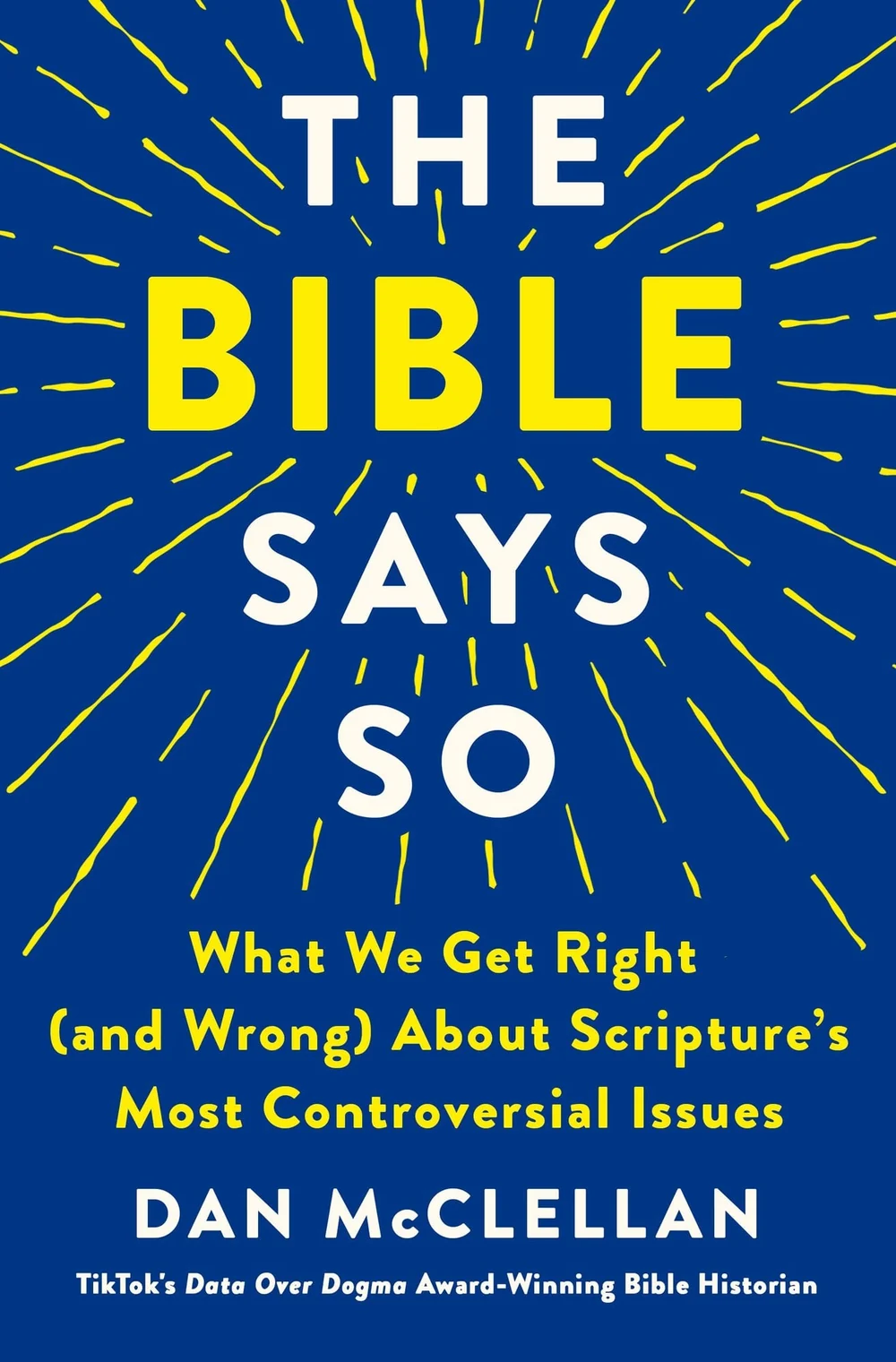
All episodes
Wash Your Own Feet!
This week we're getting all apocryphal, and diving headlong into Maccabees. Specifically, we're discussing the story of a mother and her sons in 2 Maccabees, chapter 7. This is the inspiring (?) tale of a family defying tyranny by refusing to eat, and all being brutally murdered for their trouble. And while the story itself is quite harrowing (and graphic!), it's small moments along the way that are actually worthy of some fascinating discussion. Then we go to the gospel of John, where there might be something fishy going on. We have talked about other parts of the Bible where references to feet have actually been euphemisms for genitals. So what are we to make of the moment in John where Jesus washes the feet of his disciples? —— For early access to an ad-free version of every episode of Data Over Dogma, exclusive content, and the opportunity to support our work, please consider becoming a monthly patron at: https://www.patreon.com/DataOverDogma
Bonus Episode Recorded with this episode: read the full transcript $10 patrons · log in with PatreonTranscript — tap any word to jump the video there
Dan Beecher I love the final moment of the Book of John where we'll give him the full three years.
Dan McClellan Yeah.
Dan Beecher It's still a pretty big claim to say that if everything that Jesus did was written down, even the whole world would not have room for the books that would be written.
Dan McClellan Yeah.
Dan Beecher That feels a little strong.
Dan McClellan Yeah.
Dan Beecher Coming on a little strong, author of John.
Dan McClellan Hey, everybody. I'm Dan McClellan.
Dan Beecher And I'm Dan Beecher.
Dan McClellan And you're listening to the Data Over Dogma podcast, where we increase public access to the academic study of the Bible and religion and combat the spread of misinformation about the same. How are things today, Dan?
Dan Beecher Rocking and rolling.
Dan McClellan That's what I like.
Dan Beecher Keeping it juicy. Keeping it 100, huh? Keeping it 100.
Dan McClellan Yes.
Dan Beecher All right. A fun show coming up today.
Dan McClellan Awesome.
Dan Beecher We get to talk about a book that is not one that I even ever encountered my entire growing up, because it is part of the Apocrypha.
Dan McClellan Mm-hmm. It is 2 Applebee's.
Dan Beecher And we're going to have some fun with that one. 3 Carrabba's after that. Yeah, sure. And then we're going to go into a taking issue, and the issue we're going to take is one that it isn't obvious right off the jump, but we're going to be talking about the washing of feet.
Dan McClellan Hmm.
Dan Beecher It is a thing that happened quite a bit, and was an interesting ritual, and maybe was way more interesting than we knew it was. We'll see when we get to it. That'll be a fun discussion.
Dan McClellan Yeah.
Dan Beecher But to start us off, let's do a chapter and verse.
Dan McClellan All right.
Dan Beecher All right. And this week's chapter and verse is in 2 Maccabees, chapter 7. Is that right?
Dan McClellan Yeah. Should we talk a little bit about Maccabees first?
Dan Beecher Yeah. We should just, and remind ourselves why it's not in all of the Bibles, and why the Catholics will remember it and the Protestants won't, et cetera.
Dan McClellan Yeah. There are four well-known books of Maccabees. It's generally the first two that are included in apocryphal texts, if those texts are included. And the Maccabees deal with the history of the rise of the Hasmonean kingdom, so the fighting back against the Seleucid rulers in the middle of the second century BCE, when Jewish folks actually managed to regain a degree of independence and started what has become known as the Hasmonean kingdom. So these are the events that result in the celebration of Hanukkah- Okay ... which commemorates the rededication of the temple after the Maccabean forces were able to take it back from the Seleucid forces.
Dan Beecher And- The Seleucids, is that related to Babylon? I don't know who the Seleucids were.
Dan McClellan So this is one of the groups that arose after Alexander the Great's death, and his kingdom was fractured, and there were a bunch of different regions that were ruled over by regional powers. And so, the Ptolemies, for instance, were in Egypt, and the Seleucids were around Syria, Palestine area.
Dan Beecher Oh, okay.
Dan McClellan And so, these were Hellenistic rulers. And so, 2 Maccabees talks about actually a few different rulers. Seleucus IV, Antiochus IV Epiphanes, Antiochus V, Demetrius I. So there are a few different Seleucid rulers that are discussed, but they're the ones who are trying to maintain their control over this territory while the Maccabees are fighting back and trying to gain independence.
Dan Beecher Okay. And who are the Maccabees?
Dan McClellan That's- The Maccabees, this is a nickname that is given to a family that kind of becomes the head of this resistance movement. So Judas Maccabeus, for instance, is how one of the generals is known. And we've talked in the past a little bit about how there might be a hint at some kind of notion of purgatory in 2 Maccabees 12- Hmm ... where Judas Maccabeus and his forces come upon some fallen comrades, and they have contraband, they have idols on their persons, and so he passes the hat around to gather up a collection to send off to the Jerusalem temple so that sacrifices can be made in the names of the deceased, so that maybe they can have a better resurrection.
Dan Beecher Which- I do remember talking about that.
Dan McClellan Yes.
Dan Beecher That's really interesting. And the chapter in 2 Maccabees that we are going to talk about is actually also just jam-packed with theologically interesting little moments.
Dan McClellan Yes.
Dan Beecher Which you could totally miss if you're not looking for them.
Dan McClellan Yeah.
Dan Beecher But as a guy who is peripherally associated with biblical scholarship, they jumped out at me quite- Mm-hmm ... a few of them did. Maybe there's more.
Dan McClellan Yeah.
Dan Beecher But this is a story, it is in the NRSVUE, it is titled "The Martyrdom of Seven Brothers."
Dan McClellan Yes.
Dan Beecher And the- And their mommy, it should say.
Dan McClellan And their mother, yes. And the interesting thing about this is that there are actually multiple stories of a parent and seven children, seven sons, facing death for their refusal to violate God's laws.
Dan Beecher Oh.
Dan McClellan So there's a text called the Assumption of Moses, where we have a character named Tacho Who is a father, who takes his seven sons into a cave to protest Roman oppression in a later time period, and presumably killing his sons and then himself along the way. And then we have a discussion in Josephus, where Josephus tells the same story but expands on it, and actually has the father killing the sons one by one, rather than have them fall into Roman hands. And then we have some rabbinic literature as well that reflects this story. But we have a slightly different version in 2 Maccabees chapter 7, which I argued in a paper from many, many moons ago. 2009, I think, is when I actually published it in a student journal, where I suggested that because of the fact that it is chock-full of theological significance, and also if we look at the trajectory of the development of this story, seems to come from a later time period. I argued, "Hey, maybe we ought to date chapter 7 to later. Maybe it is a later addition to the text of 2 Maccabees." But that argument has not won over a ton of supporters. So, I presented it in a couple different academic conferences, and it was received skeptically, let's say.
Dan Beecher Okay.
Dan McClellan But there are a bunch of interesting things that we see in here. For instance, we have this notion of... Well, actually, let's just talk a little bit about the narrative, and then we can- Sure ... go through some of these elements.
Dan Beecher Before we dive into that, give me a sense of the traditional dating or approximate dating of this text. When does this go back to?
Dan McClellan So scholars suggest it was probably written somewhere between 161 BCE and about 63 BCE.
Dan Beecher Okay.
Dan McClellan So it was obviously written after the reign of Antiochus IV Epiphanes, and it was almost certainly written before Pompey's annexation of Judea because the Romans are not treated as villains in this.
Dan Beecher Okay.
Dan McClellan And if it had come after that, then they probably would've been treated as villains. And it starts in chapter 7, "It happened also that..." And we're telling stories about ways that the Seleucids are trying to stamp out observation of Jewish conventions.
Dan Beecher Right.
Dan McClellan Such as circumcision, such as avoidance of pork, and things like that. So, "It happened also that seven brothers and their mother were arrested and were being compelled by the king under torture with whips and straps to partake of unlawful pig's flesh. And one of them, acting as their spokesman, said, 'What do you intend to ask and learn from us? For we are ready to die rather than transgress the laws of our ancestors.'"
Dan Beecher And then this- By the way, unlawful pig's flesh is a great name for a metal band. If anybody wants it, it's just hanging out there for you.
Dan McClellan "And then the king fell into a rage and gave orders to have pans and cauldrons heated."
Dan Beecher Yeah. It gets real intense real fast.
Dan McClellan Yeah. Well, you've got to read 4 Maccabees because this stretches it out. It expands the torture, and it expands the vocabulary that is used to describe the torture devices and the ways that the- Wow ... kids are tortured. But in short, one by one, the seven sons are going to be tortured and killed.
Dan Beecher And the torture is spelled out.
Dan McClellan Yes.
Dan Beecher They scalp them, and it seems to indicate that they are all dispatched in the same manner, which I'm going to get to in a minute because I think there's a funny thing. But they are scalped, and then their hands and feet are cut off while the rest of the brothers and the mother look on.
Dan McClellan Mm-hmm.
Dan Beecher And there is something about cutting out the tongue, isn't there?
Dan McClellan Yes. That happens in verse 10.
Dan Beecher Okay.
Dan McClellan "After him, the third was the victim of their sport. When it was demanded, he quickly put out his tongue and courageously stretched forth his hands and said nobly, 'I got these from Heaven, and because of His laws I disdain them, and from Him I hope to get them back again.'"
Dan Beecher And that right there is actually the first of our big theological moments.
Dan McClellan Mm-hmm.
Dan Beecher Which is to say, at least from my perspective, it's the first mention that we get, at least in this chapter, of "I'm going to be made whole." His understanding of what was going to happen is if he is righteous, God will give him back his hands and feet and tongue, et cetera.
Dan McClellan Yeah. So this witnesses to a view of resurrection, which is something that developed slowly within Judaism, and this would be a very early attestation to a rather developed view of resurrection, if he's like, "Oh, I'm getting all this back." And we have a few different mentions of this. And I think they're going oldest to youngest with these. "And after he too had died, they maltreated and tortured the fourth in the same way." And then he cries out. And each of the sons, before they are killed, says something mean to the king.
Dan Beecher Which is funny because the tongue-cutting-out thing is actually the first thing that happens to the first one. And if this all goes in the same order, then they all had their tongues cut out, and then later they were like, "Ha ha, but for you, there will be no resurrection." Which is pretty funny. But that is verse 14. I'll just read it, and then- Yeah ... you can talk about it, because this is the fourth kid who's being killed. And when he dies, he says, or when he's near death... And by the way, they are frying these kids in a pan after- Yeah ... they cut off all their hands and feet. So that's pretty horrific. But he says, "One cannot but choose to die at the hands of mortals, and to cherish the hope, the hope God gives of being raised again by Him. But for you, there will be no resurrection to life." Which, theologically, I suppose means no hell, right? That's oblivion.
Dan McClellan That's- Yeah, it does seem to suggest that he can't count on being raised again. In other words, the resurrection would only be for the righteous, unless resurrection to life stands in contrast to resurrection to something else.
Dan Beecher Oh.
Dan McClellan But I think the idea, the "cherish the hope God gives of being raised again by Him." Mm-hmm. If Antiochus does not have that hope, then maybe there is no resurrection of any kind that he can expect, and it's just annihilation.
Dan Beecher Yeah.
Dan McClellan But yeah, it doesn't jive with a lot of what we see in later ideas where everybody is resurrected. But, again, this is a slowly developing ideological framework.
Dan Beecher Yeah.
Dan McClellan "Then they brought forth the fifth and maltreated him, but he looked at the king and said, 'Because you have authority among mortals, though you also are mortal, you do what you please, but do not think that God has forsaken our people. Keep on and see how His mighty power will torture you and your descendants.'" Quite the threat there- Yeah ... in the face of torture and murder. But we start to see the idea that the punishment that they are receiving is a just recompense for- Mm ... the sins of Israel.
Dan Beecher Yeah, that was a bit of a befuddlement to me, because that theme is repeated multiple times.
Dan McClellan Mm-hmm.
Dan Beecher This idea that we are forsaken, and this is happening to us because of our sins, which I thought was an interesting thing. Can you talk a little bit about what that's about? Because, I don't know. I've read a lot of, you read the Psalms, and they're sort of bemoaning our lot, and, "God, why have you done this to us?" But this seems very clear that bad things that are happening to us are our fault in some way, and somehow our atonement for our sins.
Dan McClellan Yeah, you do have a sense that these punishments and this death functions as a kind of atonement, and that if they suffer it well, then that will appease God's anger or something like that.
Dan Beecher Yeah.
Dan McClellan The exilic literature, the earlier literature that's talking about Israel being sent into exile, pretty unilaterally suggests that the exile was punishment for Judah's sins. And so this later literature is probably just accepting that framing of persecution on the part of larger nations. Well, that must be because of the sins of the nation. But, yeah, we do have a sense of kind of proxy atoning for others' sins here.
Dan Beecher Yeah.
Dan McClellan Which is kind of early, in my opinion, for this thing to be popping up in the literature, alongside a very early manifestation of belief in resurrection, a very early kind of ascetic approach to martyrdom.
Dan Beecher Yeah.
Dan McClellan Where he regarded his sufferings as nothing, which is not really a first-century BCE Jewish ideal. That strikes me as something that comes a little later.
Dan Beecher Huh.
Dan McClellan And then after the sixth, we get a little about the mother. In verse 20, "The mother was especially admirable and worthy of honorable memory. Although she saw her seven sons perish within a single day, she bore it with good courage because of her hope in the Lord. She encouraged each of them in the language of their ancestors. Filled with a noble spirit, she reinforced her women's reasoning with a man's courage- ... and said to them, 'I do not know how you came into being in my womb.'" I bet she does know.
Dan Beecher Yeah.
Dan McClellan "It was not I who gave you life and breath, nor I who set in order the elements within each of you. Therefore, the creator of the world, who shaped the beginning of humankind and divined the origin of all things, in his mercy gives life and breath back to you again, since you now forget yourselves for the sake of his laws." So again, we have this reference to they are sacrificing themself in order to remain faithful to the laws, and so God will give life and breath back.
Dan Beecher Right.
Dan McClellan And here Antiochus is outraged, and so we only have the youngest brother left.
Dan Beecher Yeah.
Dan McClellan And so Antiochus not only appealed to him in words, but promised with oaths that he would make him rich and enviable if he would turn from the ways of his ancestors, and that he would take him for his friend and entrust him with public affairs. "Since the young man would not listen to him at all, the king called the mother to him and urged her to advise the youth to save himself." So it's representing Antiochus as just this out-of-control, just raging, barely human tyrant.
Dan Beecher Well, actually, I would say that in this moment, it's representing him as being someone who's like, "I'm kind of trapped into this whole thing. I don't want to kill another kid. Just eat the pork. It'll be fine." And when he doesn't do it, he's like, "Mom, come here. Talk to him. I don't want to kill him. Talk to him. I'll make him rich." You know what I mean? It feels to me like he's really working to make this not happen.
Dan McClellan It also says in verse 24, "He was suspicious of her reproachful tone." So I think he might be trying to be like, "You smarmy little..." Trying to win them over to overcome their dogmatism.
Dan Beecher Yeah.
Dan McClellan And so he urges her, and then she leans in close to him, and in their native language- Leans in close to her son.
Dan Beecher Her son.
Dan McClellan Yeah. Derides the cruel tyrant and says, "My son, have pity on me. I carried you nine months in my womb and nursed you for three years, and I've reared you and brought you up to this point in your life, and I've taken care of you." And this is verse 28. This is a very famous verse, and I'll explain why in a second. "I beg you, my child, to look at the heaven and the earth and see everything that is in them and recognize that God did not make them out of things that existed."
Dan Beecher Yeah.
Dan McClellan "And in the same way the human race came into being. Do not fear this butcher, but prove worthy of your brothers. Accept death, so that in God's mercy, I may get you back again along with your brothers." And obviously, this passage is appealed to by a bunch of folks as asserting creation ex nihilo.
Dan Beecher Yeah.
Dan McClellan Creation out of nothing.
Dan Beecher It definitely, yeah, God did not make them out of things that existed.
Dan McClellan Yes. That does seem- However, the very next sentence, "And in the same way the human race came into being," rather complicates things.
Dan Beecher Sure.
Dan McClellan Because the human race did not come into being from nothing. If you look at Genesis 2, the human race was molded from the dust.
Dan Beecher Made of dirt.
Dan McClellan Made of dirt.
Dan Beecher Yeah.
Dan McClellan Keep a little dirt under the pillow for- For the dirt man ...
Dan Beecher Adam, the dirt man.
Dan McClellan Yeah.
Dan Beecher That's right.
Dan McClellan And there's a further problem. Most scholars these days acknowledge that this things that existed and things that did not exist, this is a reference to a Greek philosophical notion of matter as existing in a realm of being or a realm of non-being, where matter that existed in the realm of non-being was still matter, and it existed. It was just part of this material substrate that lacked form and function. It was the raw materials. And so to give it form and function was to move it from the realm of non-being into the realm of being. And so there have been a handful of scholars since the '70s and '80s who've been pointing out, this is not creation ex nihilo. This is not creation out of nothing, and the fact that this creation of the world out of things that did not make them out of things that existed, if that's the same way the human race came into being, then it's very clearly not- Interesting ... creation ex nihilo.
Dan Beecher Yes.
Dan McClellan But the young man then turns and says, "Well, what are you waiting for? I will not obey the king's command, but I obey the command of the law that was given to our ancestors through Moses," and basically further mouths off to Antiochus, says, "Our brothers have fallen under God's covenant, but you, by the judgment of God, will receive just punishment for your arrogance. I, like my brothers, give up body and life for the laws of our ancestors, appealing to God to show mercy soon to our nation, and by trials and plagues, to make you confess that he alone is God, and through me and my brothers, to bring to an end the wrath of the Almighty that has justly fallen on our whole nation."
Dan Beecher Okay.
Dan McClellan So again, this is expiation for sin. This is proxy atonement for sin by them giving up their lives for their nation.
Dan Beecher Yeah.
Dan McClellan Yeah.
Dan Beecher You skipped it, but it does say in verse 32, "For we are suffering because of our own sins."
Dan McClellan Yes.
Dan Beecher So yeah, that is fascinating, the idea of proxy atonement. Does that ever come up later in the Bible at all? It seems like maybe that comes up.
Dan McClellan It's in the back somewhere, I think. And then it says, "The king fell into a rage and handled him worse than the others, being exasperated at his scorn. So he died in his integrity, putting his whole trust in the Lord. Last of all, the mother died after her sons." And then verse 42, "Let this be enough, then, about the eating of sacrifices and the extreme tortures." So the author has had enough. The author is done.
Dan Beecher That's all I'm going to say about that.
Dan McClellan Yeah.
Dan Beecher Is a weird way to end a biblical chapter. That just seems like a very odd thing to say. But yes.
Dan McClellan Yeah. But this is a part of the literature of this time period where they're like, "And now I'm going to go on to talk about this, and let that be enough of that."
Dan Beecher And thus endeth that lesson.
Dan McClellan Yes.
Dan Beecher Well, I- Yeah, go ahead.
Dan McClellan Oh, I was just going to say, that's the story of the mother and her seven sons, and represents Antiochus IV Epiphanes in not a very favorable light, as kind of not in control of his temper, and yeah, destined for not a great afterlife if the seven sons were correct. Or not an afterlife at all. Or not an afterlife at all, depending on when we date this and what they're thinking about yon afterlife.
Dan Beecher Yeah.
Dan McClellan All right.
Dan Beecher Fascinating, interesting, and again, one that many of us would never have encountered. I was far older than I should've been before I realized that that's actually still in a lot of people's Bibles.
Dan McClellan All right. Yeah, there are a number of other fascinating stories in 2 Maccabees, and 1 Maccabees is considered slightly more historical, not incredibly historical, but slightly more historical, and is important for reconstructing the history of this time period.
Dan Beecher Okay.
Dan McClellan Yeah.
Dan Beecher Well, we may have to come back to Applebee's at some point.
Dan McClellan Read your Maccabees, people.
Dan Beecher Yeah. Important stuff.
Dan McClellan All right. Let's move on to Taking Issue.
Dan Beecher All right, and the thing we're taking issue with today is feet.
Dan McClellan Yeah. No fetishes going on here.
Dan Beecher We are- We do not, yeah. This is not a Tarantino film. We are not into it.
Dan McClellan No pictures will be taken, no pictures will be shared.
Dan Beecher Although, if you check my OnlyFans, you will get some- Oh, okay.
Dan McClellan Well ...
Dan Beecher some feet things. Anyway, I have one fan.
Dan McClellan No.
Dan Beecher So, what I've got pulled up- Yeah ... is John 13.
Dan McClellan John, chapter 13.
Dan Beecher Yes. And that is where Jesus washes his disciples' feet.
Dan McClellan Mm-hmm.
Dan Beecher They have a meal, and then after that, "He poured water into a basin and began to wash his disciples' feet, drying them with the towel that was wrapped around him."
Dan McClellan Yes.
Dan Beecher And you wanted to talk about this, so I'm just going to let you. What is interesting, this has always, to me, been presented as a gesture of supplication or a gesture of service.
Dan McClellan Mm-hmm. So talk to me about what's interesting, what we're taking issue with. Well, we're taking issue with an interpretation of this that is pretty common in the world of social media, in the public discourse.
Dan Beecher Oh.
Dan McClellan Not as much in the academic discourse, but to some degree in the academic discourse. There's the notion that feet are euphemisms for genitals in the Bible.
Dan Beecher Yeah, you've mentioned that a number of times- Yeah ... as we've talked through things.
Dan McClellan Yeah. And to uncover one's feet can be a euphemism for dropping trou.
Dan Beecher Right.
Dan McClellan And to cover one's feet is a euphemism for defecation.
Dan Beecher Oh.
Dan McClellan Because you're squatting down and- Oh, okay.
Dan Beecher In your feet ...
Dan McClellan things gather around one's feet.
Dan Beecher Okay.
Dan McClellan And so there are folks who suggest that this is a homoerotic story, that there is something a little more than washing going on- Oh ... between Jesus and his disciples. And I think if there were just a passage that said, "And Jesus washed his disciples' feet," or, "uncovered his disciples' feet," or something like that, maybe there's a bit more of an argument to make there, if it's something that's just in passing. But this is a part of a pretty symbolic set of events toward the end of John's gospel, and the details in here just don't leave room, in my opinion, for interpreting this as reflecting these sexual undertones.
Dan Beecher Well, I'm just going to complicate the matter a little bit because- Okay ... the reading that I did started with verse five. But- Yes ... if I start before that- Yes ... in verse four- Mm-hmm ... Jesus got up from the meal, took off his outer clothing, and wrapped a towel around his waist.
Dan McClellan Yes.
Dan Beecher Now, why did he strip? That seems odd.
Dan McClellan Yeah. I would suggest that what's going on here is that he is doffing his symbols of his equality with the disciples and donning the clothing of an enslaved person, because in this time period, washing feet was something that happened frequently, and you might wash your own feet, but usually, if you were well enough off, you would have enslaved folks who would do it for you and your guests.
Dan Beecher Okay.
Dan McClellan And so to wash someone else's feet was to take a position of subordinate social status, and basically the position of an enslaved person.
Dan Beecher And so- Can you talk about the word that is translated here as towel? Because that might shed a little light, it seems to me.
Dan McClellan Okay.
Dan Beecher Yeah.
Dan McClellan Let me just pull up what we're looking at here. I don't have my- my Greek up. Taking a towel, which is lention, so this could be cloth, this could be apron. Let me see what BDAG says, linen cloth or towel.
Dan Beecher Hmm.
Dan McClellan And we have of a woman who is preparing to wash another person's feet. So according to Vitae Aesopi, which evidently comes from the first century CE, I'm not familiar with this text, but the life of Aesop, a woman would wrap themselves in a towel before washing another person's feet. So it sounds like this is imagery that is part of the convention of foot washing.
Dan Beecher Yes.
Dan McClellan Okay.
Dan Beecher And sounds like it- But it also puts an interesting further complication into this, which is that now is Jesus taking on a woman's role, and that's a very interesting question to me.
Dan McClellan Yeah, I would have to look at the literature to see if there's something significant about this being a woman, or if this is just an enslaved person who happens to be a woman, or maybe they're not an enslaved person at all.
Dan Beecher Yeah.
Dan McClellan I don't know. I think there are multiple different conventions, but the conventional reading on the part of scholars is that Jesus is debasing himself.
Dan Beecher Right.
Dan McClellan Humbling himself before his disciples in a symbolic gesture- Right ... to show what he's doing. And verse 5, "Then he poured water into a basin and began to wash the disciples' feet, and to wipe them with the towel that was tied around him." And so here's where the narrative details are a little too explicit for this to be a euphemistic reference to- Right ... something else going on.
Dan Beecher Yeah, it does sound very specific.
Dan McClellan Yeah. And verse 6, "He came to Simon Peter, who said to him, 'Lord, are you going to wash my feet?'" And this is kind of the incredulous Peter saying, "No way this is happening." "Jesus answered, 'You do not know now what I am doing, but later you will understand.' Peter said to him, 'You will never wash my feet.' Jesus answered, 'Unless I wash you, you have no share with me.' Simon Peter said to him, 'Lord, not my feet only, but also my hands and my head.' Jesus said to him, 'One who has bathed does not need to wash except for the feet, but is entirely clean. And you are clean, though not all of you.'" Dun-dun-dun. Dun-dun-dun. And then, yeah, we cut to Jim side-eye.
Dan Beecher Right.
Dan McClellan And so I think the idea here is that Peter misunderstands the symbol.
Dan Beecher Yeah.
Dan McClellan Peter thinks that Jesus is like, "It's time to get y'all squeaky clean." And Peter's like, "Well, my scalp's been feeling a little dry." So he's like, "Ooh, get all the rest of me, too." And Jesus kind of says, "This is a symbol, Peter. I'm not suggesting you all need a bath."
Dan Beecher You're clean already. Just let me do the foot thing.
Dan McClellan Gosh.
Dan Beecher Yeah.
Dan McClellan Because you have a bath, you go walk around, your feet are dirty.
Dan Beecher Yeah.
Dan McClellan So, yeah. Especially in sandals in the desert.
Dan Beecher Yes. That seems like that's just a recipe for dirty feet.
Dan McClellan Yeah. And so the idea here is that Jesus is humbling himself before his disciples as a sign of what's coming, and this is a symbolic way to kind of bring them into what's going to happen. And there are a variety of ways to explain what's going on, or explain the symbolism. But verse 11 says, "For he knew who was to betray him. For this reason he said, 'Not all of you are clean.'" Dun-dun-dun.
Dan Beecher Yeah.
Dan McClellan And we get Jim side-eye. "After he had washed their feet, had put on his robe, and had reclined again, he said to them, 'Do you know what I have done to you?'" Yeah, which would be a weird thing if this were sexual in some way. "You call me Teacher and Lord, and you are right, for that is what I am. So if I, your Lord and Teacher, have washed your feet, you also ought to wash one another's feet. For I have set you an example, that you also should do as I have done to you. Very truly, I tell you, slaves are not greater than their master, nor are messengers greater than the one who sent them. If you know these things, you are blessed if you do them." And then, yeah, we get back to talking about how Judas is a naughty, naughty boy.
Dan Beecher Yeah. So it's a message of equality and sort of- Well, mutual submission and subordination, kind of- Yeah ...
Dan McClellan servant leadership. You're not greater than me, but I humbled myself before you, and so obviously you guys got to humble yourselves before each other and before others. And so it's putting that burden on them to then live that example that Jesus has set, which they are going to do later on once Jesus is resurrected and they all come to their senses because they're kind of blinded by By their expectations of what the Messiah is going to be.
Dan Beecher And- Yeah, I guess I actually misread. When you just read the part about, "No servant is greater than his master," I actually, in my mind, I had that flipped. So it's not about equality. I was thinking it was a message of equality, but no, it's a message of, "You're not better than me, so you guys better act right."
Dan McClellan Yeah. You're not better than me, but I still did this.
Dan Beecher Right.
Dan McClellan And so, it is kind of, he's like, "I am humbling myself before you, even though I am greater than all of you put together."
Dan Beecher Yeah. "I am still way better than you. But if I'm so much better than you and I deigned to do this, you better be deining. You guys better deign."
Dan McClellan Yeah. And I'm trying to find out where he says this, because this is toward the end of John. I want to bring up something else interesting. There are a lot of peculiarities about John's telling of the final week of Jesus's life. But for instance, this meal that they sit down and have- Mm ... then immediately proceeds some discourses, and then his arrest, is not represented as the Passover meal in John.
Dan Beecher Oh, right.
Dan McClellan It's the Passover meal in the Synoptics, but here it doesn't seem to be a Passover meal. But we have some more sermonizing, and then at the end of chapter 14, Jesus says, "But I do as the Father has commanded me so that the world may know that I love the Father. Rise, let us be on our way. I am the true vine," and Jesus is like, "All right, everybody, let's get out of here." And then chapter 15 begins with more sermonizing. Chapter 16 has more sermonizing. And then we get to chapter 18, "After Jesus had spoken these words, he went out with his disciples across the Kidron Valley to the Garden of Gethsemane."
Dan Beecher Okay.
Dan McClellan So a lot of scholars have pointed out, we've got Jesus saying, you could skip right from the end of chapter 14 to the beginning of chapter 18 and miss nothing.
Dan Beecher Like narratively- Yeah ...
Dan McClellan it just flows just fine. But it seems like an editor was like, "I got three chapters worth of sermonizing I got to put somewhere." And so we have our true vine speech, and we have the world hatred speech, and then we have the intercessory prayer, and all of this gets shoved right in between Jesus saying, "Let's get out of here."
Dan Beecher Right.
Dan McClellan And then the verse that says, "So they got out of there."
Dan Beecher Right.
Dan McClellan Yeah. One of a handful of different cues, little indications that there's been a heavy editorial hand in the Gospel of John.
Dan Beecher And perhaps additions placed in there.
Dan McClellan Yes, absolutely. Perhaps some things were cooked up to expand on the significance.
Dan Beecher "I feel like the book's not long enough. Can we add- ... is there anything we can put in there?"
Dan McClellan Well, and we know this happens in the Gospel of John because the story of the woman taken in adultery- Oh, right ... was not original to the Gospel of John, was not in the earliest manuscripts. But that is John chapter 7 verse 53 is where it starts, and it runs all the way through chapter 8 verse 11. And we know about that one because we have manuscripts that don't have it.
Dan Beecher Mm.
Dan McClellan And that is not the case for chapters 15, 16, and 17. But certainly there is opportunity for editorializing going on. And I think one of the clearest indicators of that is at the very end. The first time I read this, I was like, "What?
Dan Beecher What?"
Dan McClellan So this is John chapter 21 verse 24. "This is the disciple who is testifying to these things and has written them, and we know that his testimony is true." And I was like, "Wait a minute." "Who's we?"
Dan Beecher Right. And where does- Perhaps it was dictated.
Dan McClellan Where does we stop and the beloved disciple start?
Dan Beecher Hmm.
Dan McClellan And so I've always found that a funny little... Somebody was like, "Yeah, let's just mention ourselves in here."
Dan Beecher Either- Let's just chuck ourselves into this.
Dan McClellan Yeah. The narrator or whoever is collating the text just couldn't help but squeeze themselves in there a little bit. And then they go, "But there are also many other things that Jesus did. If every one of them were written down, I suppose that the world itself could not contain the books that would be written." Which is a peculiar little epilogue that goes back to first person singular.
Dan Beecher Yeah.
Dan McClellan But I love that we've got this little we- Yeah ... tossed in there. And so I think that demonstrates, even if you think the Gospel of John was written firsthand by an eyewitness, there's at least that one passage that very clearly was added later. And there have got to be others. We know the woman taken in adultery is another example, and so I think it's just the compositional history of the Gospel of John is a fascinating area of research that I would love to know more about.
Dan Beecher I haven't- Remind me a little bit, when do we think John was written, like in the order of the Gospels?
Dan McClellan A lot of people- Mark was first, right?
Dan Beecher Mark was first.
Dan McClellan A lot of people think John was last, probably in the 90s CE.
Dan Beecher Okay.
Dan McClellan But if Luke is the early second century CE, then Luke probably came after John.
Dan Beecher Okay.
Dan McClellan But yeah, that's something that's still being debated, and we've got A book. There it is, Writing and Rewriting the Gospels: John and the Synoptics by James W.
Dan Beecher Barker.
Dan McClellan Okay. Where he makes the case that basically every gospel author used everything that came before. So Matthew used Mark, Luke used Matthew and Mark, and then John used all of the Synoptics.
Dan Beecher Okay.
Dan McClellan So yeah, there are a handful of different theories about how everything came together, but usually John's dated to the 90s CE.
Dan Beecher Yeah. I love, as you point out, the final moment of the Book of John because the ministry of Jesus was what? A year or something?
Dan McClellan Well, in John, it's three years. Another big difference between the Synoptics and John.
Dan Beecher Okay. We'll give him the full three years.
Dan McClellan Yeah.
Dan Beecher It's still a pretty big claim to say that if everything that Jesus did was written down, even the whole world would not have room for the books that would be written.
Dan McClellan Yeah.
Dan Beecher That feels a little strong.
Dan McClellan Yeah.
Dan Beecher Coming on a little strong, author of John.
Dan McClellan Yeah. Maybe he had extra hours. Maybe he had more than 24 hours in each day- Right ... that he was going about doing stuff as an itinerant preacher who probably spent a lot of time just hanging out.
Dan Beecher So- Yeah ...
Dan McClellan yeah, that is some hyperbole there.
Dan Beecher The book of Jesus chilling would be a lot of fun.
Dan McClellan Yeah.
Dan Beecher Well, all right. I'm fascinated. John is a very interesting book. We should probably do more John stuff.
Dan McClellan Yeah.
Dan Beecher Maybe we'll get your friend on to talk a little about it.
Dan McClellan We've got to. Yeah, we've got a handful of folks who are waiting to get scheduled.
Dan Beecher Yeah. But- It might be a minute.
Dan McClellan Yeah.
Dan Beecher Our schedules are crazy. I don't know if our listeners know this, but you just had a book come out.
Dan McClellan I did just have a book come out, "The Bible Says So: What We Get Right and Wrong About Scripture's Most Controversial Issues." And I feel bad that I have to say the subtitle every time, because as I've pointed out, I am not responsible for the subtitle.
Dan Beecher Well, I don't know why you feel bad that you have to, because you don't have to. You can just say- Yeah.
Dan McClellan "The Bible."
Dan Beecher Look for a blue and yellow cover- Yeah ... wherever you get your fine books, whatever local bookshop you go to for your favorite non-fiction books.
Dan McClellan Anyway- Yeah ... that's it for the show today.
Dan Beecher If you would like to become one of the many wonderful people who help make this show happen, we would love to have you over on patreon.com, where you can sign up to get access to early and ad-free versions of every show. You can get access to the after party, which is bonus content that we do for our patrons every week. And it also just makes us feel warm and fuzzy and keeps us actually paid so that we can afford to keep doing this.
Dan McClellan So- Whoo ...
Dan Beecher we really appreciate that. If you would like to reach out to us, it's contact@dataoverdogmapod.com. Thanks so much to Roger Gowdy for editing the show, and thanks to all of you for tuning in. We'll talk to you again next week.
Dan McClellan Bye everybody.
Further reading recommended in this episode
Affiliate links: the show earns a small commission at no extra cost to you. See all book recs


